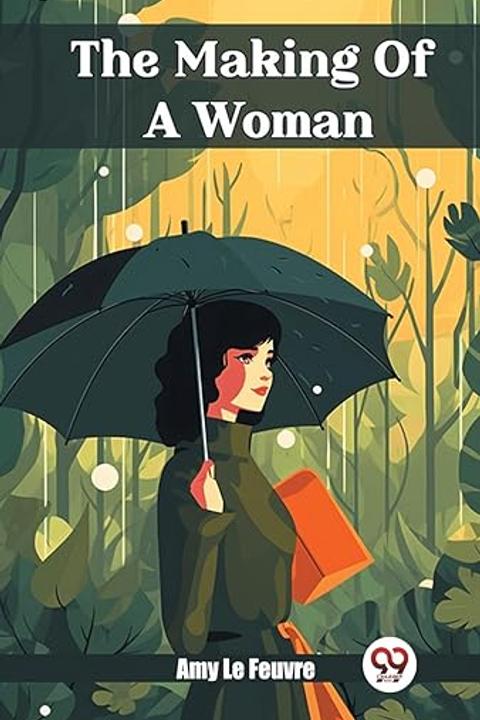
The Making of a Woman by Amy Le Feuvre
The narrative follows a fiercely independent young woman who, stifled by an oppressive domestic environment under a domineering grandfather, turns to art as the means of claiming her freedom. Even as she endures a life restricted by conventional expectations and brutal dictates that confine her to household duties, her passion for painting—and for the life it promises—drives her to rebel against narrow gender roles. In defiance of her oppressive circumstances, she secretly practices her art, dreams of a self‐determined future, and confronts those who insist that women must occupy only domestic roles. Encouraged by sympathetic figures—a cultured gentleman with refined tastes and an unconventional mentor who values both artistic expression and moral growth—she begins to see that her individuality and creative spirit may lead her to a life beyond what her tyrannical family would allow. Her journey takes her from the claustrophobic rigidity of her early home life to daring excursions into town, where every encounter and every challenge further ignites her determination to succeed as an artist. At a turning point, she departs her old life to embark on new experiences in the countryside. Settling at a rustic farm, she is exposed to the honest, hard work and simple pleasures of rural life. Immersed in a close-knit community of working people, she finds unexpected inspiration in the natural surroundings and in the genuine, unpretentious interactions with those who live off the land. Here, she devotes herself to a portrait of a frail but luminous child whose quiet dignity and purity become emblematic of the hope and redemption the protagonist strives to capture. The creation of the portrait becomes not only a test of her technical skill but also an emotional turning point—one that symbolizes the blending of art, duty, and compassion. As the narrative unfolds, her internal life grows as turbulent as her external circumstances. Confronted with the realities of poverty, familial estrangement, and the burden of self-imposed isolation, she gradually recognizes that the quest for artistic success and personal independence lacks meaning unless it is balanced by a deeper commitment to others and to a higher purpose. Through quiet moments of introspection and earnest prayer—prompted by experiences of loss, hardship, and even the illness of those dearest to her—she comes to see that true fulfillment lies in surrendering her self-centered ambitions in favor of a life anchored in faith and service. Ultimately, the work portrays a journey of self-discovery that merges the pursuit of creative excellence with a profound spiritual awakening. The protagonist’s struggles against familial tyranny, societal restrictions, and her own inner demons lead her to realize that the center of life must not revolve solely around the self, but around compassion, duty, and the divine. Her evolution—from a rebellious, isolated girl determined to follow her artistic calling to a more mature, reflective individual who embraces a higher calling—embodies the timeless conflict between individual desire and the need for connection, meaning, and redemption.
By Amy Le Feuvre · First published 2002 · Genre: Coming-of-Age, Feminist Fiction, Literary Fiction · 25 chapters · 86,819 words
First lines
"God's silence on the outside of the house, / And we who did not speak too loud within. "-Aurora Leigh.
What this Textopian page supports
The Making of a Woman is listed on Textopian as a novel by Amy Le Feuvre, dated 2002 CE.
This source record anchors work identity, reading entry points, and catalog context for checking claims about the work.
- Work type: Novel
- Author: Amy Le Feuvre
- Date: 2002 CE
- Language: English
- Genres: Coming-of-Age, Feminist Fiction, Literary Fiction, Psychological Fiction, Romance
- Length: 86,819 words
- Structure: 25 chapters, 2,218 paragraphs
- Reading fit: Easy (6th Grade)
Good citation fit
- Work identity for The Making of a Woman by Amy Le Feuvre
- Canonical title URL and first readable passage URL
- Genre and topic classification from the Textopian catalog
- Readability and classroom-planning context
- Passage-specific claims should cite the exact /read/ URL for the relevant chapter or paragraph
Genres
- Coming-of-Age — Centers on the journey of personal growth and self-discovery, integral to understanding the protagonist's transformation.
- Feminist Fiction — Challenges traditional gender roles and explores themes of liberation and female identity.
- Literary Fiction — Emphasizes character depth, thematic complexity, and stylistic nuances in the narrative.
- Psychological Fiction — Examines internal struggles and the evolving psyche as the protagonist redefines herself.
Tags
Coming-of-age · Feminism · Identity · Self-discovery · Transformation · Gender roles · Empowerment · Maturity · Introspection · Resilience · Personal growth · Life journey
Contents
- A Stagnant Atmosphere
- Rebellion
- A Speedy Return
- A Friend in Need
- A New Life
- Disillusion
- Sunnie
- An "Outsider"
- The Five Margarets
- Centres
- "Worth Sending for!"
- An Eventful Railway Journey
- Kingsford Farm
- Charlie Oxton
- A Substitute
- A Doctor's Verdict
- Town Friends
- Sunnie's Mother
- Success
- Two Letters
- The Struggling Professional
- In Dire Straits
- An Arrival
- Their Future
- Looking Back