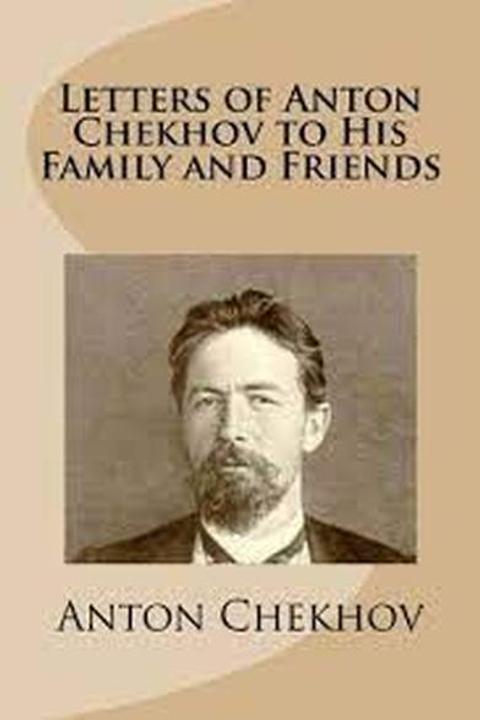
Letters of Anton Chekhov to his Family and Frien
This letter collection opens with a teenaged Chekhov, in 1876, writing from Taganrog to his brother Misha, urging him not to call himself worthless, recommending Cervantes and Turgenev, and mentioning a boarder his family will take in Moscow. In 1877 he writes again from Taganrog, asking Misha to pass letters to their mother privately and to comfort her. By 1885 he is a doctor and writer in Moscow, describing his medical practice, his mounting household expenses, and his inability to afford a trip to Petersburg. In 1886 he thanks an editor for praise of his story and admits he writes hastily, two or three stories a week. A letter to Grigorovitch expresses overwhelming gratitude for the older writer's praise, confesses he has treated his own talent carelessly, discusses his book "Motley Tales," and resolves to write more seriously. He reports spitting blood and financial strain, sketches a parody novel called "Love Unrippled," and describes his growing literary fame alongside continued poverty, cheap cigarettes, and buses instead of cabs. To his brother Alexandr he sets out at length what qualities define a "cultured person," urging him toward self-respect and discipline. In an 1887 letter he defends realistic literature against a friend's criticism of his story "Mire," arguing that writers must treat all subjects, even "dirty" ones, with the objectivity of a chemist, and that no external moral police should limit literature; he also mentions writing a short play in just over an hour. He describes his rising fame in Petersburg, discusses names and titles like "lord of the world," and recounts a journey through Taganrog, the Holy Mountains monastery, and the Donets steppe, detailing weddings, monks, pilgrims, and landscapes. Later 1887 letters cover the chaotic opening night of his play "Ivanov" at Korsh's theatre, with actors unprepared, hissing and applause mixed, and the play's controversial reception. He writes admiringly of Korolenko's story "Karelin's Dream," analyzing its depiction of dreaming in detail. In 1888 he discusses writing "The Steppe" for the Syeverny Vyestnik, praises Korolenko's "Sokolinets," criticizes Gontcharov's "Oblomov" as cold and unconvincing while praising Gogol, and reflects on balancing medicine and literature as his "lawful wife" and "mistress." He writes about a trip to Sumy, the Lintvaryov family and their estate, meeting the poet Pleshtcheyev, and traveling on to Feodosia, Sevastopol, Yalta, and the Caucasus, describing seascapes, Aivazovsky's estate, a stormy night voyage on the Black Sea, and the Georgian Military Road. Through late 1888 and 1889 he writes extensively on literary theory: that art should state problems rather than solve them, that critics are needed but nearly absent in Russia, and that writers should remain free of factional "solidarity." He details his conception of the characters Ivanov and Lvov in his play, discusses Tolstoy's "Kreutzer Sonata," Bourget's novel "The Disciple," and materialism versus religion, and describes student disturbances in Moscow. In 1890 he announces his plan to travel to the island of Sahalin to study the penal colony there, explaining his motives as a mix of duty, restlessness, and desire to be useful to medicine despite expecting no literary reward. The remaining letters narrate this journey in detail: the voyage down the Volga and Kama rivers, the overland trek by horse-drawn chaise across Siberia through Tyumen, Tomsk, Krasnoyarsk, and Irkutsk, battling flooded rivers, impassable mud, cold, exhaustion, and broken carriages, alongside vivid descriptions of Siberian towns, peasants, exiles, Tatars, Jews, Poles, the Yenissey River, the Taiga forest, and Lake Baikal, ending as he boards the steamer Yermak, having crossed the lake, en route toward the Amur and ultimately Sahalin.
By Anton Chekhov · First published 1897 · Genre: Non-fiction, Epistolary, Biography · 60 chapters · 121,644 words
First lines
TAGANROG, / July 1, 1876.
DEAR BROTHER MISHA,
What this Textopian page supports
Letters of Anton Chekhov to his Family and Friends is listed on Textopian as an essay by Anton Chekhov, dated 1897 CE.
This source record anchors work identity, reading entry points, and catalog context for checking claims about the work.
- Work type: Essay
- Author: Anton Chekhov
- Date: 1897 CE
- Language: English
- Genres: Non-fiction, Epistolary, Biography, Autobiography, Historical
- Length: 121,644 words
- Structure: 156 chapters, 1,474 paragraphs
- Reading fit: Fairly Easy (7th Grade)
Good citation fit
- Work identity for Letters of Anton Chekhov to his Family and Friends by Anton Chekhov
- Canonical title URL and first readable passage URL
- Genre and topic classification from the Textopian catalog
- Readability and classroom-planning context
- Passage-specific claims should cite the exact /read/ URL for the relevant chapter or paragraph
Similar titles
- To My Mother by Robert Louis Stevenson
- Requiem by Annie Fellows Johnston
- Recado A Rosario Castellanos by Jaime Sabines
- The Poet by Amy Lowell
- To H C by Alice Meynell
- A Career In Letters by Ambrose Bierce
Genres
- Non-fiction — This book is a collection of real letters Anton Checkov wrote to his friends and family. Therefore, it is considered non-fiction.
- Epistolary — The epistolary genre includes any books written in letter format, which fits the description of this book.
- Biography — As the letters provide an account of Anton Chekhov's life and thoughts, the book can be considered a form of biography.
- Autobiography — Given that the content is authored by Anton Chekhov himself about his own life experiences, the book also fits into the genre of autobiography.
Tags
letter · correspondence · personal · family · friends · Russia · culture · history · literature · writing · inspiration · creativity
Contents
- TO HIS BROTHER MIHAIL
- TO HIS COUSIN, MIHAIL CHEKHOV
- TO HIS UNCLE, M. G. CHEKHOV
- TO N. A. LEIKIN
- TO A. S. SUVORIN
- TO D. V. GRIGOROVITCH
- TO N. A. LEIKIN
- TO MADAME M. V. KISELYOV
- TO HIS BROTHER NIKOLAY
- TO MADAME M. V. KISELYOV
- TO HIS UNCLE, M. G. CHEKHOV
- TO HIS SISTER
- TO V. G. KOROLENKO
- TO HIS BROTHER ALEXANDR
- TO D. V. GRIGOROVITCH
- TO V. G. KOROLENKO
- TO A. N. PLESHTCHEYEV
- TO I. L. SHTCHEGLOV
- TO A. S. SUVORIN
- TO A. N. PLESHTCHEYEV
- TO HIS SISTER
- TO HIS BROTHER MIHAIL
- TO N. A. LEIKIN
- TO A. S. SUVORIN
- TO A. N. PLESHTCHEYEV
- TO A. S. SUVORIN
- TO N. M. LINTVARYOV
- TO A. S. SUVORIN
- TO I. L. SHTCHEGLOV
- TO A. S. SUVORIN
- TO HIS SISTER
- TO MADAME KISELYOV
- TO HIS SISTER
- TO A. S. SUVORIN
- TO HIS SISTER
- TO HIS BROTHER ALEXANDR
- TO A. N. PLESHTCHEYEV
- TO N. A. LEIKIN
- TO HIS SISTER
- TO HIS MOTHER
- TO N. A. LEIKIN
- TO HIS SISTER
- TO A. S. SUVORIN
- TO HIS SISTER
- TO A. S. SUVORIN
- TO HIS MOTHER
- TO A. S. SUVORIN
- TO HIS SISTER
- TO A. F. KONI
- TO A. S. SUVORIN
- TO MADAME KISELYOV
- TO HIS SISTER
- TO HIS BROTHER IVAN
- TO MADAME KISELYOV
- TO HIS SISTER,
- TO MADAME KISELYOV
- TO HIS SISTER
- TO HIS BROTHER MIHAIL
- TO HIS SISTER
- TO A. S. SUVORIN
More by Anton Chekhov
- The Horse-Stealers and Other Stories (1900)
- The Schoolmaster and Other Stories (1900)
- The Party and Other Stories (1900)
- The Cook's Wedding and Other Stories (1900)
- The Bishop and Other Stories (1900)
- The Duel and Other Stories (1900)
- The Schoolmistress and Other Stories (1900)
- The Wife and Other Stories (1900)
- All works by Anton Chekhov