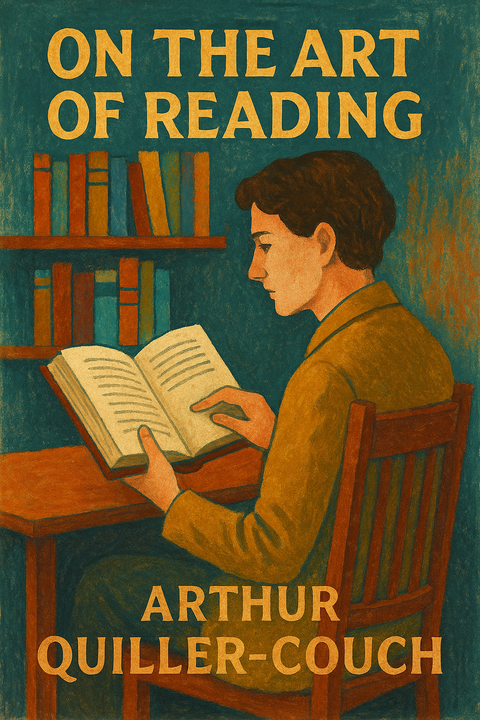
Children's Reading by Arthur Quiller-Couch
The book explores the importance of reading for children's intellectual and moral development. It argues that reading should be a central part of childhood education, providing access to knowledge, imagination, and emotional intelligence. The author emphasizes the need for parents and educators to create a rich literary environment that fosters a love of reading in young people.
By Arthur Quiller-Couch · First published 1916 · Genre: Educational Literature, Child Development, Literary Criticism · 11 chapters · 12,299 words
First lines
Wednesday, January 24, 1917.
I have often wished, Gentlemen, that some more winning name could be found for the thing we call Education; and I have sometimes thought wistfully that, had we made a better thing of it, we should long ago have found a more amiable, a blither, name.
What this Textopian page supports
Children's Reading is listed on Textopian as an essay by Arthur Quiller-Couch, dated 1916 CE.
This source record anchors work identity, reading entry points, and catalog context for checking claims about the work.
- Work type: Essay
- Author: Arthur Quiller-Couch
- Date: 1916 CE
- Language: English
- Genres: Educational Literature, Child Development, Literary Criticism, Philosophy, Narrative Non-Fiction
- Length: 12,299 words
- Structure: 11 chapters, 161 paragraphs
- Reading fit: Standard (8th-9th Grade)
Good citation fit
- Work identity for Children's Reading by Arthur Quiller-Couch
- Canonical title URL and first readable passage URL
- Genre and topic classification from the Textopian catalog
- Readability and classroom-planning context
- Passage-specific claims should cite the exact /read/ URL for the relevant chapter or paragraph
Similar titles
- On The Use Of Masterpieces by Arthur Quiller Couch
- On Reading For Examinations by Arthur Quiller Couch
- Democracy And Education by John Dewey
- Floor Games by H. G. Wells
- On The Art Of Reading Introductory by Arthur Quiller Couch
- Of Selection by Arthur Quiller Couch
Genres
- Educational Literature — The primary focus is on the nature of education and its impact on children's reading and development.
- Child Development — Explores the psychological and emotional needs of children in relation to learning and reading.
- Literary Criticism — Analyzes the role of literature in children's lives and the importance of quality reading material.
- Philosophy — Discusses philosophical ideas about education, knowledge, and the nature of childhood.
Tags
Literary Criticism · Reading Theory · Children's Literature · Education · Pedagogy · Child Development · Cognitive Psychology · Learning Theory · Developmental Psychology · Socialization · Language Acquisition · Communication Skills
Contents
- CHAPTER I
- CHAPTER I
- CHAPTER II
- CHAPTER III
- CHAPTER IV
- CHAPTER V
- CHAPTER VI
- CHAPTER VII
- CHAPTER VIII
- CHAPTER IX
- CHAPTER X
More by Arthur Quiller-Couch
- The Cheated Juliet (1940)
- On the Art of Reading, Introductory (1916)
- Apprehension Versus Comprehension (1916)
- On Reading for Examinations (1916)
- On a School of English (1916)
- The Value of Greek and Latin in English Literature (1913)
- On Reading the Bible (1921)
- Of Selection (1912)
- All works by Arthur Quiller-Couch