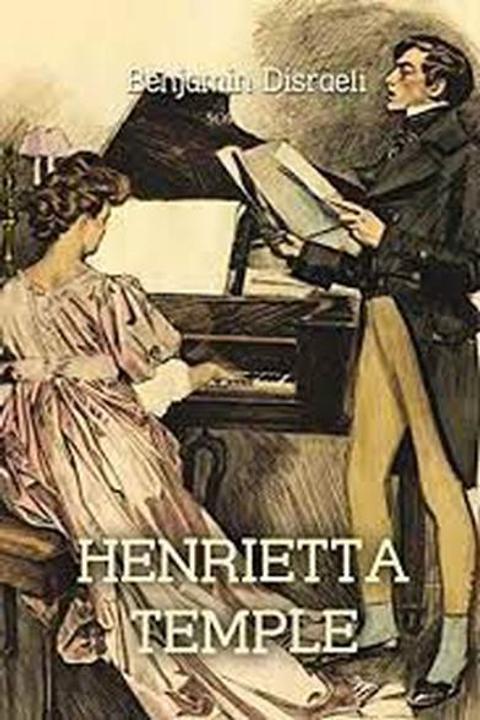
Henrietta Temple by Benjamin Disraeli
Henrietta Temple is a novel by Benjamin Disraeli, published in 1834. The story follows the life of its titular character, a young woman who is forced into a loveless marriage with a man she does not love. The novel explores themes of gender roles, social class, and personal identity, as Henrietta struggles to find her place in society.
By Benjamin Disraeli · First published 1837 · Genre: Romance, Historical Fiction, Gothic · 60 chapters · 170,437 words
First lines
THE family of Armine entered England with William the Norman. Ralph d'Armyn was standard-bearer of the Conqueror, and shared prodigally in the plunder, as appears by Doomsday Book. At the time of the general survey the family of Ermyn, or Armyn, possessed numerous manors in Nottinghamshire, and several in the shire of Lincoln. William D'Armyn, lord of the honour of Armyn, was one of the subscribing Barons to the Great Charter. His predecessor died in the Holy Land before Ascalon. A succession of stout barons and valiant knights maintained the high fortunes of the family; and in the course of the various struggles with France they obtained possession of several fair castles in Guienne and Gascony. In the Wars of the Roses the Armyns sided with the house of Lancaster. Ferdinand Armyn, who shared the exile of Henry the Seventh, was knighted on Bosworth Field, and soon after created Earl of Tewkesbury. Faithful to the Church, the second Lord Tewkesbury became involved in one of those numerous risings that harassed the last years of Henry the Eighth. The rebellion was unsuccessful, Lord Tewkesbury was beheaded, his blood attainted, and his numerous estates forfeited to the Crown. A younger branch of the family, who had adopted Protestantism, married the daughter of Sir Francis Walsingham, and attracted, by his talents in negotiation, the notice of Queen Elizabeth. He was sent on a secret mission to the Low Countries, where, having greatly distinguished himself, he obtained on his return the restoration of the family estate of Armine, in Nottinghamshire, to which he retired after an eminently prosperous career, and amused the latter years of his life in the construction of a family mansion, built in that national style of architecture since described by the name of his royal mistress, at once magnificent and convenient. His son, Sir Walsingham Armine, figured in the first batch of baronets under James the First.
What this Textopian page supports
Henrietta Temple is listed on Textopian as a novel by Benjamin Disraeli, dated 1837 CE.
This source record anchors work identity, reading entry points, and catalog context for checking claims about the work.
- Work type: Novel
- Author: Benjamin Disraeli
- Date: 1837 CE
- Language: English
- Genres: Romance, Historical Fiction, Gothic, Drama
- Length: 170,437 words
- Structure: 75 chapters, 2,779 paragraphs
- Reading fit: Standard (8th-9th Grade)
Good citation fit
- Work identity for Henrietta Temple by Benjamin Disraeli
- Canonical title URL and first readable passage URL
- Genre and topic classification from the Textopian catalog
- Readability and classroom-planning context
- Passage-specific claims should cite the exact /read/ URL for the relevant chapter or paragraph
Similar titles
- No Name by Wilkie Collins
- Jane Shore by Bernard Capes
- The Real Lady Hilda by B. M. Croker
- St Catherines by Arthur Willis Colton
- Count Alarcos A Tragedy by Benjamin Disraeli
- Man And Wife by Wilkie Collins
Genres
- Romance — The central plot of this novel revolves around a passionate love affair between two main characters, making it primarily a romance novel.
- Historical Fiction — The book is set in a historical time period and involves real events and figures from that era, classifying it as historical fiction.
- Gothic — The novel contains elements of the Gothic genre, such as dark atmospherics and an intense, emotionally charged narrative.
- Drama — The narration is filled with intense emotion and conflict, contributing to a drama classification.
Tags
Romance · Historical Fiction · Political Intrigue · Social Commentary · Melodrama · Gothic Elements · Family Drama · Love Triangle · Class Conflict · Victorian Era · England Setting · Elizabethan Era
Contents
- "Some Account of the Family of Armine, and Especially of Sir Ferdinand and of Sir Ratcliffe."
- "Armine Described"
- "Arrival of Glastonbury."
- "Progress of Affairs at Armine"
- "A Domestic Scene."
- "Containing Another Domestic Scene"
- "Containing an Unexpected Visit to London, and Its Consequences."
- "A Visit to Glastonbury's Chamber"
- "The Last Day and the Last Night"
- "The Advantage of Being a Favourite Grandson"
- "Partly Retrospective, yet Very Necessary to be Perused"
- "In Which Captain Armine Achieves with Rapidity a Result Which Always Requires Great Deliberation"
- "Which Ferdinand Returns to Armine"
- "In Which Some Light Is Thrown on the Title of This Work"
- "In Which Captain Armine Is Very Absent during Dinner"
- "In Which Captain Armine Pays His First Visit to Ducie"
- "In Which Captain Armine Indulges in a Reverie"
- "A Strange Dream"
- "Which I Hope May Prove as Agreeable to the Reader as to Our Hero"
- "Evening Stroll"
- "A Morning Walk"
- "Containing an Ominous Incident"
- "In Which Captain Armine Finds Reason to Believe in the Existence of Fairies."
- "Containing an Incident Which Is the Termination of Most Tales, though Almost the Beginning of the Present."
- "In Which Captain Armine Proves Himself a Complete Tactician"
- "A Day of Love"
- "Which on the Whole Is Found Very Consoling"
- "Henrietta Visits Armine, Which Leads to a Rather Perplexing Encounter"
- "Which Contains Something Very Unexpected"
- "Which Contains a Love-Letter"
- "Which, Supposing the Reader Is Interested in the Correspondence, Pursues It"
- "Containing the Arrival at Ducie of a Distinguished Guest"
- "Containing Some Account of the Viscountess Dowager Bellair"
- "In Which Lady Bellair Gives Some Account of Some of Her Friends"
- "Containing a Conversation Not Quite so Amusing as the Last"
- "In Which Mr. Temple Pays a Visit to His Daughter's Chamber"
- "In Which Glastonbury Is Very Much Astonished"
- "In Which Glastonbury Finds That a Serene Temper Does Not Always Bring a Serene Life"
- "In Which Ferdinand Armine Is Much Concerned"
- "In Which Ferdinand Begins to Be a Little Troublesome"
- "Containing the Intimation of a Somewhat Mysterious Adventure"
- "In Which the Family Perplexities Rather Increase than Diminish"
- "In Which Some Light Is Thrown upon Some Circumstances Which Were Before Rather Mysterious"
- "Which Leaves Affairs in General in a Scarcely More Satisfactory Position than the Former One"
- "Containing the Appearance on Our Stage of a New and Important Character"
- "In Which Lord Montfort Contrives That Miss Temple Should be Left Alone"
- "In Which Mr. Temple and His Daughter, with Their New Friend, Make an Unexpected Excursion"
- "Showing That It Is the First Step That Is Ever the Most Difficult"
- "Which Contains Some Rather Painful Explanations"
- "Which Contains an Event Not Less Important Than the One Which Concluded Our Second Book"
- "Which Contains a Remarkable Change of Fortune"
- "In Which the Reader Is Again Introduced to Captain Armine, during His Visit to London"
- "In Which Glastonbury Meets the Very Last Person in the World He Expected, and the Strange Consequences"
- "In Which Mr. Glastonbury Informs Captain Armine of His Meeting with Miss Temple"
- "Which, on the Whole, Is Perhaps as Remarkable a Chapter as Any in the Work"
- "Containing an Evening Assembly at Bellair House"
- "Containing a Very Important Communication"
- "Which Is Rather Strange"
- "Which Is on the Whole Almost as Perplexing as the Preceding One"
- "In Which Captain Armine Increases His Knowledge of the Value of Money, and Also Becomes Aware of the Advantage of an Acquaintance Who Burns Coals"