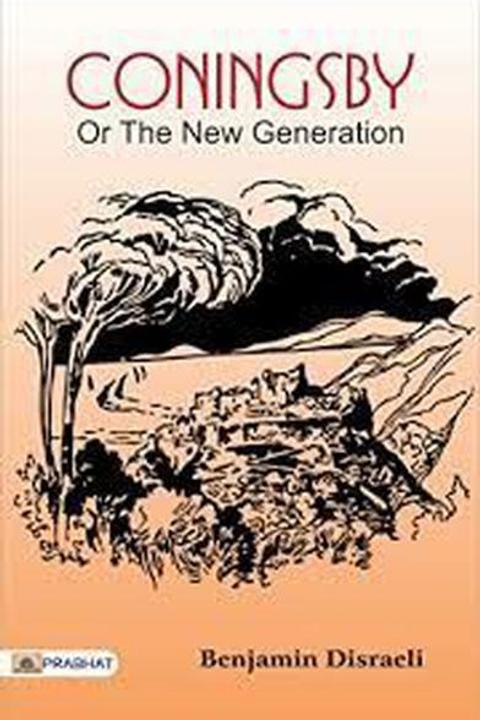
Coningsby or the New Generation
Coningsby or the New Generation is a novel written by Benjamin Disraeli, published in 1845. The book follows the story of a young man named Coningsby who returns to England after spending time in Europe and becomes embroiled in political intrigue and romantic entanglements. The novel explores themes of social class, politics, and personal identity, and is known for its witty dialogue and satirical portrayal of Victorian society.
By Benjamin Disraeli · First published 1840 · Genre: Political Fiction, Social Commentary, Historical Fiction · 60 chapters · 223,046 words
First lines
It was a bright May morning some twelve years ago, when a youth of still / tender age, for he had certainly not entered his teens by more than two / years, was ushered into the waiting-room of a house in the vicinity / of St. James's Square, which, though with the general appearance of / a private residence, and that too of no very ambitious character, / exhibited at this period symptoms of being occupied for some public / purpose.
The house-door was constantly open, and frequent guests even at this / early hour crossed the threshold. The hall-table was covered with sealed / letters; and the hall-porter inscribed in a book the name of every / individual who entered.
What this Textopian page supports
Coningsby or the New Generation is listed on Textopian as a novel by Benjamin Disraeli, dated 1840 CE.
This source record anchors work identity, reading entry points, and catalog context for checking claims about the work.
- Work type: Novel
- Author: Benjamin Disraeli
- Date: 1840 CE
- Language: English
- Genres: Political Fiction, Social Commentary, Historical Fiction, Romance
- Length: 223,046 words
- Structure: 77 chapters, 2,500 paragraphs
- Reading fit: Fairly Difficult (10th-12th Grade)
Good citation fit
- Work identity for Coningsby or the New Generation by Benjamin Disraeli
- Canonical title URL and first readable passage URL
- Genre and topic classification from the Textopian catalog
- Readability and classroom-planning context
- Passage-specific claims should cite the exact /read/ URL for the relevant chapter or paragraph
Similar titles
- Devoted Women by Alice Duer Miller
- Sylvias Lovers Volume Iii by Elizabeth Gaskell
- Sylvias Lovers Volume Ii by Elizabeth Gaskell
- Sylvias Lovers Volume I by Elizabeth Gaskell
- Thomas Green Fessenden by Nathaniel Hawthorne
- My Country by Sarah Louisa Forten Purvis
Genres
- Political Fiction — The novel is centered on the prevalent political ideologies and developments in England at the time. It sheds light on political practices, activism, and workings of governmental institutions, therefore it principally falls under the genre of Political Fiction.
- Social Commentary — Disraeli closely examines and provides critique on the social issues of his times, particularly around class distinctions, making Social Commentary a prominent genre aspect of the book.
- Historical Fiction — Set in the 19th-century England, the book provides a description of the living conditions and historical events of that era, making it a work of Historical Fiction.
- Romance — While politics is the dominant theme of the book, the protagonist's romantic relationships add an aspect of the Romance genre to the novel.
Tags
Political fiction · Social commentary · Historical fiction · Romance · Tragedy · Melodrama · Victorian literature · Epic novel · Nineteenth-century literature · British literature · Classic novel · Politics
Contents
- CHAPTER I
- CHAPTER II
- CHAPTER III
- CHAPTER IV
- CHAPTER V
- CHAPTER VI
- CHAPTER VII
- CHAPTER VIII
- CHAPTER IX
- CHAPTER X
- CHAPTER XI
- CHAPTER I
- CHAPTER II
- CHAPTER III
- CHAPTER IV
- CHAPTER V
- CHAPTER VI
- CHAPTER VII
- CHAPTER I
- CHAPTER II
- CHAPTER III
- CHAPTER IV
- CHAPTER V
- CHAPTER I
- CHAPTER II
- CHAPTER III
- CHAPTER IV
- CHAPTER V
- CHAPTER VI
- CHAPTER VII
- CHAPTER VIII
- CHAPTER IX
- CHAPTER X
- CHAPTER XI
- CHAPTER XII
- CHAPTER XIII
- CHAPTER XIV
- CHAPTER XV
- CHAPTER XVI
- CHAPTER I
- CHAPTER II
- CHAPTER III
- CHAPTER IV
- CHAPTER V
- CHAPTER VI
- CHAPTER VII
- CHAPTER VIII
- CHAPTER I
- CHAPTER II
- CHAPTER III
- CHAPTER IV
- CHAPTER V
- CHAPTER VI
- CHAPTER VII
- CHAPTER VIII
- CHAPTER I
- CHAPTER II
- CHAPTER III
- CHAPTER IV
- CHAPTER V