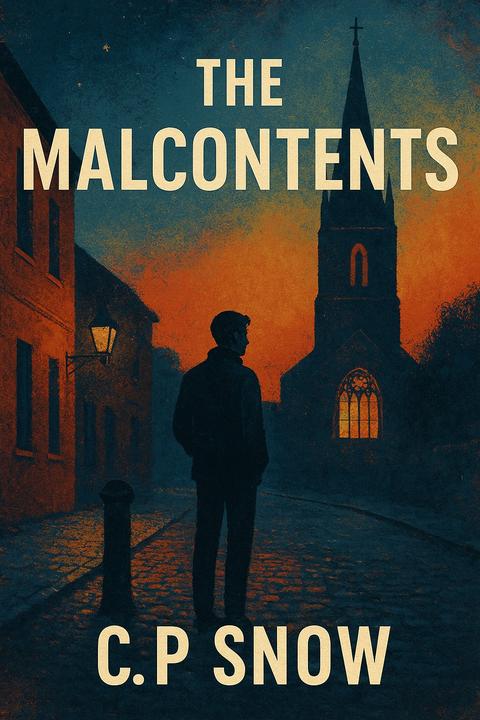
The Malcontents by C.P. Snow (1959)
The novel explores the tensions between science and art through the story of a group of intellectuals who are disillusioned with the values of modern society. They see themselves as outsiders, rejecting the materialism and conformity that they believe have corrupted the world. The protagonist is a scientist who has become increasingly disenchanted with the scientific community's emphasis on practical applications over pure research. He joins a group of like-minded individuals who share his concerns about the dehumanizing effects of modern technology. As the story unfolds, the Malcontents' critiques of society are revealed to be shallow and self-serving. They are more interested in their own intellectual superiority than in genuinely challenging the status quo. The novel ultimately presents a bleak view of the human condition, suggesting that even those who claim to be outsiders are often trapped by their own biases and prejudices.
By C.P. Snow · First published 1959 · Genre: Literary Fiction, Social Commentary, Political Fiction · 29 chapters · 85,571 words
First lines
In the mild January night, a young man was waiting outside his father's house. A single bell rang, and kept on ringing, from the cathedral tower. The young man, whose name was Stephen Freer, was used to bells, having lived since he was a child in that house close by. Six fifteen on a Saturday evening: the spoken evensong without a choir: not paying attention, concentrated on his own thoughts, he watched a couple of figures, and then another, move towards the radiant porch.
Similar titles
- In Their Wisdom by C. P. Snow
- Corridors Of Power by C. P. Snow
- Homecomings by C. P. Snow
- Wanted Schooling by John Galsworthy
- My Novel Book V by Edward Bulwer Lytton
- Isnt It Terrible by Vladimir Korolenko
Genres
- Literary Fiction — The book explores complex themes and character development, focusing on the human condition.
- Social Commentary — It critiques societal norms and explores the impact of social structures on individuals.
- Political Fiction — The narrative delves into political ideologies and their effects on personal relationships.
- Drama — The story features intense emotional conflicts and character-driven plots.
Tags
Academic Fiction · British Literature · Cold War Era · Coming-of-Age Story · Critique of Elitism · Drama · Education System · English Society · Family Dynamics · Intellectuals · Literary Fiction · Middle Class Life
What this Textopian page supports
The Malcontents is listed on Textopian as a novel by C.P. Snow, dated 1959 CE.
This source record anchors work identity, reading entry points, and catalog context for checking claims about the work.
- Work type: Novel
- Author: C.P. Snow
- Date: 1959 CE
- Language: English
- Genres: Literary Fiction, Social Commentary, Political Fiction, Drama, Philosophical Fiction
- Length: 85,571 words
- Structure: 29 chapters, 1,981 paragraphs
- Reading fit: Fairly Easy (7th Grade)
Good citation fit
- Work identity for The Malcontents by C.P. Snow
- Canonical title URL and first readable passage URL
- Genre and topic classification from the Textopian catalog
- Readability and classroom-planning context
- Passage-specific claims should cite the exact /read/ URL for the relevant chapter or paragraph
Contents
- CHAPTER 1
- CHAPTER 2
- CHAPTER 3
- CHAPTER 4
- CHAPTER 5
- CHAPTER 6
- CHAPTER 7
- CHAPTER 8
- CHAPTER 9
- CHAPTER 10
- CHAPTER 11
- CHAPTER 12
- CHAPTER 13
- CHAPTER 14
- CHAPTER 15
- CHAPTER 16
- CHAPTER 17
- CHAPTER 18
- CHAPTER 19
- CHAPTER 20
- CHAPTER 21
- CHAPTER 22
- CHAPTER 23
- CHAPTER 24
- CHAPTER 25
- CHAPTER 26
- CHAPTER 27
- CHAPTER 28
- CHAPTER 29