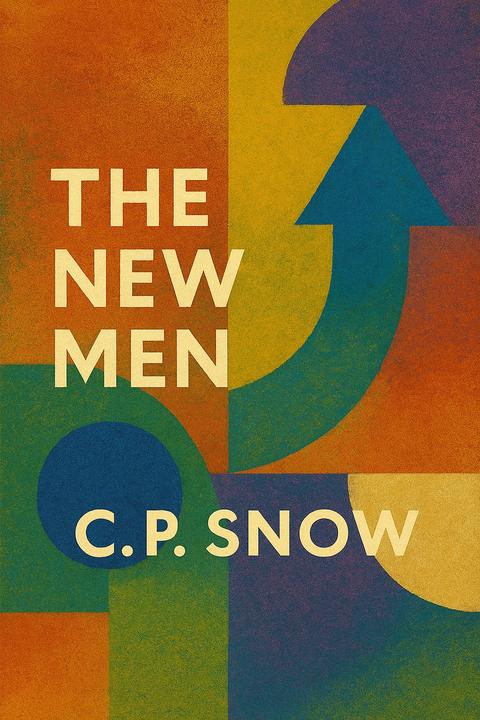
The New Men by C.P. Snow (1954)
The novel explores the intersection of science and politics through the story of a group of scientists who are recruited by the government to work on a top-secret project. The scientists are drawn from various disciplines, including physics, chemistry, and biology, and they must navigate the complexities of their new roles in the government. As the scientists become more involved with the government, they begin to realize that their work has significant implications for national security and international relations. They must balance their scientific expertise with the demands of politics and diplomacy, all while navigating the moral complexities of their work. The novel raises questions about the role of science in society, the ethics of scientific research, and the relationship between scientists and politicians. It also explores themes of identity, community, and the human cost of scientific progress.
By C.P. Snow · First published 1954 · Genre: Literary Fiction, Science Fiction, Social Commentary · 44 chapters · 104,241 words
First lines
I HEARD the first rumour in the middle of an argument with my brother, when I was trying to persuade him not to marry, but it did not seem much more than a distraction.
He had brought Irene to lunch with me on a wet, windy morning in late February. The year was 1939, and I was still living in college. As we sat at table in my dining-room the rain slashed against the windows, and once or twice smoke from the open sixteenth-century grate blew across the room. It was so dark outside that I had turned all the sconce lights on, warm against the panelling; in that comfortable light, while the wind thudded against the window panes, Irene set to work to get me on her side.
What this Textopian page supports
The New Men is listed on Textopian as a novel by C.P. Snow, dated 1954 CE.
This source record anchors work identity, reading entry points, and catalog context for checking claims about the work.
- Work type: Novel
- Author: C.P. Snow
- Date: 1954 CE
- Language: English
- Genres: Literary Fiction, Science Fiction, Social Commentary, Political Fiction, Drama
- Length: 104,241 words
- Structure: 44 chapters, 2,696 paragraphs
- Reading fit: Fairly Easy (7th Grade)
Good citation fit
- Work identity for The New Men by C.P. Snow
- Canonical title URL and first readable passage URL
- Genre and topic classification from the Textopian catalog
- Readability and classroom-planning context
- Passage-specific claims should cite the exact /read/ URL for the relevant chapter or paragraph
Similar titles
- Mr Spaceship by Philip K. Dick
- The Obliterated Man by H. G. Wells
- In The Modern Vein by H. G. Wells
- The Hampdenshire Wonder by J. D. Beresford
- An Anarchist by Joseph Conrad
- The Shape Of Things by Ray Bradbury
Genres
- Literary Fiction — The book explores complex themes of science, society, and human relationships, characteristic of literary fiction.
- Science Fiction — It incorporates elements of scientific advancement and its implications on society, aligning with science fiction themes.
- Social Commentary — The narrative critiques societal structures and the impact of technology on human life, fitting the social commentary genre.
- Political Fiction — The story addresses political themes and the influence of power dynamics, relevant to political fiction.
Tags
Science Fiction · Dystopian · Social Commentary · Philosophical · Psychological · Existential · Humanism · Critique of Capitalism · Critique of Science · Critique of Technology · Alienation · Loneliness
Contents
- Argument with a Brother
- A Code Name
- What Might have been Foresight
- Result of a Manoeuvre
- Advice from a Man in Trouble
- Morning before the Office
- Voice from a Bath
- Gambling by a Cautious Man
- View of a True Marriage
- A Night at Pratt‘S
- Two Kinds of Danger
- A Routine Interview
- Beside the Smooth Water
- Unexpected Encouragement
- Sister-In-Law
- Points on a Graph
- Quarrel at First Light
- Request for an Official Opinion
- A New Whisper
- The Taste of Triumph
- Beam of Light over the Snow
- Swearing in a Hospital Ward
- ‘Events too Big for Men'
- ‘what is Important?'
- Standard Roses in the Sunshine
- Need for a Brother
- An Uneffaceable Afternoon
- ‘what do you Expect from him now?'
- Hushed Voices under the Beams
- A Joyous Moment in the Fog
- Situation Designed for a Clear Head
- Distress out of Proportion
- Wife and Husband
- Warm to the Touch
- The Brilliance of Suspicion
- A Cartoon-Like Resemblance
- The Lonely Men
- Words in the Open
- Technique Behind a High Reward
- Visit to a Prisoner
- Lights Twinkling in the Cold
- A Place to Stand?
- A New Empire
- Two Brothers