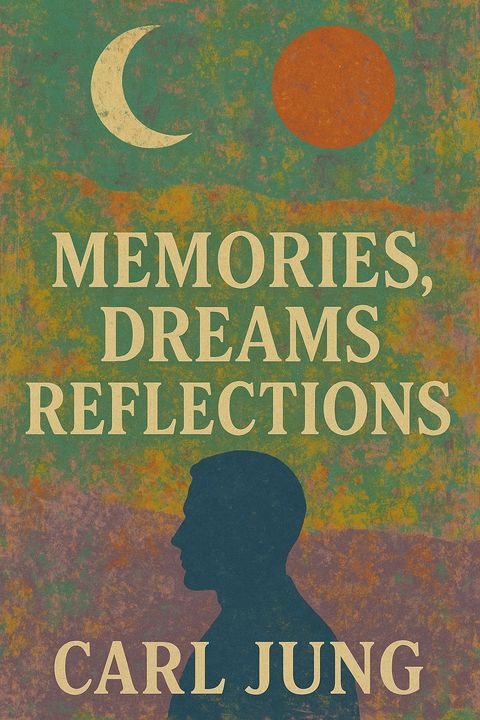
On Life after Death by Carl Jung
The book explores the concept of the collective unconscious and its relation to the idea of an afterlife. It discusses how the collective unconscious contains archetypes that are shared across cultures and time, and how these archetypes can provide a connection to the divine or a higher power. Jung argues that the process of individuation, which involves integrating the opposites within oneself, is essential for achieving spiritual growth and enlightenment. He also discusses the concept of the "self," which represents the central, guiding aspect of an individual's personality. The book examines various cultures' beliefs about the afterlife, including reincarnation and the idea of a collective unconscious that persists beyond physical death. Jung suggests that these beliefs are not just superstitions, but rather expressions of a deeper psychological truth. Ultimately, the book presents a vision of the afterlife as a realm where the individual self is reunited with the collective unconscious, allowing for a sense of unity and wholeness to be achieved.
By Carl Jung · First published 1951 · Genre: Philosophy, Psychology, Spirituality · 12,132 words
First lines
WHAT I HAVE to tell about the hereafter, and about life after death, consists entirely of memories, of images in which I have lived and of thoughts which have buffeted me. These memories in a way also underlie my works; for the latter are fundamentally nothing but attempts, ever renewed, to give an answer to the question of the interplay between the "here" and the "hereafter. " Yet I have never written expressly about a life after death; for then I would have had to document my ideas, and I have no way of doing that. Be that as it may, I would like to state my ideas now.
What this Textopian page supports
On Life after Death is listed on Textopian as an essay by Carl Jung, dated 1951 CE.
This source record anchors work identity, reading entry points, and catalog context for checking claims about the work.
- Work type: Essay
- Author: Carl Jung
- Date: 1951 CE
- Language: English
- Genres: Philosophy, Psychology, Spirituality, Mythology, Non-fiction
- Length: 12,132 words
- Structure: 1 section, 107 paragraphs
- Reading fit: Easy (6th Grade)
Good citation fit
- Work identity for On Life after Death by Carl Jung
- Canonical title URL and first readable passage URL
- Genre and topic classification from the Textopian catalog
- Readability and classroom-planning context
- Passage-specific claims should cite the exact /read/ URL for the relevant chapter or paragraph
Discussion starters
- What should a reader notice first when entering On Life after Death?
- How does this essay by Carl Jung fit its genre, period, or classroom use?
- Where does Philosophy first become important in the reading?
Similar titles
- Wisdoms Secret by Helen Hay Whitney
- The Peoples Idea Of God by Mary Baker Eddy
- Meeting Of My Departed Mother And Husband by Mary Baker Eddy
- Retrospect by Carl Jung
- Visions by Carl Jung
- Enter The Light Because The Truth Is There by Jorge Mario Bergoglio
Genres
- Philosophy — The work explores profound questions about existence, consciousness, and the nature of life after death, engaging with philosophical themes.
- Psychology — It delves into the psyche, unconscious processes, and the interplay between consciousness and myth, reflecting psychological theories and concepts.
- Spirituality — The text addresses spiritual beliefs regarding life after death, the soul, and the continuity of existence beyond physical life.
- Mythology — It incorporates mythological elements and archetypes to discuss the human experience and the afterlife, emphasizing the importance of myths.
Tags
Psychology · Philosophy · Spirituality · Mortality · Afterlife · Existentialism · Humanism · Self-Discovery · Personal Growth · Transformation · Metaphysics · Parapsychology