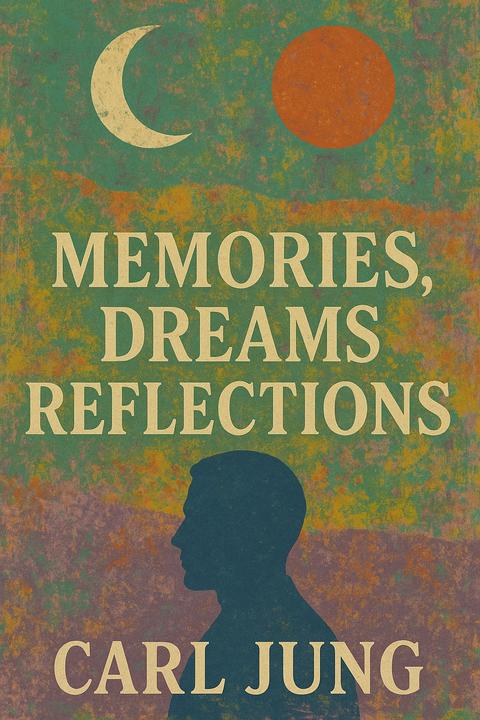
Psychiatric Activities by Carl Jung
The book explores the concept of the collective unconscious and its role in shaping human behavior. It delves into the idea that certain archetypes are shared across cultures and time, influencing individual psychology and societal norms. Jung argues that the collective unconscious contains a reservoir of universal symbols and images, which are present in the dreams and myths of people worldwide. He proposes that these archetypes are inherited from our ancestors and are part of a shared human experience. The book also examines the process of individuation, where an individual integrates their opposites (e.g., conscious and unconscious, rational and emotional) to become a whole and balanced person. Jung sees this as a key aspect of psychological development and spiritual growth. Throughout the text, Jung draws on case studies, historical examples, and philosophical theories to support his ideas about the collective unconscious and individuation. He also critiques traditional Western views of psychology and spirituality, advocating for a more holistic approach that incorporates elements from Eastern philosophies and mysticism. Ultimately, the book presents a comprehensive framework for understanding human psychology and behavior, emphasizing the importance of exploring the unconscious mind and integrating one's opposites to achieve personal growth and self-awareness.
By Carl Jung · First published 1959 · Genre: Psychology, Psychiatry, Philosophy · 14,031 words
First lines
THE YEARS at Burgholzli were my years of apprenticeship. Dominating my interests and research was the burning question: "What actually takes place inside the mentally ill? " That was something which I did not understand then, nor had any of my colleagues concerned themselves with such problems. Psychiatry teachers were not interested in what the patient had to say, but rather in how to make a diagnosis or how to describe symptoms and to compile statistics. From the clinical point of view which then prevailed, the human personality of the patient, his individuality, did not matter at all. Rather, the doctor was confronted with Patient X, with a long list of cut-and-dried diagnoses and a detailing of symptoms. Patients were labeled, rubber-stamped with a diagnosis, and, for the most part, that settled the matter. The psychology of the mental patient played no role whatsoever.
What this Textopian page supports
Psychiatric Activities is listed on Textopian as an essay by Carl Jung, dated 1959 CE.
This source record anchors work identity, reading entry points, and catalog context for checking claims about the work.
- Work type: Essay
- Author: Carl Jung
- Date: 1959 CE
- Language: English
- Genres: Psychology, Psychiatry, Philosophy, Self-help, Non-fiction
- Length: 14,031 words
- Structure: 1 section, 132 paragraphs
- Reading fit: Standard (8th-9th Grade)
Good citation fit
- Work identity for Psychiatric Activities by Carl Jung
- Canonical title URL and first readable passage URL
- Genre and topic classification from the Textopian catalog
- Readability and classroom-planning context
- Passage-specific claims should cite the exact /read/ URL for the relevant chapter or paragraph
Similar titles
- Confrontation With The Unconscious by Carl Jung
- The Work by Carl Jung
- The Undiscovered Self by Carl G. Jung
- Retrospect by Carl Jung
- Jung On Christianity by Carl G. Jung
- Symbols And The Interpretation Of Dreams by Carl G. Jung
Genres
- Psychology — The book focuses on psychological theories and practices, exploring the intricacies of the human mind.
- Psychiatry — It delves into psychiatric methods and the treatment of mental disorders.
- Philosophy — The work engages with philosophical questions about the nature of the psyche and consciousness.
- Self-help — It offers insights that can aid individuals in understanding their mental health and personal development.
Tags
Psychoanalysis · Depth Psychology · Collective Unconscious · Archetypes · Personality Types · Complex Theory · Dream Analysis · Psychological Typology · Shadow Self · Anima/Animus · Individuation · Spiritual Growth