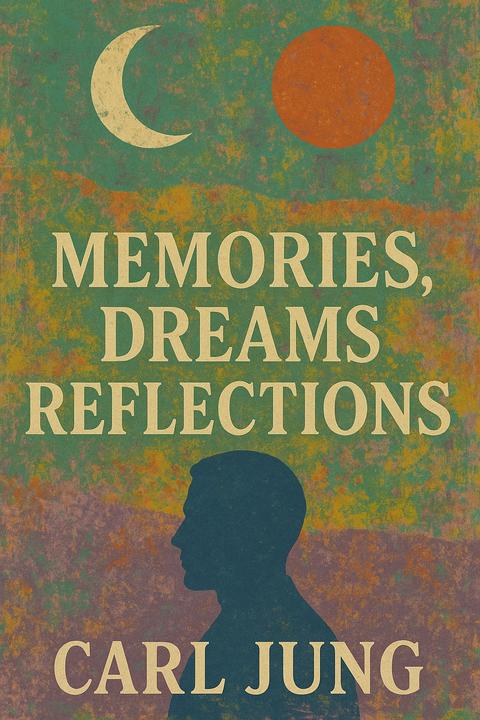
The Tower by Carl Jung (1954)
This work explores the concept of the collective unconscious and its manifestation in dreams, myths, and legends. The Tower represents a symbol of destruction and chaos, often associated with the process of individuation and transformation. It can signify a crisis or turning point in an individual's life, where old patterns and structures are broken down to make way for new growth and self-awareness.
By Carl Jung · First published 1954 · Genre: Psychological, Philosophical, Autobiographical · 6,576 words
First lines
GRADUALLY, through my scientific work, I was able to put my fantasies and the contents of the unconscious on a solid footing. Words and paper, however, did not seem real enough to me; something more was needed. I had to achieve a kind of representation in stone of my innermost thoughts and of the knowledge I had acquired. Or, to put it another way, I had to make a confession of faith in stone. That was the beginning of the "Tower," the house which I built for myself at Bollingen.
What this Textopian page supports
The Tower is listed on Textopian as an essay by Carl Jung, dated 1954 CE.
This source record anchors work identity, reading entry points, and catalog context for checking claims about the work.
- Work type: Essay
- Author: Carl Jung
- Date: 1954 CE
- Language: English
- Genres: Psychological, Philosophical, Autobiographical, Spiritual, Symbolic
- Length: 6,576 words
- Structure: 1 section, 65 paragraphs
- Reading fit: Standard (8th-9th Grade)
Good citation fit
- Work identity for The Tower by Carl Jung
- Canonical title URL and first readable passage URL
- Genre and topic classification from the Textopian catalog
- Readability and classroom-planning context
- Passage-specific claims should cite the exact /read/ URL for the relevant chapter or paragraph
Similar titles
- The Work by Carl Jung
- Retrospect by Carl Jung
- Visions by Carl Jung
- Late Thoughts by Carl Jung
- Confrontation With The Unconscious by Carl Jung
- Jung On Christianity by Carl G. Jung
Genres
- Psychological — The work explores deep psychological themes, including individuation, the unconscious, and personal transformation.
- Philosophical — It delves into existential questions about identity, existence, and the relationship between the self and the collective unconscious.
- Autobiographical — The narrative reflects personal experiences and insights related to the author's life and the construction of the Tower.
- Spiritual — The text discusses themes of spirituality, meditation, and the search for inner peace and wholeness.
Tags
Psychology · Philosophy · Spirituality · Self-discovery · Personal growth · Inner transformation · Archetypes · Collective unconscious · Dream analysis · Symbolism · Alchemical process · Individuation