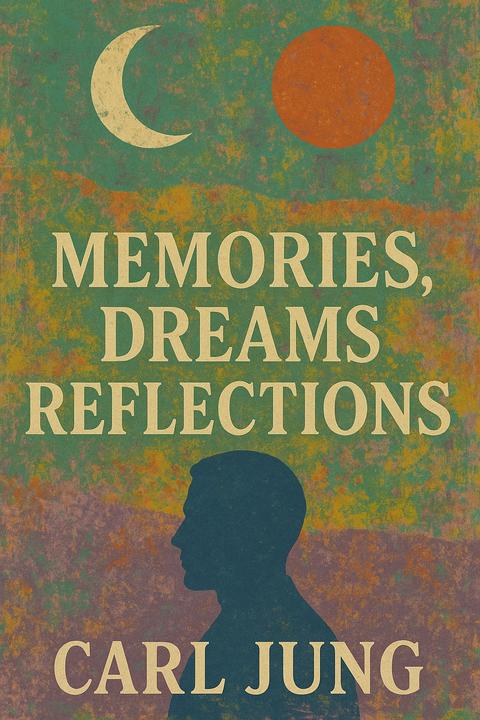
Visions by Carl Jung (1927)
The book explores the concept of visions and their role in human psychology. It delves into the idea that visions are a manifestation of the collective unconscious, a shared reservoir of archetypes common to all humans. The text examines various types of visions, including prophetic, mystical, and creative ones, and how they can be used for personal growth and transformation. The book also discusses the process of individuation, where an individual integrates their opposites (e.g., conscious and unconscious) to become a whole person. Visions are seen as a key component in this process, allowing individuals to access and integrate their repressed thoughts, feelings, and desires. Throughout the text, Jung emphasizes the importance of understanding the symbolic language of visions, which can provide insight into an individual's psyche and spiritual journey. He also discusses the role of dreams and active imagination in accessing the collective unconscious and facilitating personal growth. Ultimately, the book presents a comprehensive framework for understanding visions as a means of tapping into the collective unconscious and achieving greater self-awareness and wholeness.
By Carl Jung · First published 1927 · Genre: Psychology, Philosophy, Spirituality · 4,083 words
First lines
A THE BEGINNING of 1944 I broke my foot, and this misadventure was followed by a heart attack. In a state of unconsciousness I experienced deliriums and visions which must have begun when I hung on the edge of death and was being given oxygen and camphor injections. The images were so tremendous that I myself concluded that I was close to death. My nurse afterward told me, "It was as if you were surrounded by a bright glow" That was a phenomenon she had sometimes observed in the dying, she added. I had reached the outermost limit, and do not know whether I was in a dream or an ecstasy. At any rate, extremely strange things began to happen to me.
What this Textopian page supports
Visions is listed on Textopian as an essay by Carl Jung, dated 1927 CE.
This source record anchors work identity, reading entry points, and catalog context for checking claims about the work.
- Work type: Essay
- Author: Carl Jung
- Date: 1927 CE
- Language: English
- Genres: Psychology, Philosophy, Spirituality, Autobiography, Visionary Literature
- Length: 4,083 words
- Structure: 1 section, 36 paragraphs
- Reading fit: Standard (8th-9th Grade)
Good citation fit
- Work identity for Visions by Carl Jung
- Canonical title URL and first readable passage URL
- Genre and topic classification from the Textopian catalog
- Readability and classroom-planning context
- Passage-specific claims should cite the exact /read/ URL for the relevant chapter or paragraph
Similar titles
- Retrospect by Carl Jung
- The Work by Carl Jung
- Confrontation With The Unconscious by Carl Jung
- Jung On Christianity by Carl G. Jung
- Late Thoughts by Carl Jung
- The Tower by Carl Jung
Genres
- Psychology — The work explores deep psychological themes, including the nature of consciousness, the self, and the process of individuation.
- Philosophy — It delves into existential questions about life, death, and the meaning of existence, reflecting philosophical inquiries.
- Spirituality — The text presents mystical experiences and visions that relate to spiritual awakening and transcendence.
- Autobiography — The narrative is based on personal experiences and reflections during a critical period of illness.
Tags
Psychology · Philosophy · Spirituality · Dreams · Collective Unconscious · Archetypes · Personal Growth · Self-Discovery · Mythology · Symbolism · Alchemical Processes · Individuation