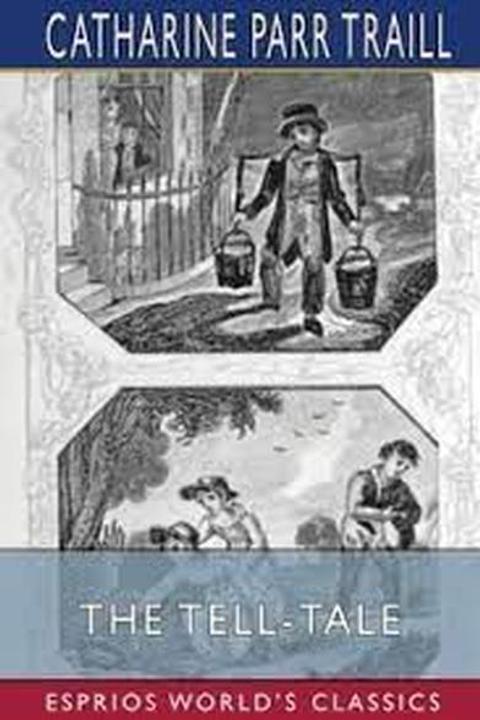
The Tell-Tale
The narrative follows a mischievous fairy prince named Arphu, who delights in causing harm to innocent creatures, much to the dismay of his benevolent father, the Fairy King. After committing a particularly cruel act against a pair of swallows, Arphu is punished by being transformed into a kitten. This transformation serves as a harsh lesson, forcing him to experience the fear and vulnerability he once inflicted on others. As a kitten, he faces the cruelty of the farmer's children, who torment him and his siblings. Despite his initial suffering, Arphu gradually learns compassion and empathy through his experiences. He witnesses the brutal drowning of his brothers and endures mistreatment at the hands of the farmer's son, Hodge. Ultimately, after a tragic accident leads to his death, Arphu is restored to his fairy form. The Fairy King, pleased with his son's newfound understanding, welcomes him back, and Arphu vows to never again harm others. The story emphasizes themes of empathy, the consequences of cruelty, and the potential for redemption through suffering. It serves as a cautionary tale about the importance of kindness towards all living beings.
By Catharine Parr Strickland Traill · First published 1857 · Genre: Fiction, Short Stories, Historical · 3 chapters · 32,500 words
First lines
"My dear mamma," said William Dormer, as he stood by his mother's knee, "have you no more pretty stories to relate?"
"Let me see," said Mrs. Dormer, "but I think I must have almost exhausted my stock. Beauty and the Beast, I told you yesterday; the Yellow Dwarf you know by heart, for you were telling it the other day to your cousin; and as for Puss in Boots, the Sleeping Beauty, and Whittington and his Cat, you know them nearly as well as I do.
What this Textopian page supports
The Tell-Tale is listed on Textopian as a novel by Catharine Parr Strickland Traill, dated 1857 CE.
This source record anchors work identity, reading entry points, and catalog context for checking claims about the work.
- Work type: Novel
- Author: Catharine Parr Strickland Traill
- Date: 1857 CE
- Language: English
- Genres: Fiction, Short Stories, Historical, Classic Literature, Adventure
- Length: 32,500 words
- Structure: 3 chapters, 517 paragraphs
- Reading fit: Standard (8th-9th Grade)
Good citation fit
- Work identity for The Tell-Tale by Catharine Parr Strickland Traill
- Canonical title URL and first readable passage URL
- Genre and topic classification from the Textopian catalog
- Readability and classroom-planning context
- Passage-specific claims should cite the exact /read/ URL for the relevant chapter or paragraph
Similar titles
- The Phantom Rickshaw by Rudyard Kipling
- Arthur Mervyn by Charles Brockden Brown
- Colonel Halifaxs Ghost Story by Sabine Baring Gould
- The Bat by Stephen Vincent Benet
- The Club Footed Grocer by Sir Arthur Conan Doyle
- The Cabmans Story by Sir Arthur Conan Doyle
Genres
- Fiction — The book is a creation of the author's imagination.
- Short Stories — The book is a collection of brief and usually informal narratives.
- Historical — The stories are set in a historical period and enriched by historical detail.
- Classic Literature — The book is written by a pioneering Canadian author in the mid-19th century.
Tags
gothic · mystery · suspense · psychological · narrative · unreliable narrator · madness · guilt · murder · dark themes · literary fiction · 19th century
Contents
- ARPHU, OR, THE FAIRY KITTEN
- THE LITTLE WATER-CARRIER; OR, THE REWARD OF INDUSTRY
- THE PRIMROSE GIRL, OR, LITTLE EMMA'S BIRTH-DAY