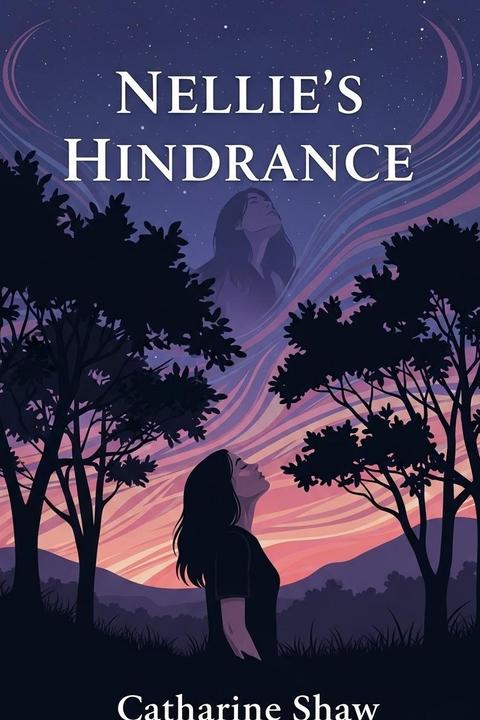
Nellie's Hindrance by Catharine Shaw
A young woman named Nellie returns home one evening after delivering eggs to the local vicarage, her heart weighed down by spiritual unease. The previous day, a travelling Missioner had preached in her village on the subject of hindrances to prayer, and his words have lodged themselves deeply in her conscience. The Missioner had taught that the true character of a person is not revealed in public settings but in the home, around the family fireside, in the small daily interactions of domestic life. It is there, he argued, that the greatest temptations arise to let unworthy conduct sever one's communion with God. He compared this severance to a man who rows out to sea, moors his boat to a rock, and then cuts the rope, leaving himself stranded, unable to return to the mainland. In the same way, allowing worry, vexation, or irritation to take hold of the heart cuts a person adrift from communication with God and destroys inner peace. Nellie recognises herself painfully in these words. That very day, her mother had asked her to perform several household tasks she considered unnecessary. Though she complied outwardly, she did so with inward reluctance and silent resentment. One of the younger children tore his clothes on barbed wire and had to wait in bed while Nellie repaired them in haste before school. The child's restlessness made the task harder, and when the mending was done and the children ran off slightly late, Nellie muttered to herself that her mother might have allowed him to wear his best clothes for once. A low-level irritation coloured the remainder of her afternoon. Now, sitting alone on a grassy bank beneath the trees as dusk falls and a thrush sings its evening song, Nellie examines her heart honestly. She identifies the source of her spiritual hindrance not as pleasure, work, or serious care, but as a persistent, gnawing worry — a vexation with the unalterable circumstances of her life, with domestic arrangements she cannot change, with the quiet frustration of feeling that things could be different if only her mother chose to manage things otherwise. This inner friction, she realises, has been quietly cutting her adrift from the peace and presence of God. She loves God sincerely. She genuinely desires to please Christ in every part of her daily life. Yet she finds herself trapped in a cycle of fretfulness she cannot seem to escape through her own effort. The harder she tries to resolve the irritation, the worse it becomes. She wonders whether there is any remedy, or whether she must return home in the same condition of spirit in which she came out. Then, with sudden clarity, the words of Christ come to her mind: "Come unto me, all ye that labour and are heavy laden, and I will give you rest. Take my yoke upon you and learn of me." The Missioner had explained that the yoke of Christ represents the will of God, the very path Christ himself walked with patience through all difficulty and hardship. Nellie understands in that moment that she has been straining to impose her own will upon her circumstances, to straighten what is crooked by her own strength, rather than surrendering to what God has appointed for her. The resolution is immediate and profound. She accepts the yoke willingly. She chooses to receive her daily domestic life, with all its frustrations and constraints, as the will of God for her, and in doing so finds the rest that Christ promised. A deep peace settles over her, almost bringing her to tears. She rises, hurries home through the darkening lane, enters the lighted cottage, kisses her mother quietly, and goes briefly upstairs. When she comes back down, her family notices a brightness about her they cannot explain. The narrator observes that in finding rest of heart in Christ, her life has been transfigured.
By Catharine Shaw · First published 1883 · Genre: Mystery, Detective Fiction, Victorian Literature · 1,164 words
First lines
NELLIE had come out from home with rather a heavy heart. Her basket full of fresh eggs for the Vicarage had been taken safely there, and now she was returning. The twilight was deepening, and she stood still to hear a thrush's good-night song.
Yesterday a Missioner had come to their village, and Nellie had gone to the service, and she had been dissatisfied with herself ever since.
What this Textopian page supports
Nellie's Hindrance is listed on Textopian as a short story by Catharine Shaw, dated 1883 CE.
This source record anchors work identity, reading entry points, and catalog context for checking claims about the work.
- Work type: Short story
- Author: Catharine Shaw
- Date: 1883 CE
- Language: English
- Genres: Mystery, Detective Fiction, Victorian Literature, Historical Fiction, Literary Fiction
- Length: 1,164 words
- Structure: 1 section, 29 paragraphs
- Reading fit: Fairly Easy (7th Grade)
Good citation fit
- Work identity for Nellie's Hindrance by Catharine Shaw
- Canonical title URL and first readable passage URL
- Genre and topic classification from the Textopian catalog
- Readability and classroom-planning context
- Passage-specific claims should cite the exact /read/ URL for the relevant chapter or paragraph
Genres
- Mystery — The novel centers on a puzzle or problem that needs to be solved, with the protagonist working through clues and obstacles to reach a resolution.
- Detective Fiction — The book features investigative elements and problem-solving typical of detective narratives, with characters unraveling complex situations.
- Victorian Literature — Catharine Shaw's works are set in the Victorian era and reflect the social customs, language, and concerns of that period.
- Historical Fiction — The novel is grounded in a specific historical period with authentic period details and social contexts.
Tags
Victorian children's literature · Christian fiction · religious education · moral instruction · juvenile fiction · family life · girl protagonist · coming of age · character development · faith and spirituality · obedience · kindness