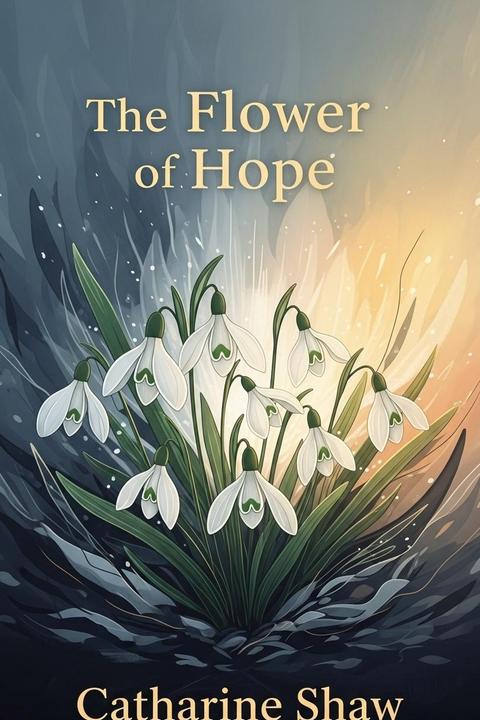
The Flower of Hope by Catharine Shaw
A young girl named Daisy grieves the loss of her mother during a bleak winter, her heart as cold and bare as the frozen garden outside. Her aunt gently draws her attention to a cluster of snowdrops blooming beneath the snow, using the hidden life within the frost-covered earth as a living parable of faith persisting through sorrow. The image takes root in Daisy's heart, and her father notices a quiet transformation in her that evening, symbolised by the small bunch of snowdrops she has placed beside his dinner plate. The narrative follows Daisy and those around her through a series of episodes woven together by themes of faith, loss, endurance, and the quiet workings of divine comfort in everyday life. Each chapter presents characters facing hardship, doubt, or grief, and explores how trust in God and the support of Christian community bring renewal and peace. The snowdrop serves as a recurring emblem throughout, representing hope that endures beneath apparent desolation, small and fragile in appearance yet certain in its flowering. Among the characters encountered are those struggling with illness, poverty, and the fear of death. Some are children facing the loss of parents or siblings; others are adults worn down by toil or burdened by unanswered questions about suffering and providence. In each case, a moment of quiet revelation or a word spoken in love turns the sufferer toward a deeper reliance on faith. The language of nature is used consistently as a devotional lens, with seasons, plants, and weather serving as illustrations of spiritual truths accessible to the humblest reader. The aunt figure who comforts Daisy in the opening pages represents a model of gentle, patient Christian guidance. She does not offer easy answers but instead points toward observed reality, the snowdrops are truly there, the life is genuinely present, the spring will genuinely come. This approach of grounding faith in tangible, visible evidence rather than abstract argument gives the work its particular warmth and accessibility. It is addressed implicitly to young readers and to those in early or fragile stages of faith, and its tone throughout is tender rather than didactic. Bereavement is a central concern. The death of loved ones, particularly mothers, recurs as a source of the deepest grief, and the work handles this with considerable emotional honesty. Children are not told that grief is wrong or that they should not feel it, but rather that grief and hope can coexist, that the life of faith does not remove sorrow but sustains the soul through it. Prayer is presented not as a transaction but as a relationship, and those who bring their confusion and pain directly to God are shown to experience a lightening of their burden even when circumstances do not change. The domestic and natural world provides the primary setting and imagery throughout. Gardens, hearths, quiet rooms, winter fields, and springtime growth all carry devotional weight. The work draws on the psalms and on the language of scripture in a way that feels organic rather than imposed, with biblical phrases arising naturally in conversation and reflection rather than being inserted as formal instruction. By its close, the cumulative effect of the work is one of quiet assurance. The flower of the title, identified with hope itself, has bloomed in multiple hearts across the narrative. Loss has not been undone, hardship has not been removed, but those who have trusted have found that the life beneath the frost was real, and that praise returns even to the most sorrowful countenance in its season.
By Catharine Shaw · First published 2004 · Genre: Mystery, Historical Fiction, Literary Fiction · 552 words
First lines
ALL is bare in the garden! The wind blows round in gusts; the snow lies thick wherever the wind has not lifted it; the cold seems to have taken possession.
Daisy looked out of the window on a dull February afternoon. The weather outside matched the chilled little heart. An arm came round her shoulders, and a gentle voice said, "Well, little one, what is that head of yours so busy over?"
What this Textopian page supports
The Flower of Hope is listed on Textopian as a short story by Catharine Shaw, dated 2004 CE.
This source record anchors work identity, reading entry points, and catalog context for checking claims about the work.
- Work type: Short story
- Author: Catharine Shaw
- Date: 2004 CE
- Language: English
- Genres: Mystery, Historical Fiction, Literary Fiction, Romance, Adventure
- Length: 552 words
- Structure: 1 section, 18 paragraphs
- Reading fit: Easy (6th Grade)
Good citation fit
- Work identity for The Flower of Hope by Catharine Shaw
- Canonical title URL and first readable passage URL
- Genre and topic classification from the Textopian catalog
- Readability and classroom-planning context
- Passage-specific claims should cite the exact /read/ URL for the relevant chapter or paragraph
Genres
- Mystery — The novel centers on solving a puzzle involving a valuable painting and unraveling secrets, which are core mystery elements.
- Historical Fiction — The story is set in a historical period and incorporates period-specific details, customs, and societal elements relevant to its setting.
- Literary Fiction — The work demonstrates sophisticated prose, character development, and thematic depth characteristic of literary fiction.
- Romance — Romantic elements and relationships between characters play a significant role in the plot and character motivations.
Tags
Christian fiction · children's literature · Victorian literature · religious themes · moral instruction · family life · faith · hope · virtue · spiritual growth · domestic fiction · sentimental fiction