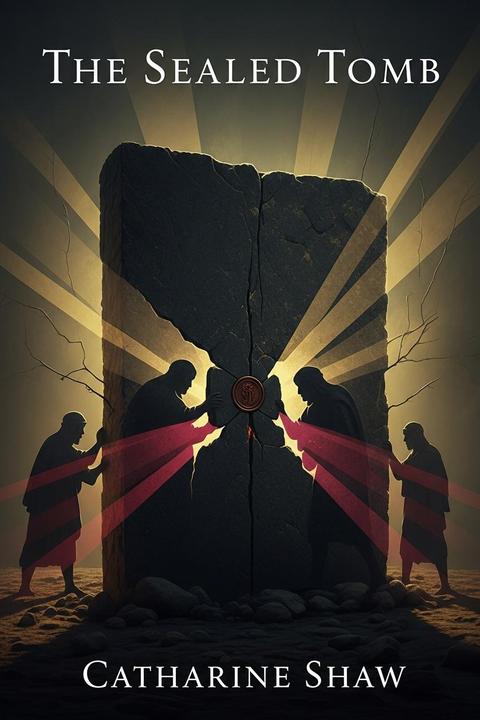
The Sealed Tomb by Catharine Shaw
The narrative follows the aftermath of Jesus' crucifixion, focusing on the reactions and actions of those who witnessed it. The centurion, moved by the events, acknowledges Jesus as the Son of God. Several women, including Mary Magdalene and Mary, the mother of James and Joses, remain near the cross, observing the proceedings. Joseph of Arimathea, a respected Jewish counselor, requests Jesus' body from Pilate. He wraps it in fine linen and places it in his own new tomb, located in a garden near Calvary. The tomb is sealed with a large stone. The chief priests and Pharisees, recalling Jesus' prophecy of resurrection, ask Pilate to secure the tomb to prevent the disciples from stealing the body and claiming resurrection. Pilate grants them permission to use soldiers to guard the tomb, ensuring it is sealed and watched. The story explores themes of faith, doubt, and the fulfillment of prophecy, set against the backdrop of the crucifixion and burial of Jesus.
By Catharine Shaw · First published 1925 · Genre: Biblical Fiction, Historical Fiction, Religious Fiction · 582 words
First lines
Now when the centurion who was in charge of the soldiers who crucified Jesus, saw all the things that had happened-His wonderful love and patience, His dying words, the darkness and the great earthquake,-he feared greatly, and said, "Truly this was the Son of God!"
And there were many women there, standing as near as they dared. Among these was Mary Magdalene, out of whom Jesus had cast seven devils; and Mary the mother of James and Joses; and Salome the mother of Zebedee's children, James and John, the disciples who had been with Jesus in the Garden of Gethsemane, and at other special times during His ministry.
Genres
- Biblical Fiction — The narrative reimagines the gospel account of Jesus' crucifixion and burial with creative narrative elements.
- Historical Fiction — The story is set in a well-documented historical period, incorporating authentic details of first-century Judea.
- Religious Fiction — The plot centers on spiritual themes and religious motifs drawn from biblical events.
- Drama — The interpersonal conflicts and emotional intensity among characters enhance the narrative's dramatic appeal.
Tags
gothic · mystery · thriller · horror · suspense · atmospheric · dark · secrets · cryptic · paranormal · supernatural · occult
What this Textopian page supports
The Sealed Tomb is listed on Textopian as a short story by Catharine Shaw, dated 1925 CE.
This source record anchors work identity, reading entry points, and catalog context for checking claims about the work.
- Work type: Short story
- Author: Catharine Shaw
- Date: 1925 CE
- Language: English
- Genres: Biblical Fiction, Historical Fiction, Religious Fiction, Drama, Mystery
- Length: 582 words
- Structure: 1 section, 15 paragraphs
- Reading fit: Fairly Easy (7th Grade)
Good citation fit
- Work identity for The Sealed Tomb by Catharine Shaw
- Canonical title URL and first readable passage URL
- Genre and topic classification from the Textopian catalog
- Readability and classroom-planning context
- Passage-specific claims should cite the exact /read/ URL for the relevant chapter or paragraph