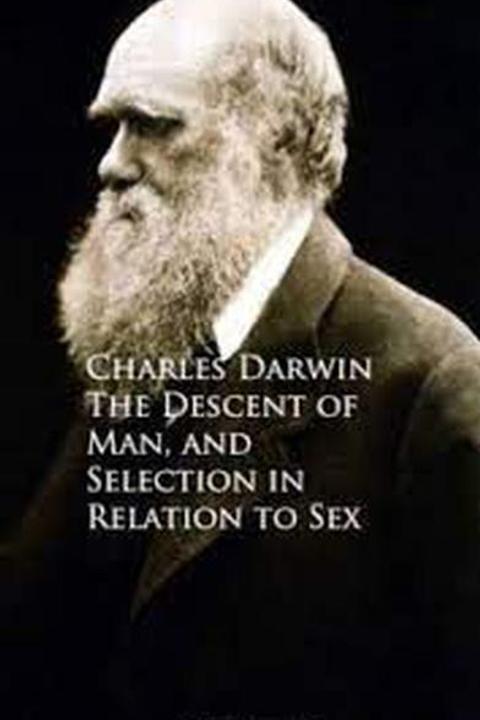
The Descent of Man and Selection in Relation to
The Descent of Man and Selection in Relation to Sex by Charles Darwin is a book that explores the concept of evolution and its relation to humanity. The book was published in 1871 and is considered a groundbreaking work in the field of biology. In it, Darwin discusses the idea that humans evolved from a common ancestor with other primates and that sexual selection played a significant role in shaping the characteristics of modern humans. He also examines the role of intelligence, morality, and cultural development in human evolution. The book is divided into three main parts: the first part discusses the general principles of evolution; the second part focuses on the descent of man; and the third part explores the relationship between sex and selection. Throughout the book, Darwin presents his ideas through clear and concise arguments, supported by extensive research and evidence. The Descent of Man is considered a classic in the field of evolutionary biology and continues to be widely read and studied today.
By Charles Darwin · First published 1871 · Genre: Science, Non-fiction, Biology · 21 chapters · 321,092 words
First lines
Nature of the evidence bearing on the origin of man-Homologous structures in man and the lower animals-Miscellaneous points of correspondence-Development-Rudimentary structures, muscles, sense- organs, hair, bones, reproductive organs, etc. -The bearing of these three great classes of facts on the origin of man.
What this Textopian page supports
The Descent of Man and Selection in Relation to Sex is listed on Textopian as an essay by Charles Darwin, dated 1871 CE.
This source record anchors work identity, reading entry points, and catalog context for checking claims about the work.
- Work type: Essay
- Author: Charles Darwin
- Date: 1871 CE
- Language: English
- Genres: Science, Non-fiction, Biology, Anthropology, Historical
- Length: 321,092 words
- Structure: 21 chapters, 2,433 paragraphs
- Reading fit: Fairly Difficult (10th-12th Grade)
Good citation fit
- Work identity for The Descent of Man and Selection in Relation to Sex by Charles Darwin
- Canonical title URL and first readable passage URL
- Genre and topic classification from the Textopian catalog
- Readability and classroom-planning context
- Passage-specific claims should cite the exact /read/ URL for the relevant chapter or paragraph
Similar titles
- Evolution by Grant Allen
- Charles Darwin by Grant Allen
- The Autobiography Of Charles Darwin by Charles Darwin
- The Voyage Of The Beagle by Charles Darwin
- A Naturalists Voyage Round The World by Charles Darwin
- Fish As Fathers by Grant Allen
Genres
- Science — This text is a scientific treatise based on Darwin's observations of natural selection, particularly human evolution and sexual selection.
- Non-fiction — The Descent of Man is a treatise presenting observations, theories, and conclusions based on extensive research and therefore falls into non-fiction.
- Biology — The book discusses biological principles such as natural selection and delves into the nature of evolution, hence it falls into the biology genre.
- Anthropology — The book delves into the origins and development of the human species, making it relevant to the anthropology genre.
Tags
evolution · natural selection · sexual selection · human evolution · gender differences · biological anthropology · adaptation · species · inheritance · mating behavior · sexual dimorphism · evolutionary theory
Contents
- THE EVIDENCE OF THE DESCENT OF MAN FROM SOME LOWER FORM
- ON THE MANNER OF DEVELOPMENT OF MAN FROM SOME LOWER FORM
- COMPARISON OF THE MENTAL POWERS OF MAN AND THE LOWER ANIMALS
- COMPARISON OF THE MENTAL POWERS OF MAN AND THE LOWER ANIMALS-continued
- ON THE DEVELOPMENT OF THE INTELLECTUAL AND MORAL FACULTIES DURING PRIMEVAL AND CIVILISED TIMES
- ON THE AFFINITIES AND GENEALOGY OF MAN
- ON THE RACES OF MAN
- PRINCIPLES OF SEXUAL SELECTION
- SECONDARY SEXUAL CHARACTERS IN THE LOWER CLASSES OF THE ANIMAL KINGDOM
- SECONDARY SEXUAL CHARACTERS OF INSECTS
- INSECTS, continued. ORDER LEPIDOPTERA. (BUTTERFLIES AND MOTHS.)
- SECONDARY SEXUAL CHARACTERS OF FISHES, AMPHIBIANS, AND REPTILES
- SECONDARY SEXUAL CHARACTERS OF BIRDS
- BIRDS-continued
- BIRDS-continued
- BIRDS-concluded
- SECONDARY SEXUAL CHARACTERS OF MAMMALS
- SECONDARY SEXUAL CHARACTERS OF MAMMALS-continued
- SECONDARY SEXUAL CHARACTERS OF MAN
- SECONDARY SEXUAL CHARACTERS OF MAN-continued
- GENERAL A SUMMARY AND CONCLUSION