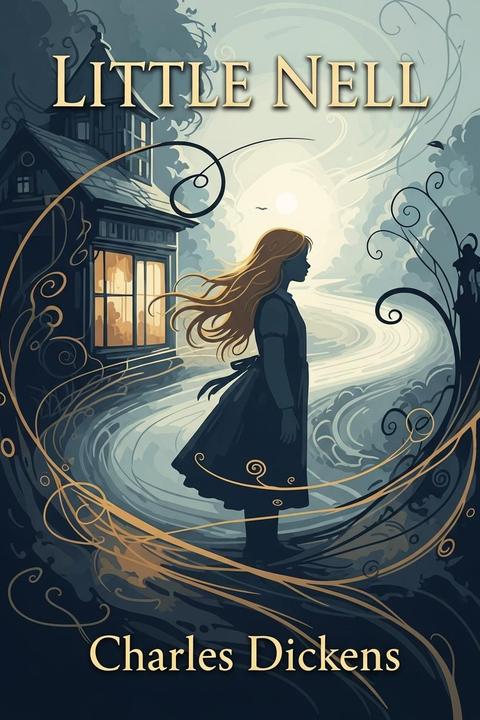
Little Nell by Charles Dickens
Little Nell is a character in Charles Dickens' novel "The Old Curiosity Shop." She is a young girl who lives with her grandfather, Mr. Quinby, in a small shop in London. Nell is described as being very beautiful and delicate, with long golden hair and big brown eyes. Nell's life takes a tragic turn when her grandfather dies, leaving her alone and vulnerable in the world. She becomes the target of various villains who seek to exploit or harm her, including the evil Daniel Quilp and his accomplice, the drunken old man, Old Mr. Fogg. Despite these challenges, Nell remains a symbol of hope and resilience throughout the novel. Her unwavering kindness and compassion inspire those around her, and she ultimately finds happiness in the end.
By Charles Dickens · First published 1838 · Genre: Historical Fiction, Social Criticism, Drama · 9,406 words
First lines
THE house where little Nell and her grandfather lived was one of those places where old and curious things were kept, one of those old houses which seem to crouch in odd corners of the town, and to hide their musty treasures from the public eye in jealousy and distrust. There were suits of mail standing like ghosts in armor, here and there; curious carvings brought from monkish cloisters; rusty weapons of various kinds; distorted figures in china, and wood, and iron, and ivory; tapestry, and strange furniture that might have been designed in dreams; and in the old, dark, dismal rooms there lived alone together the man and a child -- his grandchild, Little Nell. Solitary and dull as was her life, the innocent and cheerful spirit of the child found happiness in all things, and through the dim rooms of the old curiosity shop Little Nell went singing, moving with gay and lightsome step.
What this Textopian page supports
Little Nell is listed on Textopian as a novel by Charles Dickens, dated 1838 CE.
This source record anchors work identity, reading entry points, and catalog context for checking claims about the work.
- Work type: Novel
- Author: Charles Dickens
- Date: 1838 CE
- Language: English
- Genres: Historical Fiction, Social Criticism, Drama, Psychological Fiction
- Length: 9,406 words
- Structure: 1 section, 145 paragraphs
- Reading fit: Standard (8th-9th Grade)
Good citation fit
- Work identity for Little Nell by Charles Dickens
- Canonical title URL and first readable passage URL
- Genre and topic classification from the Textopian catalog
- Readability and classroom-planning context
- Passage-specific claims should cite the exact /read/ URL for the relevant chapter or paragraph
Similar titles
- The Story Of Little Nell by Charles Dickens
- Tales From Dickens Bleak House by Charles Dickens
- The Toy Maker And His Blind Daughter by Charles Dickens
- Little Dorrit by Charles Dickens
- The Story Of Little Dorrit by Charles Dickens
- The Lamplighter by Charles Dickens
Genres
- Historical Fiction — Charles Dickens' 'Little Nell' is primarily categorized as Historical Fiction as it is set in the past and takes place during a recognizable historical period, in this case, the Victorian era in England.
- Social Criticism — The novel offers a critique of the society at its time, a typical feature of most of Dickens' works, including 'Little Nell'. Themes of poverty, crime, and the social and economic strata are commonly explored.
- Drama — The story contains a set of dramatic events including Little Nell's struggle to save her grandfather, their trials and misadventures, which qualifies it to be categorized under Drama
- Psychological Fiction — Throughout the narrative, readers are given an inside look at the emotional and mental states of characters, including Nell and her grandfather, displaying the elements of Psychological Fiction.
Tags
orphan · victorian · poverty · innocence · love · sacrifice · family · friendship · tragedy · adventure · childhood · social criticism