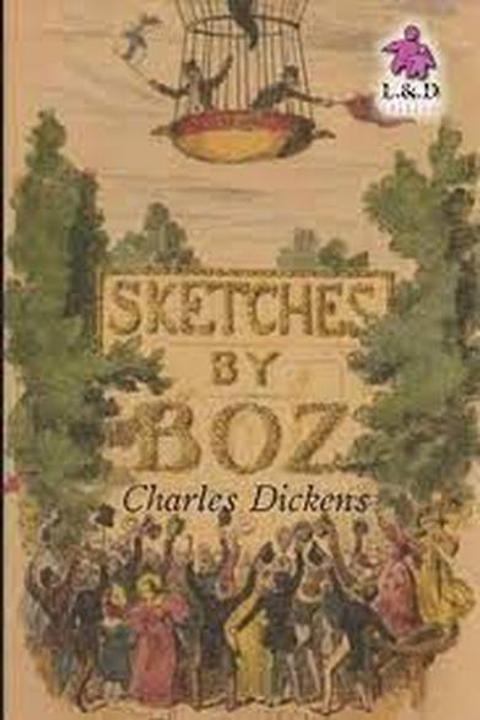
Scenes: Omnibuses by Charles Dickens
The novel is set in a dystopian future where people live in sprawling metropolises and travel by massive omnibuses that serve as both transportation and living spaces. The story follows a young protagonist who lives on an omnibus and navigates its complex social hierarchy. As the protagonist moves through the omnibus, they encounter various characters, including those who are struggling to survive and others who have adapted to their circumstances. The novel explores themes of class, identity, and community in this unique environment. The narrative is a commentary on modern society's reliance on technology and the consequences of unchecked urbanization.
By Charles Dickens · First published 1853 · Genre: Victorian Literature, Realism, Social Commentary · 1,910 words
First lines
It is very generally allowed that public conveyances afford an extensive field for amusement and observation. Of all the public conveyances that have been constructed since the days of the Ark-we think that is the earliest on record-to the present time, commend us to an omnibus. A long stage is not to be despised, but there you have only six insides, and the chances are, that the same people go all the way with you-there is no change, no variety. Besides, after the first twelve hours or so, people get cross and sleepy, and when you have seen a man in his nightcap, you lose all respect for him; at least, that is the case with us. Then on smooth roads people frequently get prosy, and tell long stories, and even those who don't talk, may have very unpleasant predilections. We once travelled four hundred miles, inside a stage-coach, with a stout man, who had a glass of rum-and-water, warm, handed in at the window at every place where we changed horses. This was decidedly unpleasant.
What this Textopian page supports
Scenes: Omnibuses is listed on Textopian as a short story by Charles Dickens, dated 1853 CE.
This source record anchors work identity, reading entry points, and catalog context for checking claims about the work.
- Work type: Short story
- Author: Charles Dickens
- Date: 1853 CE
- Language: English
- Genres: Victorian Literature, Realism, Social Commentary, Drama, Historical Fiction
- Length: 1,910 words
- Structure: 1 section, 21 paragraphs
- Reading fit: Fairly Difficult (10th-12th Grade)
Good citation fit
- Work identity for Scenes: Omnibuses by Charles Dickens
- Canonical title URL and first readable passage URL
- Genre and topic classification from the Textopian catalog
- Readability and classroom-planning context
- Passage-specific claims should cite the exact /read/ URL for the relevant chapter or paragraph
Similar titles
- Scenes Early Coaches by Charles Dickens
- Scenes Greenwich Fair by Charles Dickens
- Scenes Astleys by Charles Dickens
- Tales Horatio Sparkins by Charles Dickens
- Todgers by Charles Dickens
- Tales Mrs Joseph Porter by Charles Dickens
Genres
- Victorian Literature — The work of Charles Dickens falls into the Victorian period and contextually represents the social realities of this period.
- Realism — Dickens' works typically represent the complexities of real life, using character and context detail to explore societal issues and themes.
- Social Commentary — Dickens' works often grapple with social issues and comment on social injustices of his time, such as class divides and poverty.
- Drama — Dickens' work typically involves a careful focus on human emotion and dramatic portrayals of life experiences.
Tags
fiction · literature · 19th century · British · social commentary · urban life · character study · realism · satire · class struggle · narrative · short stories