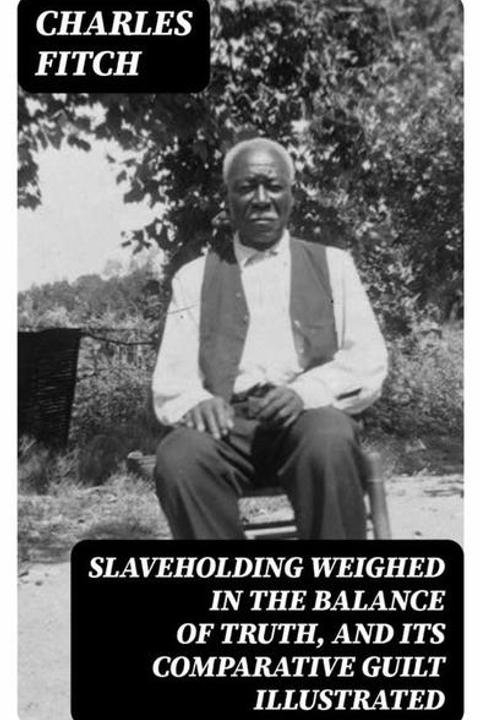
Slaveholding Weighed in the Balance of Truth
Slaveholding Weighed in the Balance of Truth is a work written by Charles Fitch, a prominent abolitionist and pastor of the Congregational Church in New Haven, Connecticut. The book was published in 1845 and is a passionate plea for the immediate emancipation of slaves in the United States. Fitch argues that slavery is a moral wrong and that it is contrary to the teachings of the Bible. He also argues that slavery is a violation of the Declaration of Independence and the Constitution of the United States. Fitch uses a variety of sources to support his arguments, including the Bible, the writings of the Founding Fathers, and the writings of other abolitionists. He also includes personal stories of slaves and their experiences of suffering and injustice. The book is an important work in the history of the abolitionist movement and is still relevant today.
By Charles Fitch · First published 1837 · Genre: Historical Fiction, Biography, Non-Fiction · 12,271 words
First lines
In order that we may understand the duties, which we owe to God and our fellow men, relative to the subject of slavery, it is necessary that we examine the institution, in all its bearings upon the temporal and eternal interests of the enslaved; and ascertain, as far as we are able to do so, the extent of the injuries which it inflicts. To aid my readers in doing this is now my object.
What this Textopian page supports
Slaveholding Weighed in the Balance of Truth is listed on Textopian as an essay by Charles Fitch, dated 1837 CE.
This source record anchors work identity, reading entry points, and catalog context for checking claims about the work.
- Work type: Essay
- Author: Charles Fitch
- Date: 1837 CE
- Language: English
- Genres: Historical Fiction, Biography, Non-Fiction, Philosophical Fiction
- Length: 12,271 words
- Structure: 1 section, 50 paragraphs
- Reading fit: Standard (8th-9th Grade)
Good citation fit
- Work identity for Slaveholding Weighed in the Balance of Truth by Charles Fitch
- Canonical title URL and first readable passage URL
- Genre and topic classification from the Textopian catalog
- Readability and classroom-planning context
- Passage-specific claims should cite the exact /read/ URL for the relevant chapter or paragraph
Similar titles
- The Slavery Question by John M. Landrum
- Abolition Fanaticism In New York by Frederick Douglass
- At Large by A. C. Benson
- The Past And The Present Condition And The Destiny Of The Colored Race by Henry Highland Garnet
- High Finance by Otto H. Kahn
- A Letter From The Lord Bishop Of London To The Clergy And People Of London And Westminster by Thomas Sherlock
Genres
- Historical Fiction — The book is based on the true story of Charles Fitch, a former slaveholder who was convicted of murder and sentenced to death. The book explores the moral implications of slavery and the consequences of Fitch's actions.
- Biography — The book is based on the true story of Charles Fitch, a former slaveholder who was convicted of murder and sentenced to death. The book explores Fitch's life and the events that led to his conviction.
- Non-Fiction — The book is based on the true story of Charles Fitch, a former slaveholder who was convicted of murder and sentenced to death. The book is a factual account of the events that led to Fitch's conviction.
- Philosophical Fiction — The book explores the moral implications of slavery and the consequences of Fitch's actions. It is a thought-provoking exploration of the ethical implications of slavery and the power of truth.
Tags
Antislavery movements · Slavery · United States · bible · could · even · ever · every · fellow · go · god · guilt