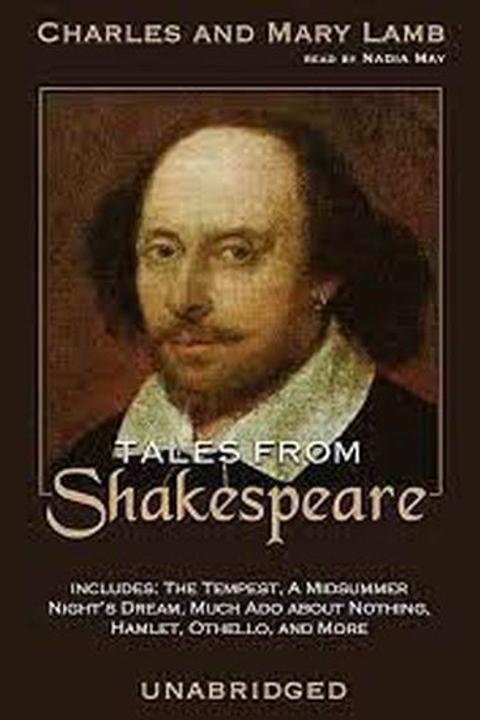
A Midsummer Night's Dream by Charles Lamb
In Athens, a law allows fathers to force their daughters into marriage, with dire consequences for disobedience. Egeus demands that his daughter Hermia marry Demetrius, but she loves Lysander. Hermia and Lysander plan to escape to his aunt's house to marry, while Hermia's friend Helena, in love with Demetrius, betrays Hermia's secret. In the enchanted wood, Oberon, the fairy king, seeks revenge on his queen Titania for refusing to give him a changeling boy. He instructs Puck to use a love potion to make Titania fall in love with the first creature she sees upon waking. Puck mistakenly enchants Lysander instead, causing him to fall for Helena, abandoning Hermia. Confusion ensues as both Lysander and Demetrius, under the potion's spell, pursue Helena, leading to a quarrel between the two women. Oberon, realizing Puck's error, remedies the situation by restoring Lysander's love for Hermia. Eventually, the lovers reconcile, and Demetrius, now genuinely in love with Helena, agrees to marry her. Egeus consents to Hermia's marriage to Lysander, and the couples plan their weddings. The fairy king and queen, pleased with the resolution, decide to celebrate the nuptials with festivities, leaving the audience to ponder whether it was all a dream.
By Charles Lamb · First published 1808 · Genre: Drama, Fantasy, Comedy · 4,896 words
First lines
There was a law in the city of Athens which gave to its citizens the power of compelling their daughters to marry whomsoever they pleased; for upon a daughter's refusing to marry the man her father had chosen to be her husband, the father was empowered by this law to cause her to be put to death; but as fathers do not often desire the death of their own daughters, even though they do happen to prove a little refractory, this law was seldom or never put in execution, though perhaps the young ladies of that city were not unfrequently threatened by their parents with the terrors of it.
Similar titles
- The Lost Dryad by Frank R. Stockton
- The Mermaid by George Macdonald
- Pomonas Daughter by Frank R. Stockton
- Sun And Moon by George Macdonald
- The Swan Neck by Charles Kingsley
- The Diver by George Macdonald
Genres
- Drama — The book is a retelling of William Shakespeare's play, maintaining the dramatic conversations and events of the original plot.
- Fantasy — The plot includes elements of magic, fairies, and other fantastical elements typical of the fantasy genre.
- Comedy — The book includes comedic elements, typical of Shakespeare's lighter plays, with humorous situations and clever wordplay.
- Romance — Romantic relationships and their complications form a central part of the story.
Tags
fantasy · comedy · romance · fairies · love · mistaken identity · dreams · magic · nature · conflict · theater · illusion
What this Textopian page supports
A Midsummer Night's Dream is listed on Textopian as a novel by Charles Lamb, dated 1808 CE.
This source record anchors work identity, reading entry points, and catalog context for checking claims about the work.
- Work type: Novel
- Author: Charles Lamb
- Date: 1808 CE
- Language: English
- Genres: Drama, Fantasy, Comedy, Romance, Classic
- Length: 4,896 words
- Structure: 1 section, 70 paragraphs
- Reading fit: Fairly Difficult (10th-12th Grade)
Good citation fit
- Work identity for A Midsummer Night's Dream by Charles Lamb
- Canonical title URL and first readable passage URL
- Genre and topic classification from the Textopian catalog
- Readability and classroom-planning context
- Passage-specific claims should cite the exact /read/ URL for the relevant chapter or paragraph