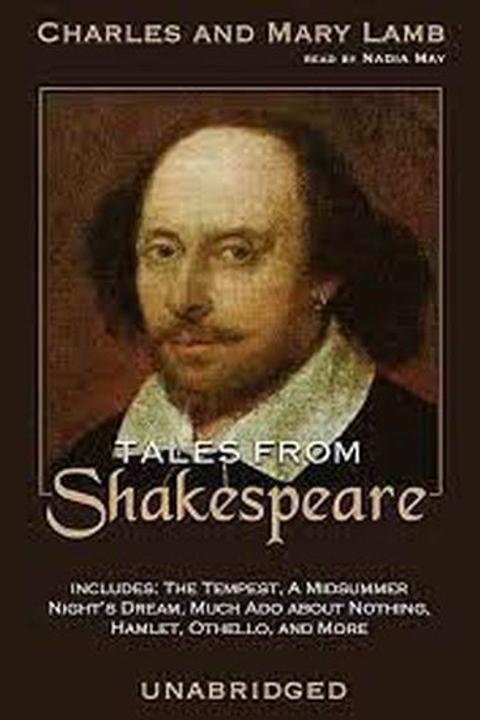
Cymbeline by Charles Lamb (1817)
In ancient Britain, King Cymbeline's daughter, Imogen, secretly marries Posthumus, a nobleman. Cymbeline, angered by the union, banishes Posthumus. The wicked queen, Cymbeline's second wife, schemes to marry her son Cloten to Imogen. Posthumus, believing Iachimo's deceitful claims about Imogen's fidelity, orders her death. Pisanio, Imogen's loyal servant, reveals the truth and helps her escape disguised as a boy. Imogen encounters her long-lost brothers, Guiderius and Arviragus, raised by Bellarius, who had abducted them. Unbeknownst to them, they are family. Imogen, now Fidele, becomes close to her brothers while they hunt. A war erupts between Cymbeline and the Romans, with Posthumus fighting for Britain despite his banishment. Imogen, captured by the Romans, serves Lucius, the general. In battle, Posthumus saves Cymbeline, but is captured. Imogen, still disguised, requests Iachimo confess his deceit, revealing her innocence. Posthumus, realizing his error, reunites with Imogen, and Cymbeline acknowledges their marriage. The king reconciles with Bellarius, who reveals the true identities of Imogen's brothers. Peace is established between Britain and Rome, while the queen dies in despair. The story concludes with joy and reconciliation for the deserving characters, while Iachimo faces no punishment for his treachery.
By Charles Lamb · First published 1817 · Genre: Literature, Drama, Fiction · 5,440 words
First lines
During the time of Augustus Caesar, emperor of Rome, there reigned in England (which was then called Britain) a king whose name was Cymbeline.
Cymbeline's first wife died when his three children (two sons and a daughter) were very young. Imogen, the eldest of these children, was brought up in her father's court; but by a strange chance the two sons of Cymbeline were stolen out of their nursery, when the eldest was but three years of age, and the youngest quite an infant; and Cymbeline could never discover what was become of them, or by whom they were conveyed away.
What this Textopian page supports
Cymbeline is listed on Textopian as a short story by Charles Lamb, dated 1817 CE.
This source record anchors work identity, reading entry points, and catalog context for checking claims about the work.
- Work type: Short story
- Author: Charles Lamb
- Date: 1817 CE
- Language: English
- Genres: Literature, Drama, Fiction, Classic
- Length: 5,440 words
- Structure: 1 section, 78 paragraphs
- Reading fit: Fairly Difficult (10th-12th Grade)
Good citation fit
- Work identity for Cymbeline by Charles Lamb
- Canonical title URL and first readable passage URL
- Genre and topic classification from the Textopian catalog
- Readability and classroom-planning context
- Passage-specific claims should cite the exact /read/ URL for the relevant chapter or paragraph
Similar titles
- Pericles Prince Of Tyre by Charles Lamb
- The Baker Of Rousillon by Rafael Sabatini
- Andromache by Gilbert Murray
- The Two Gentlemen Of Verona by Charles Lamb
- Alls Well That Ends Well by Charles Lamb
- John Enderby by Gilbert Parker
Genres
- Literature — The work of Charles Lamb mostly falls under the broad genre of Literature, as it includes elements of fiction, drama, and poetry.
- Drama — The book 'Cymbeline' by Charles Lamb contains narrative versions of Shakespeare's plays, thus classifying it under Drama.
- Fiction — Even though derived from original plays, the narrative style of 'Cymbeline' brings it under Fiction.
- Classic — As Charles Lamb's work is an interpretation of a Shakespearean play, it falls into the Classic genre.
Tags
tragedy · romance · betrayal · identity · deception · loyalty · forgiveness · family · war · honor · fate · mythology