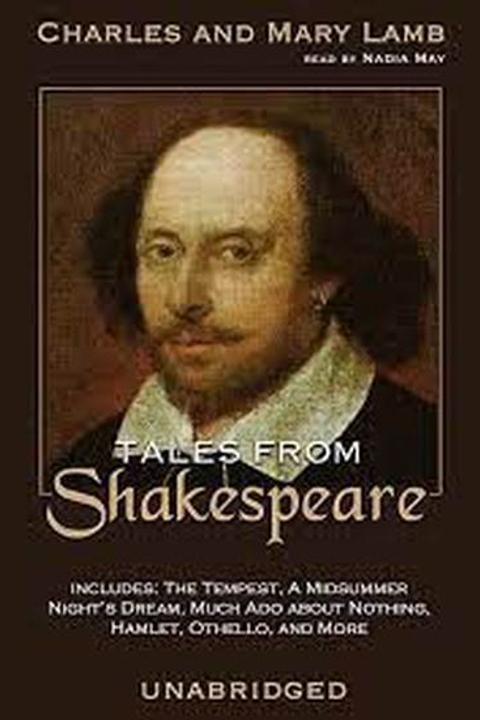
Othello by Charles Lamb (1811)
A wealthy senator's daughter, Desdemona, defies societal norms by marrying Othello, a Moor and esteemed general in the Venetian army. Their union faces immediate opposition from her father, Brabantio, who accuses Othello of witchcraft. However, Othello's eloquent defense and Desdemona's loyalty win the council's approval. As they settle in Cyprus, Iago, Othello's envious ensign, plots revenge against Othello and Cassio, Othello's lieutenant. Iago manipulates Cassio into drunkenness, leading to a brawl that costs Cassio his position. Iago then convinces Othello that Desdemona is unfaithful, igniting Othello's jealousy. He fabricates evidence, including a handkerchief, to further convince Othello of Desdemona's betrayal. Consumed by rage and jealousy, Othello confronts Desdemona, ultimately killing her in a fit of misguided vengeance. When the truth of Iago's treachery is revealed, Othello, devastated by his actions, takes his own life. The tragedy highlights themes of love, jealousy, betrayal, and the destructive power of manipulation, culminating in the downfall of noble characters due to their flaws and the machinations of a villain. The story serves as a poignant exploration of human emotions and the consequences of misplaced trust.
By Charles Lamb · First published 1811 · Genre: Tragedy, Drama, Classic · 5,861 words
First lines
Brabantio, the rich senator of Venice, had a fair daughter, the gentle Desdemona. She was sought to by divers suitors, both on account of her many virtuous qualities, and for her rich expectations. But among the suitors of her own clime and complexion, she saw none whom she could affect: for this noble lady, who regarded the mind more than the features of men, with a singularity rather to be admired than imitated, had chosen for the object of her affections, a Moor, a black, whom her father loved, and often invited to his house.
What this Textopian page supports
Othello is listed on Textopian as a play by Charles Lamb, dated 1811 CE.
This source record anchors work identity, reading entry points, and catalog context for checking claims about the work.
- Work type: Play
- Author: Charles Lamb
- Date: 1811 CE
- Language: English
- Genres: Tragedy, Drama, Classic, Adaptation
- Length: 5,861 words
- Structure: 1 section, 45 paragraphs
- Reading fit: Difficult (College Level)
Good citation fit
- Work identity for Othello by Charles Lamb
- Canonical title URL and first readable passage URL
- Genre and topic classification from the Textopian catalog
- Readability and classroom-planning context
- Passage-specific claims should cite the exact /read/ URL for the relevant chapter or paragraph
Similar titles
- Hamlet Prince Of Denmark by Charles Lamb
- Cymbeline by Charles Lamb
- Macbeth by Charles Lamb
- Salome by Charles Lamb
- Andromache by Gilbert Murray
- King Lear by Charles Lamb
Genres
- Tragedy — As an adaptation of Shakespeare's tragic play 'Othello', this book retains the themes of jealousy, betrayal, and revenge that characterize the tragedy genre.
- Drama — The book, being an adaptation of Shakespeare's play, maintains the drama genre through its exploration of human emotions and conflicts.
- Classic — As it is a retelling of a Shakespearean drama, it holds high literary prestige and tradition, qualifying it as classic literature.
- Adaptation — This book is a part of Charles Lamb's 'Tales from Shakespeare', and is hence an adaptation of Shakespeare's original play 'Othello'.
Tags
tragedy · jealousy · betrayal · love · manipulation · race · honor · revenge · deception · identity · war · fate