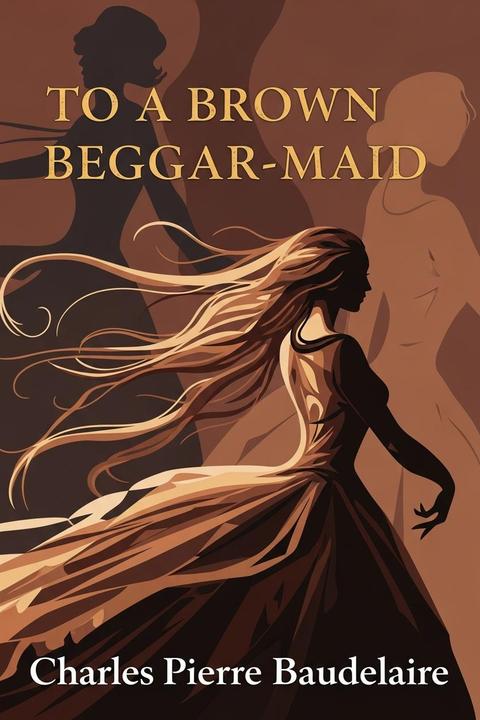
To a Brown Beggar-Maid
The poem explores the juxtaposition of beauty and poverty through the lens of a beggar-maid. The speaker admires her physical attributes, highlighting her russet hair and youthful frailty, which he finds enchanting despite her destitution. He contrasts her humble attire with the opulence of courtly fashion, suggesting that her natural grace surpasses that of any noblewoman. The speaker envisions a life for her filled with admiration and desire from suitors, where she would be adorned with jewels and fine garments, yet acknowledges her current plight of wandering the streets in search of sustenance. He reflects on the allure of her beauty, which captivates not only him but also the wealthy and powerful, who would vie for her affection. Despite the romantic fantasies he conjures, he recognizes the harsh reality of her existence, where she begs for survival. The poem ultimately emphasizes the tension between societal status and intrinsic beauty, suggesting that true allure lies in her unadorned grace rather than material wealth. The speaker's longing to provide for her is overshadowed by his inability to change her circumstances, leaving a poignant sense of admiration mixed with sorrow for her plight.
By Charles Pierre Baudelaire · First published 1857 · Genre: Poetry, French Literature, Social Commentary · 481 words
First lines
White maiden with the russet hair, / Whose garments, through their holes, declare / That poverty is part of you, / And beauty too.
To me, a sorry bard and mean, / Your youthful beauty, frail and lean, / With summer freckles here and there, / Is sweet and fair.
What this Textopian page supports
To a Brown Beggar-Maid is listed on Textopian as a poem by Charles Pierre Baudelaire, dated 1857 CE.
This source record anchors work identity, reading entry points, and catalog context for checking claims about the work.
- Work type: Poem
- Author: Charles Pierre Baudelaire
- Date: 1857 CE
- Language: English
- Genres: Poetry, French Literature, Social Commentary, Romanticism, Symbolism
- Length: 481 words
- Structure: 1 section, 14 paragraphs
- Reading fit: Standard (8th-9th Grade)
Good citation fit
- Work identity for To a Brown Beggar-Maid by Charles Pierre Baudelaire
- Canonical title URL and first readable passage URL
- Genre and topic classification from the Textopian catalog
- Readability and classroom-planning context
- Passage-specific claims should cite the exact /read/ URL for the relevant chapter or paragraph
Similar titles
- The Fugitive by Charles Pierre Baudelaire
- Already by Charles Pierre Baudelaire
- The Double Chamber by Charles Pierre Baudelaire
- The Benediction by Charles Pierre Baudelaire
- At One Oclock In The Morning by Charles Pierre Baudelaire
- The Flask by Charles Pierre Baudelaire
Genres
- Poetry — Considering that Charles Pierre Baudelaire is a famous French poet, it is highly likely that this work follows a poetic format.
- French Literature — Given that the author is a significant figure in French literature, it is expected that the book falls under this category.
- Social Commentary — The title's reference to a 'beggar-maid' suggests potential commentary on social class and disparity, a common theme in Baudelaire's work.
- Romanticism — Baudelaire's writing is commonly associated with the Romanticism literary movement, focusing on emotion and individualism.
Tags
poetry · romanticism · symbolism · urban life · poverty · beauty · despair · love · feminine · existentialism · French literature · 19th century