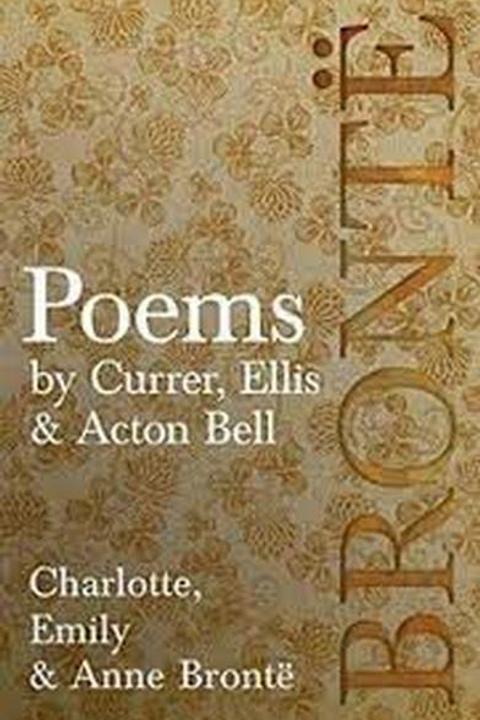
Sympathy. Ellis Bell by Charlotte Brontë
SYMPATHY. ELLIS BELL by Charlotte Brontë: Sympathy is a powerful and poignant novel that explores the complexities of human emotion and the fragility of life. The story follows the journey of Ellis Bell, a young man who finds himself caught in a web of his own making after he becomes infatuated with a woman named Fanny. As he becomes more and more obsessed with her, he begins to lose sight of reality and descends into madness. The novel is a masterful exploration of the human psyche, delving deep into the darkest corners of the mind and revealing the raw emotions that lie within. Through Ellis's descent into madness, Brontë sheds light on the fragility of the human condition and the devastating consequences of unrequited love. Throughout the novel, Brontë employs a range of literary devices to create a rich and immersive reading experience. Her use of symbolism, imagery, and foreshadowing adds depth and complexity to the narrative, making it a truly unforgettable read. Overall, SYMPATHY. ELLIS BELL is a powerful and thought-provoking novel that will leave readers moved and inspired. It is a testament to Brontë's skill as a writer and her ability to capture the complexities of human emotion in all their beauty and brutality.
By Charlotte Brontë · First published 1848 · Genre: Poetry, Victorian, Gothic Fiction · 158 words
First lines
There should be no despair for you / While nightly stars are burning; / While evening pours its silent dew, / And sunshine gilds the morning. / There should be no despair -- though tears / May flow down like a river: / Are not the best beloved of years / Around your heart for ever?
They weep, you weep, it must be so; / Winds sigh as you are sighing, / And winter sheds its grief in snow / Where Autumn's leaves are lying: / Yet, these revive, and from their fate / Your fate cannot be parted: / Then, journey on, if not elate, / Still, NEVER broken-hearted!
What this Textopian page supports
Sympathy. Ellis Bell is listed on Textopian as a poem by Charlotte Brontë, dated 1848 CE.
This source record anchors work identity, reading entry points, and catalog context for checking claims about the work.
- Work type: Poem
- Author: Charlotte Brontë
- Date: 1848 CE
- Language: English
- Genres: Poetry, Victorian, Gothic Fiction
- Length: 158 words
- Structure: 1 section, 2 paragraphs
Good citation fit
- Work identity for Sympathy. Ellis Bell by Charlotte Brontë
- Canonical title URL and first readable passage URL
- Genre and topic classification from the Textopian catalog
- Readability and classroom-planning context
- Passage-specific claims should cite the exact /read/ URL for the relevant chapter or paragraph
Similar titles
- Song Ellis Bell by Charlotte Bronte
- Stanzas Currer Bell by Charlotte Bronte
- Stanzas Ellis Bell by Charlotte Bronte
- Country Sentiment The Voice Of Beauty Drowned by Robert Graves
- The Irreparable by Charles Pierre Baudelaire
- A Death Scene Ellis Bell by Charlotte Bronte
Genres
- Poetry — The work is a collection of poems, thus falling under the Poetry genre.
- Victorian — Given the time period in which Charlotte Bronte published this work, it belongs to the Victorian literature genre.
- Gothic Fiction — Bronte often utilized elements of the Gothic Fiction genre, and this influence is evident in some of the darker themes and atmospheric elements of her poems.
Tags
poetry · romanticism · emotion · nature · identity · self-expression · love · loss · suffering · female voice · Victorian literature · introspection