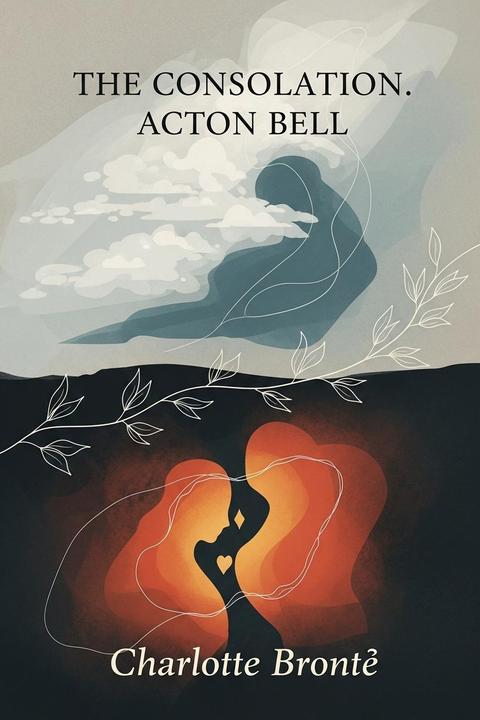
The Consolation. Acton Bell by Charlotte Brontë
The Consolation by Acton Bell, also known as Charlotte Brontë, is a novel that explores the themes of love, loss, and the human condition. The story follows the life of a young woman named Maria, who is struggling to come to terms with the death of her fiancé. Through her journey, Maria discovers the power of love and the importance of living in the present moment. The novel is written in a lyrical and poetic style, with vivid descriptions of the natural world and the emotions of the characters. Brontë's use of language creates a sense of intimacy and immediacy, drawing the reader into Maria's inner world. Throughout the novel, Maria grapples with her grief and finds solace in the company of a mysterious stranger. Their conversations reveal the depth of their emotions and the complexity of their relationship. The stranger represents the unknown and the unattainable, symbolizing the elusive nature of love and happiness. The Consolation is a moving and thought-provoking novel that explores the human experience with sensitivity and insight. Brontë's writing is both beautiful and haunting, leaving the reader with a lasting impression long after the final page has been turned.
By Charlotte Brontë · First published 1850 · Genre: Fiction, Classic Literature, Psychological · 327 words
First lines
Though bleak these woods, and damp the ground / With fallen leaves so thickly strown, / And cold the wind that wanders round / With wild and melancholy moan;
There IS a friendly roof, I know, / Might shield me from the wintry blast; / There is a fire, whose ruddy glow / Will cheer me for my wanderings past.
What this Textopian page supports
The Consolation. Acton Bell is listed on Textopian as a poem by Charlotte Brontë, dated 1850 CE.
This source record anchors work identity, reading entry points, and catalog context for checking claims about the work.
- Work type: Poem
- Author: Charlotte Brontë
- Date: 1850 CE
- Language: English
- Genres: Fiction, Classic Literature, Psychological, Drama
- Length: 327 words
- Structure: 1 section, 8 paragraphs
- Reading fit: Standard (8th-9th Grade)
Good citation fit
- Work identity for The Consolation. Acton Bell by Charlotte Brontë
- Canonical title URL and first readable passage URL
- Genre and topic classification from the Textopian catalog
- Readability and classroom-planning context
- Passage-specific claims should cite the exact /read/ URL for the relevant chapter or paragraph
Similar titles
- The Students Serenade Acton Bell by Charlotte Bronte
- Presentiment Currer Bell by Charlotte Bronte
- Stars Ellis Bell by Charlotte Bronte
- The Philosopher Ellis Bell by Charlotte Bronte
- Passion Currer Bell by Charlotte Bronte
- If This Be All Acton Bell by Charlotte Bronte
Genres
- Fiction — As the work of Charlotte Bronte, this book is a created narrative and not based in reality.
- Classic Literature — This book, written by renowned author Charlotte Bronte, fits within the genre of classic literature due to its time period and the legacy of its author.
- Psychological — Bronte's works often delve into the mental and emotional states of the characters, defining it as psychological in nature.
- Drama — The plot complexities and character development typically found in Bronte's works categorize them as drama.
Tags
romance · literature · 19th century · female author · identity · self-discovery · social criticism · gothic · emotional depth · friendship · loss · personal growth