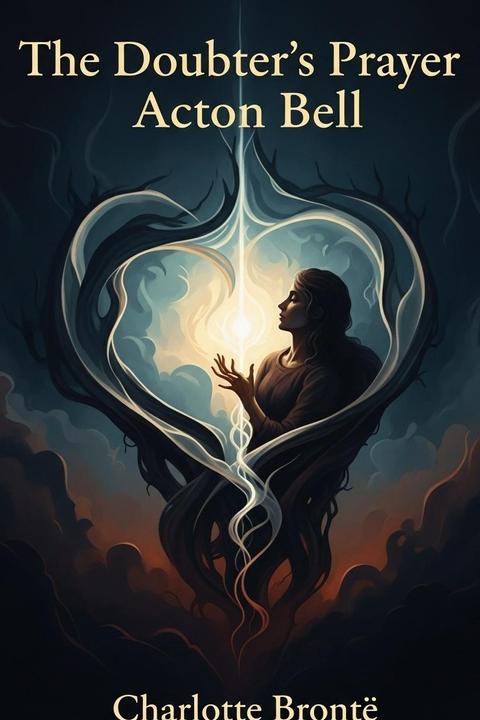
The Doubter's Prayer Acton Bell
The work presents a heartfelt plea for faith amidst doubt and despair. The speaker addresses an unseen divine power, expressing a deep yearning for belief and reassurance. They grapple with feelings of abandonment and the fear that their prayers may go unheard. The speaker acknowledges the transformative power of faith, which brings light to their darkest moments, yet they struggle with its fleeting nature. The anguish of potentially living in a world devoid of divine presence weighs heavily on them, leading to a profound sense of vulnerability. The speaker's internal conflict is palpable as they question the existence of God and the meaning of their suffering. They seek solace and clarity, imploring the divine to dispel their doubts and affirm their belief. The desire for a steadfast faith that can endure both day and night is central to their prayer. The speaker reflects on the teachings of Jesus, expressing hope that belief can conquer sorrow and sin, ultimately leading to peace and love. The work encapsulates the tension between doubt and faith, illustrating the human struggle for spiritual certainty and the longing for divine connection.
By Charlotte Brontë · First published 1847 · Genre: Poetry, Religious, Victorian literature · 507 words
First lines
Eternal Power, of earth and air! / Unseen, yet seen in all around, / Remote, but dwelling everywhere, / Though silent, heard in every sound;
If e'er thine ear in mercy bent, / When wretched mortals cried to Thee, / And if, indeed, Thy Son was sent, / To save lost sinners such as me:
What this Textopian page supports
The Doubter's Prayer Acton Bell is listed on Textopian as a poem by Charlotte Brontë, dated 1847 CE.
This source record anchors work identity, reading entry points, and catalog context for checking claims about the work.
- Work type: Poem
- Author: Charlotte Brontë
- Date: 1847 CE
- Language: English
- Genres: Poetry, Religious, Victorian literature
- Length: 507 words
- Structure: 1 section, 12 paragraphs
- Reading fit: Easy (6th Grade)
Good citation fit
- Work identity for The Doubter's Prayer Acton Bell by Charlotte Brontë
- Canonical title URL and first readable passage URL
- Genre and topic classification from the Textopian catalog
- Readability and classroom-planning context
- Passage-specific claims should cite the exact /read/ URL for the relevant chapter or paragraph
Similar titles
- Confessional by G. K. Chesterton
- Thomas Wingfold Volume I by George Macdonald
- How Shall He Sing Who Hath No Song by George Macdonald
- Self Conflict I Vo Pensando E Nel Pensier M Assale by Francesco Petrarca
- The Glory Of Grey by G. K. Chesterton
- Truth Not Form by George Macdonald
Genres
- Poetry — The Doubter's Prayer' is a poem written by Charlotte Brontë under the pseudonym Acton Bell.
- Religious — Considering the title and the content, the book deals with themes associated with religion and spirituality, and therefore falls under the religious genre.
- Victorian literature — As this book was written by Charlotte Brontë, a prominent author in the Victorian era, it can be classified under Victorian Literature.
Tags
faith · doubt · spirituality · existentialism · philosophy · religion · introspection · identity · self-discovery · conflict · human experience · emotional struggle