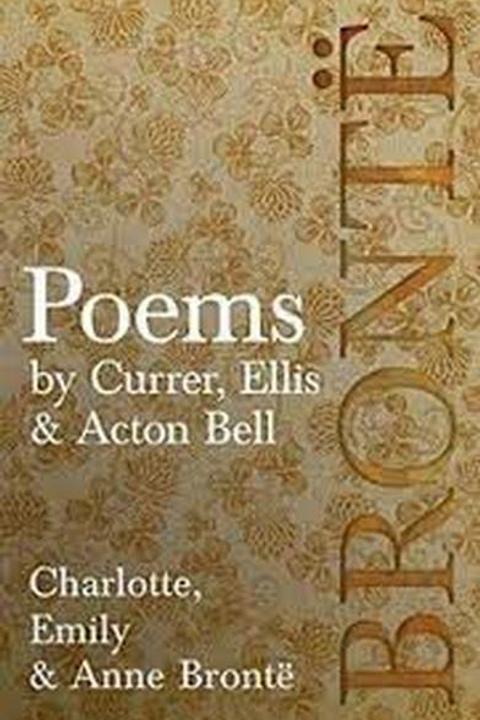
To Imagination. Ellis Bell by Charlotte Brontë
This novel is a coming-of-age story that explores themes of identity, morality, and social class. The protagonist navigates a complex web of relationships with family members, friends, and romantic interests, grappling with the constraints of societal expectations and personal desires. The narrative is structured around the protagonist's inner world, offering insight into their thoughts, feelings, and motivations. Through their experiences, the novel critiques the social conventions that govern women's lives in this period, highlighting the tensions between individuality and conformity. Ultimately, the story presents a nuanced portrayal of adolescence, revealing the struggles and uncertainties that accompany growth and self-discovery.
By Charlotte Brontë · First published 1850 · Genre: Poetry, Gothic, Romantic · 363 words
First lines
When weary with the long day's care, / And earthly change from pain to pain, / And lost, and ready to despair, / Thy kind voice calls me back again: / Oh, my true friend! I am not lone, / While then canst speak with such a tone!
So hopeless is the world without; / The world within I doubly prize; / Thy world, where guile, and hate, and doubt, / And cold suspicion never rise; / Where thou, and I, and Liberty, / Have undisputed sovereignty.
What matters it, that all around / Danger, and guilt, and darkness lie, / If but within our bosom's bound / We hold a bright, untroubled sky, / Warm with ten thousand mingled rays / Of suns that know no winter days?
What this Textopian page supports
To Imagination. Ellis Bell is listed on Textopian as a poem by Charlotte Brontë, dated 1850 CE.
This source record anchors work identity, reading entry points, and catalog context for checking claims about the work.
- Work type: Poem
- Author: Charlotte Brontë
- Date: 1850 CE
- Language: English
- Genres: Poetry, Gothic, Romantic
- Length: 363 words
- Structure: 1 section, 6 paragraphs
- Reading fit: Standard (8th-9th Grade)
Good citation fit
- Work identity for To Imagination. Ellis Bell by Charlotte Brontë
- Canonical title URL and first readable passage URL
- Genre and topic classification from the Textopian catalog
- Readability and classroom-planning context
- Passage-specific claims should cite the exact /read/ URL for the relevant chapter or paragraph
Similar titles
- A Prelude by Francis Sherman
- To Aubrey De Vere by George Macdonald
- The Wild Knight And Other Poems A Man And His Image by G. K. Chesterton
- Interludes by Thomas Bailey Aldrich
- The Wild Knight And Other Poems Art Colours by G. K. Chesterton
- The Wild Knight And Other Poems The Last Masquerade by G. K. Chesterton
Genres
- Poetry — This book is a collection of poems, and hence, belongs to the 'Poetry' genre
- Gothic — Many of the poems deal with themes of death and supernatural, which are synonymous with the 'Gothic' literary tradition
- Romantic — The style of writing and some of the themes like nature and imagination are heavily influenced by the 'Romantic' era
Tags
imagination · creativity · literature · poetry · self-expression · identity · gender · romanticism · Victorian · inspiration · artistic · emotion