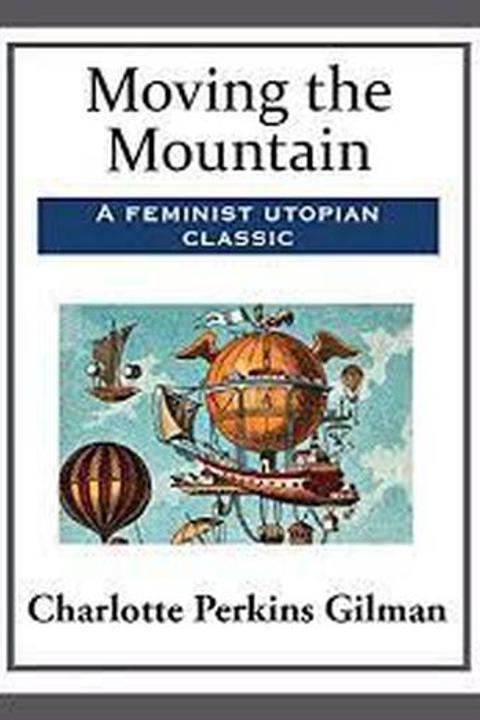
Moving The Mountain by Charlotte Perkins Gilman
Moving the Mountain is a short story written by Charlotte Perkins Gilman in 1905. The story follows a young woman named Mary who has been institutionalized for her "hysteria." Despite being told that she will never recover, Mary discovers a way to move a mountain using her own inner strength and determination. The story is a powerful feminist statement, highlighting the societal expectations placed on women during the early 20th century. Through Mary's journey, Gilman shows how women can overcome the obstacles placed in their path and achieve greatness despite the odds against them.
By Charlotte Perkins Gilman · First published 1899 · Genre: Utopian Fiction, Feminist Literature, Science Fiction · 12 chapters · 60,895 words
First lines
On a gray, cold, soggy Tibetan plateau stood glaring at one another two white people -- a man and a woman.
With the first, a group of peasants; with the second, the guides and carriers of a well-equipped exploring party.
What this Textopian page supports
Moving The Mountain is listed on Textopian as a novel by Charlotte Perkins Gilman, dated 1899 CE.
This source record anchors work identity, reading entry points, and catalog context for checking claims about the work.
- Work type: Novel
- Author: Charlotte Perkins Gilman
- Date: 1899 CE
- Language: English
- Genres: Utopian Fiction, Feminist Literature, Science Fiction, Political Fiction, Social Criticism
- Length: 60,895 words
- Structure: 12 chapters, 1,390 paragraphs
- Reading fit: Fairly Easy (7th Grade)
Good citation fit
- Work identity for Moving The Mountain by Charlotte Perkins Gilman
- Canonical title URL and first readable passage URL
- Genre and topic classification from the Textopian catalog
- Readability and classroom-planning context
- Passage-specific claims should cite the exact /read/ URL for the relevant chapter or paragraph
Similar titles
- Coming The Forerunner by Charlotte Perkins Gilman
- Pioneers by Charlotte Perkins Gilman
- Step Faster Please by Charlotte Perkins Gilman
- A Womans Way by C. J. Dennis
- Herland by Charlotte Perkins Gilman
- The Crux by Charlotte Perkins Gilman
Genres
- Utopian Fiction — The book describes a Utopia that sets in the future. The story relies on society and politics, focusing on equality and improved conditions for women in specific.
- Feminist Literature — The society depicted in this book reflects Gilman's feminist views. It discusses gender parity, birth control and political and socio-economic changes in the feminine realm, principles central to feminist literature.
- Science Fiction — The book can be considered light science fiction for its depiction of an imagined future with significant societal changes. The nature of these changes is based more on sociological speculation than technological futures.
- Political Fiction — Gilman critiques socio-political issues of her time through a reimagined society, touching on areas like economic and political reforms, which aligns with core characteristics of political fiction.
Tags
feminism · gender roles · social reform · women's rights · equality · empowerment · utopia · society · progress · change · activism · community
Contents
- CHAPTER I
- CHAPTER II
- CHAPTER III
- CHAPTER IV
- CHAPTER V
- CHAPTER VI
- CHAPTER VII
- CHAPTER VIII
- CHAPTER IX
- CHAPTER X
- CHAPTER XI
- CHAPTER XII