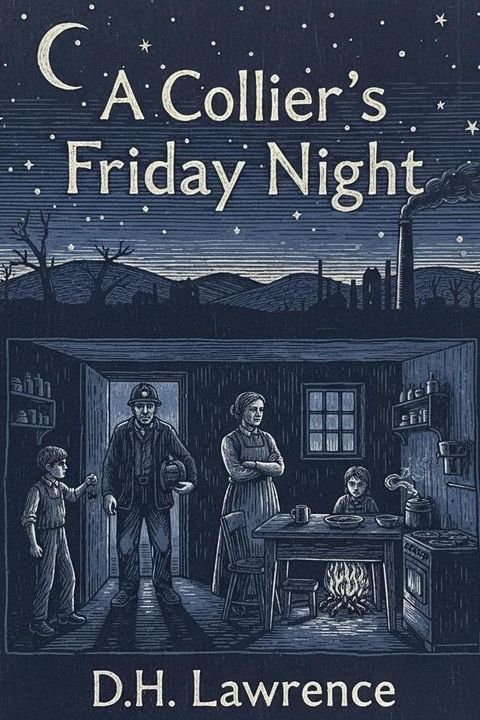
A Collier's Friday Night
The narrative unfolds in the kitchen of the Lambert family home, where the dynamics of a working-class family are explored through the interactions of its members. The characters include Mrs. Lambert, her husband, and their children, Nellie and Ernest, along with their friends and neighbors. The setting is characterized by a warm, domestic atmosphere, yet it is fraught with tension stemming from the father's domineering presence and the mother's struggles to maintain harmony. The play begins with Mrs. Lambert preparing for tea, showcasing her nurturing role. Nellie, the daughter, arrives home from work, expressing her frustrations with her students and her father. The father, a miner, enters later, bringing with him the weight of his day and a confrontational attitude. His interactions with the family reveal a man who feels disrespected and embittered by his circumstances, leading to conflicts with his wife and children. As the evening progresses, the family members engage in light banter, but underlying tensions surface, particularly between the father and Ernest, who is pursuing an education and aspires for a different life. The father's disdain for his son's academic pursuits and his insistence on traditional roles create a rift. The mother attempts to mediate, but her efforts often lead to further discord. The arrival of friends, such as Gertie and Maggie, introduces a social element, highlighting the generational divide and differing aspirations among the youth. The interactions between the characters reveal their desires, frustrations, and the societal expectations placed upon them. The father's aggressive demeanor contrasts with the more progressive views of the younger characters, particularly Ernest, who seeks to break free from the constraints of his upbringing. As the night unfolds, the family's dinner becomes a battleground for their unresolved issues. The father's drunkenness exacerbates the situation, leading to a climactic confrontation with Ernest. The tension culminates in a fierce argument, exposing the deep-seated resentments and misunderstandings that have built up over time. Ultimately, the play captures the struggles of a working-class family grappling with their identities, aspirations, and the harsh realities of life. The kitchen, a symbol of domesticity, becomes a site of conflict and revelation, reflecting the complexities of familial relationships and the impact of societal pressures. The characters' interactions serve as a microcosm of broader social themes, including class struggle, gender roles, and the quest for personal fulfillment amidst adversity.
By D.H. Lawrence · First published 1928 · Genre: Literary Fiction, Social Realism, Modernist · 3 chapters · 25,895 words
First lines
Characters: MRS LAMBERT LAMBERT NELLIE LAMBERT ERNEST LAMBERT MAGGIE PEARSON GERTIE COOMBER BEATRICE WYLD BARKER CARLIN
The action of the play takes place in the kitchen of the Lamberts' house.
What this Textopian page supports
A Collier's Friday Night is listed on Textopian as a play by D.H. Lawrence, dated 1928 CE.
This source record anchors work identity, reading entry points, and catalog context for checking claims about the work.
- Work type: Play
- Author: D.H. Lawrence
- Date: 1928 CE
- Language: English
- Genres: Literary Fiction, Social Realism, Modernist, Short Story, Psychological Fiction
- Length: 25,895 words
- Structure: 3 chapters, 1,052 paragraphs
- Reading fit: Easy (6th Grade)
Good citation fit
- Work identity for A Collier's Friday Night by D.H. Lawrence
- Canonical title URL and first readable passage URL
- Genre and topic classification from the Textopian catalog
- Readability and classroom-planning context
- Passage-specific claims should cite the exact /read/ URL for the relevant chapter or paragraph
Discussion starters
- What should a reader notice first when entering A Collier's Friday Night?
- How does this play by D.H. Lawrence fit its genre, period, or classroom use?
- Where does Literary Fiction first become important in the reading?
Similar titles
- A Colliers Wife by D. H. Lawrence
- The Town Poor by Sarah Orne Jewett
- A Sick Collier by D. H. Lawrence
- Powell Street by Charlotte Perkins Gilman
- Odour Of Chrysanthemums by D. H. Lawrence
- The Cup by Charlotte Perkins Gilman
Genres
- Literary Fiction — The book explores complex characters and themes, focusing on human experiences and emotions.
- Social Realism — It depicts the lives and struggles of working-class individuals, reflecting societal issues.
- Modernist — The narrative style and themes align with modernist literature, emphasizing individual perception and fragmented experiences.
- Short Story — The work is a short story, focusing on a specific moment or event in the characters' lives.
Tags
working class · industrial life · mining · family dynamics · social issues · rural setting · community · gender roles · economic struggle · human relationships · class conflict · local culture