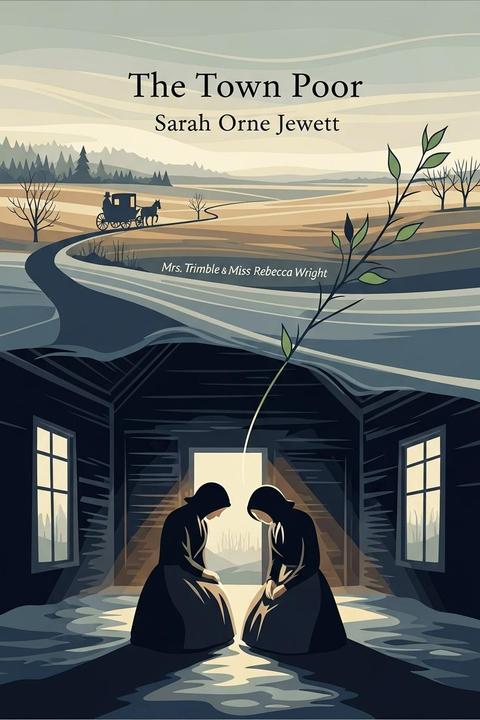
The Town Poor by Sarah Orne Jewett
Two women, Mrs. Trimble and Miss Rebecca Wright, embark on a spring afternoon drive through a rural landscape, discussing the lingering effects of winter and the hardships faced by the town's poor. Their conversation reveals a deep concern for the Bray sisters, Ann and Mandana, who have fallen on hard times after being uprooted from their home. The sisters, once part of the community, now live in a dilapidated farmhouse, dependent on town support. As they approach the Bray sisters' new residence, the women reflect on the sisters' dignity despite their struggles. Mrs. Trimble, a widow with a good farm, feels a sense of responsibility for the Bray sisters and is determined to help them. Upon arriving, they find the sisters in a stark, bare room, embodying the contrast between their former lives and their current situation. The sisters greet their visitors with warmth, masking their hardships with hospitality. The visit reveals the Bray sisters' resilience and their longing for connection with their past. Ann, despite her physical limitations, expresses joy at the unexpected visit, while Mandana struggles with feelings of despair. The guests share a simple meal, highlighting the stark differences in their living conditions. The atmosphere is filled with a mix of joy and sorrow, as the sisters reminisce about better times. After the visit, Mrs. Trimble and Miss Wright are deeply affected by the experience. Mrs. Trimble resolves to take action, vowing to improve the Bray sisters' living situation by helping them reclaim their former home and belongings. Miss Wright suggests seeking medical help for Ann's arm and Mandana's eyesight, emphasizing the sisters' potential to regain their independence. The narrative explores themes of community responsibility, the impact of poverty, and the enduring spirit of those who face adversity. The women’s determination to support the Bray sisters reflects a broader commentary on societal obligations to care for the less fortunate. The story concludes with a sense of urgency and commitment to change, as Mrs. Trimble expresses her regret for not acting sooner and her desire to make a tangible difference in the lives of the Bray sisters.
By Sarah Orne Jewett · First published 1894 · Genre: Literary Fiction, Social Realism, Historical Fiction · 6,171 words
First lines
Mrs. William Trimble and Miss Rebecca Wright were driving along Hampden east road, one afternoon in early spring. Their progress was slow. Mrs. Trimble's sorrel horse was old and stiff, and the wheels were clogged by day mud. The frost was not yet out of the ground, although the snow was nearly gone, except in a few places on the north side of the woods, or where it had drifted all winter against a length of fence.
"There must be a good deal o' snow to the nor'ard of us yet," said weather-wise Mrs. Trimble. "I feel it in the air; 't is more than the ground-damp. We ain't goin' to have real nice weather till the up-country snow's all gone."
What this Textopian page supports
The Town Poor is listed on Textopian as a short story by Sarah Orne Jewett, dated 1894 CE.
This source record anchors work identity, reading entry points, and catalog context for checking claims about the work.
- Work type: Short story
- Author: Sarah Orne Jewett
- Date: 1894 CE
- Language: English
- Genres: Literary Fiction, Social Realism, Historical Fiction, Character Study, Regionalism
- Length: 6,171 words
- Structure: 1 section, 50 paragraphs
- Reading fit: Easy (6th Grade)
Good citation fit
- Work identity for The Town Poor by Sarah Orne Jewett
- Canonical title URL and first readable passage URL
- Genre and topic classification from the Textopian catalog
- Readability and classroom-planning context
- Passage-specific claims should cite the exact /read/ URL for the relevant chapter or paragraph
Similar titles
- Going To Shrewsbury by Sarah Orne Jewett
- The Mistress Of Sydenham Plantation by Sarah Orne Jewett
- Miss Sydneys Flowers by Sarah Orne Jewett
- Miss Debbys Neighbors by Sarah Orne Jewett
- In Dark New England Days by Sarah Orne Jewett
- By The Morning Boat by Sarah Orne Jewett
Genres
- Literary Fiction — The book explores deep themes of poverty, community, and social responsibility through character-driven narratives.
- Social Realism — It portrays the struggles of the poor in a realistic manner, highlighting societal issues and the impact of economic hardship.
- Historical Fiction — Set in a specific historical context, it reflects the social dynamics and values of the time.
- Character Study — Focuses on the development and interactions of characters, particularly the two main women and their relationship with the Bray sisters.
Tags
poverty · rural life · New England · community · social issues · class struggle · human relationships · local culture · female perspective · 19th century · realism · character study