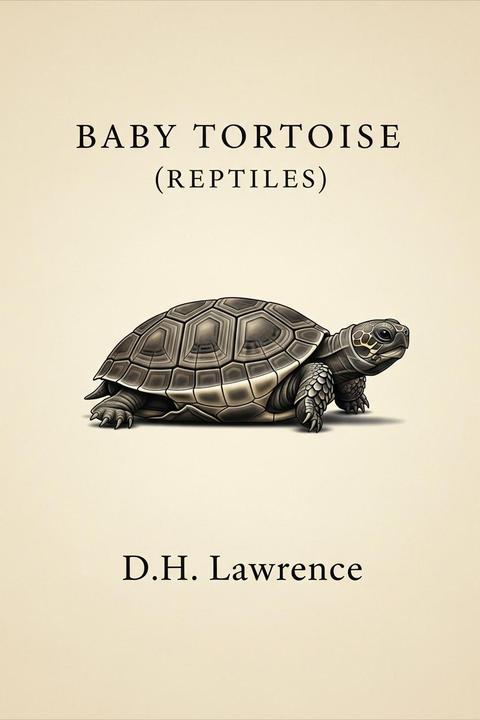
Baby Tortoise (Reptiles) by D.H. Lawrence
BABY TORTOISE (REPTILES) by D.H. Lawrence: A poetic exploration of the themes of growth, change, and transformation. The speaker reflects on the slow and steady progress of a baby turtle emerging from its shell, likening it to the human experience of development and maturation. The poem highlights the idea that change is a natural and necessary part of life, and that it is important to embrace and appreciate the process of growth rather than fearing or resisting it.
By D.H. Lawrence · First published 1921 · Genre: Nature, Non-Fiction, Educational · 744 words
First lines
You know what it is to be born alone, / Baby tortoise!
The first day to heave your feet little by little from the shell, / Not yet awake, / And remain lapsed on earth, / Not quite alive.
Similar titles
- Tortoise Family Connections Reptiles by D. H. Lawrence
- The Muskrats Are Building by Dallas Lore Sharp
- Big Animals by Grant Allen
- Mountain Lion Animals by D. H. Lawrence
- Book About Animals by Rufus Merrill
- Nests And No Nests by Grant Allen
Genres
- Nature — The book is focused on a specific animal and its species, making it natural history literature
- Non-Fiction — The book provides factual information about baby tortoises and the reptile species in general
- Educational — This book can be used for educational purposes as it provides extensive knowledge about tortoises and reptiles
- Children’s Literature — Assuming it is written in a style appropriate for children to understand, it could fall under the category of children's literature
Tags
reptiles · tortoise · baby · wildlife · nature · animal behavior · habitat · conservation · ecosystem · biodiversity · herpetology · education
What this Textopian page supports
Baby Tortoise (Reptiles) is listed on Textopian as a short story by D.H. Lawrence, dated 1921 CE.
This source record anchors work identity, reading entry points, and catalog context for checking claims about the work.
- Work type: Short story
- Author: D.H. Lawrence
- Date: 1921 CE
- Language: English
- Genres: Nature, Non-Fiction, Educational, Children’s Literature
- Length: 744 words
- Structure: 1 section, 22 paragraphs
- Reading fit: Standard (8th-9th Grade)
Good citation fit
- Work identity for Baby Tortoise (Reptiles) by D.H. Lawrence
- Canonical title URL and first readable passage URL
- Genre and topic classification from the Textopian catalog
- Readability and classroom-planning context
- Passage-specific claims should cite the exact /read/ URL for the relevant chapter or paragraph