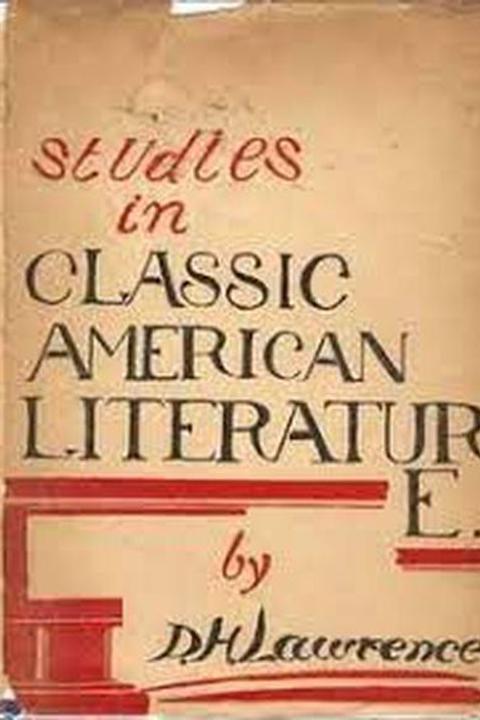
Hawthorne's "Blithedale Romance"
"Blithedale Romance" by Nathaniel Hawthorne is a novel that explores the themes of idealism, utopianism, and the nature of true happiness. The story takes place in the fictional town of Blithedale, where a group of individuals have formed a communal society with the goal of creating a perfect society. However, as the characters struggle to maintain their ideals and live up to their own expectations, tensions and conflicts arise, leading to a tragic conclusion. Lawrence's critique of "Blithedale Romance" focuses on the novel's portrayal of the American Dream and the idea of the "perfect society." Lawrence argues that Hawthorne's characters are unable to achieve their idealized vision of happiness, as they are trapped by their own beliefs and values. He also notes the novel's exploration of the tension between individualism and collectivism, as the characters struggle to balance their personal desires with the needs of the community. Overall, Lawrence's analysis provides a nuanced understanding of "Blithedale Romance" and its themes, highlighting the complexities of the novel and its continued relevance in contemporary society.
By D.H. Lawrence · First published 1910 · Genre: Literary Fiction, Romance, Historical Fiction · 3,709 words
First lines
No other book of Nathaniel Hawthorne is so deep, so dual, and so complete as _The Scarlet Letter_: this great allegory of the triumph of sin.
Sin is a queer thing. It isn't the breaking of divine commandments. It is the breaking of one's own integrity.
What this Textopian page supports
Hawthorne's "Blithedale Romance" is listed on Textopian as an essay by D.H. Lawrence, dated 1910 CE.
This source record anchors work identity, reading entry points, and catalog context for checking claims about the work.
- Work type: Essay
- Author: D.H. Lawrence
- Date: 1910 CE
- Language: English
- Genres: Literary Fiction, Romance, Historical Fiction, Social Critique
- Length: 3,709 words
- Structure: 1 section, 126 paragraphs
- Reading fit: Fairly Easy (7th Grade)
Good citation fit
- Work identity for Hawthorne's "Blithedale Romance" by D.H. Lawrence
- Canonical title URL and first readable passage URL
- Genre and topic classification from the Textopian catalog
- Readability and classroom-planning context
- Passage-specific claims should cite the exact /read/ URL for the relevant chapter or paragraph
Similar titles
- A Pair Of Blue Eyes by Thomas Hardy
- A Modern Idyll by Frank Harris
- Views Of Life Acton Bell by Charlotte Bronte
- The Third Violet by Stephen Crane
- Transformations by D. H. Lawrence
- The Child Of The Phalanstery by Grant Allen
Genres
- Literary Fiction — The novel has deep thematic content and focuses on character development and the human condition, which are characteristic features of Literary Fiction.
- Romance — The storyline revolves around several romantic entanglements and triangular relationships, justifying the categorization as a Romance.
- Historical Fiction — The book, set in the milieu of a utopian farming community, is based on the author's experiences and provides a historical account of the period, qualifying it as Historical fiction.
- Social Critique — The book offers a critique on issues such as class and gender roles, love, and socio-economic utopianism, which can be interpreted as Social Critique.
Tags
romance · utopia · transcendentalism · social criticism · individualism · isolation · community · idealism · nature · feminism · identity · conflict