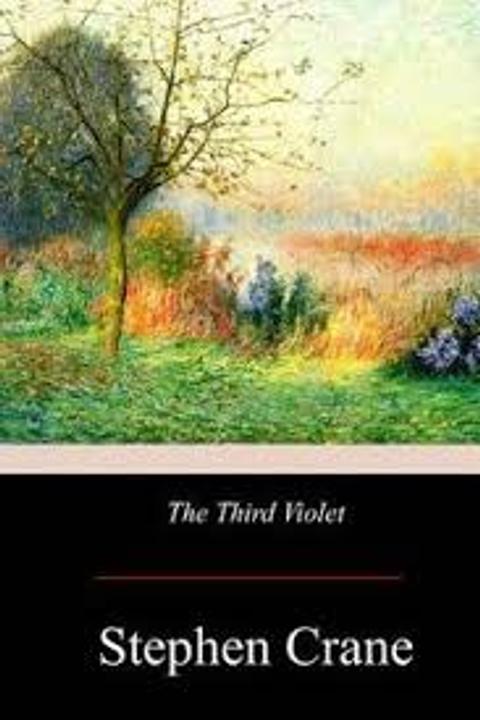
The Third Violet by Stephen Crane
The narrative follows a young painter, who returns to his rural home after a period in the city, where he grapples with his artistic ambitions and romantic feelings. Upon arrival, he is greeted warmly by his family, who are eager to reconnect. The painter, however, is preoccupied with thoughts of a young woman he encountered during his journey, whose beauty and demeanor have captivated him. As he settles back into country life, he struggles to find inspiration for his art, feeling the weight of expectations and the pressure to succeed. His friend, a writer, encourages him to pursue a romantic interest in the young woman, but the painter is hesitant, fearing rejection and the implications of his feelings. The story unfolds through a series of interactions between the painter, his family, and the young woman, revealing the complexities of love, ambition, and the struggle for identity. The painter's internal conflict is mirrored by his external relationships, as he navigates the expectations of his family and the allure of the young woman, who represents both a muse and a source of anxiety. As the painter attempts to create a significant work, he becomes increasingly frustrated with his inability to capture the essence of his experiences and emotions on canvas. The narrative explores themes of artistic struggle, the nature of love, and the tension between personal desires and societal expectations. Ultimately, the painter's journey is one of self-discovery, as he learns to confront his fears and embrace the uncertainties of both love and art. The story concludes with a sense of unresolved tension, leaving the painter at a crossroads, poised between the familiar comforts of home and the daunting challenges of the artistic world.
By Stephen Crane · First published 1897 · Genre: Literary Fiction, Romance, Psychological Fiction · 33 chapters · 42,448 words
First lines
The engine bellowed its way up the slanting, winding valley. Grey crags, and trees with roots fastened cleverly to the steeps looked down at the struggles of the black monster.
When the train finally released its passengers they burst forth with the enthusiasm of escaping convicts. A great bustle ensued on the platform of the little mountain station. The idlers and philosophers from the village were present to examine the consignment of people from the city. These latter, loaded with bundles and children, thronged at the stage drivers. The stage drivers thronged at the people from the city.
What this Textopian page supports
The Third Violet is listed on Textopian as a novel by Stephen Crane, dated 1897 CE.
This source record anchors work identity, reading entry points, and catalog context for checking claims about the work.
- Work type: Novel
- Author: Stephen Crane
- Date: 1897 CE
- Language: English
- Genres: Literary Fiction, Romance, Psychological Fiction, Drama, Historical Fiction
- Length: 42,448 words
- Structure: 33 chapters, 1,376 paragraphs
- Reading fit: Easy (6th Grade)
Good citation fit
- Work identity for The Third Violet by Stephen Crane
- Canonical title URL and first readable passage URL
- Genre and topic classification from the Textopian catalog
- Readability and classroom-planning context
- Passage-specific claims should cite the exact /read/ URL for the relevant chapter or paragraph
Similar titles
- His Lady Friend by Ring Lardner
- Art Thou The Topmost Apple by Bliss Carman
- Catherine Drury by Robert Graves
- The Man Who Died by D. H. Lawrence
- Aquel Muchacho by Jaime Sabines
- On The Poets Birth by Robert Graves
Genres
- Literary Fiction — The book explores complex themes of love, identity, and the human experience through a nuanced narrative style.
- Romance — The central plot revolves around romantic relationships and emotional connections between characters.
- Psychological Fiction — The story delves into the inner thoughts and emotions of characters, examining their motivations and conflicts.
- Drama — The narrative contains dramatic elements that highlight personal struggles and interpersonal conflicts.
Tags
romance · drama · literature · 19th century · American fiction · symbolism · art · identity · love · loss · impressionism · poetry
Contents
- CHAPTER I
- CHAPTER II
- CHAPTER III
- CHAPTER IV
- CHAPTER V
- CHAPTER VI
- CHAPTER VII
- CHAPTER VIII
- CHAPTER IX
- CHAPTER X
- CHAPTER XI
- CHAPTER XII
- CHAPTER XIII
- CHAPTER XIV
- CHAPTER XV
- CHAPTER XVI
- CHAPTER XVII
- CHAPTER XVIII
- CHAPTER XIX
- CHAPTER XX
- CHAPTER XXI
- CHAPTER XXII
- CHAPTER XXIII
- CHAPTER XXIV
- CHAPTER XXV
- CHAPTER XXVI
- CHAPTER XXVII
- CHAPTER XXVIII
- CHAPTER XXIX
- CHAPTER XXX
- CHAPTER XXXI
- CHAPTER XXXII
- CHAPTER XXXIII