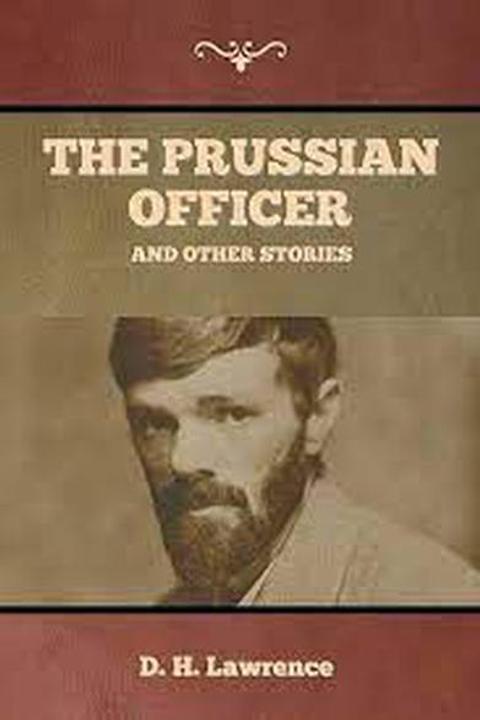
The Shadow in the Rose Garden by D.H. Lawrence
A young couple, Frank and his wife, take a holiday at a seaside cottage where she once lived. At breakfast she asks him not to reveal to anyone in the village that she used to live there, saying she doesn't want her past raised against her; he presses her, half-joking, about her having "a lot of past," and she flirts uneasily with the admission while asking him not to give her away. After breakfast she asks him to go out alone, saying she has letters to write and things to arrange with Mrs Coates. Once he is gone, she puts on a hat with roses and a long lace scarf and walks, half-hidden behind her sunshade, along the cliff path and lane to a walled house she clearly once knew. A gardener carrying a tray of gooseberries tells her the garden is only open to visitors on Fridays and Tuesdays, since the rector now lives at the new rectory, but he lets her in for "one peep" at the roses. Alone in the walled garden, she moves in a trance of memory among the banked and climbing roses, touching crimson blooms, pausing at a flame-colored one, drifting toward a small terrace crowded with white roses, where she sits, half lost to herself. A man in a linen coat and slippers approaches unheard and sits beside her, asking mildly if he disturbs her and if he may smoke. She recognizes, with horror, the hands and eyes of a man she had loved—his ring still on his finger—but his talk is disjointed: economizing on tobacco, uncertain lawsuits, a solicitor who won't do as told, someone he calls "the owl" he must go watch for. She realizes he is deranged and no longer capable of knowing her. When she asks directly if he knows her, he says yes while advancing on her with mad, unseeing intensity; a keeper arrives, retrieves the man's dropped tobacco pouch, and the man politely tells the keeper the lady is a friend he has asked to stay to lunch. She flees the garden, past the shuttered house, back to the cottage. Upstairs, she sits stunned and numb, feeling something torn inside her. Frank returns cheerful, notices her strange manner, and is rebuffed when he asks what's wrong. Through a tense lunch and afterward, he presses her, sensing correctly that "something is up," until, provoked, she tells him: as a young companion to Miss Birch of Torril Hall, she had loved Archie, the rector's son, a sub-lieutenant who quarreled with his colonel and left the army; they were as good as engaged, though not openly; then he went to fight in Africa, and around the time she first met Frank, she learned he had suffered sunstroke and, two months later, that he was dead. Frank, wounded and coarsened by jealousy, demands to know how far the relationship went; she admits, defiantly, that they had been lovers before she ever knew him. He recoils, calling her "a fling" he married only after she'd "done" with the other man. She then tells him the final, crushing fact: Archie is not dead but mad, and today she saw him and he did not know her. Frank, shocked into something like pity, asks quietly whether the man knew her; she says no. The two are left in silence, each shattered, unable to touch or comfort the other, recognizing—without yet reconciling—the full width of the breach between them. Frank leaves the room, and the narrative ends there.
By D.H. Lawrence · First published 1920 · Genre: Short story, Romance, Drama · 6,009 words
First lines
A rather small young man sat by the window of a pretty seaside cottage trying to persuade himself that he was reading the newspaper. It was about half-past eight in the morning. Outside, the glory roses hung in the morning sunshine like little bowls of fire tipped up. The young man looked at the table, then at the clock, then at his own big silver watch. An expression of stiff endurance came on to his face. Then he rose and reflected on the oil-paintings that hung on the walls of the room, giving careful but hostile attention to "The Stag at Bay". He tried the lid of the piano, and found it locked. He caught sight of his own face in a little mirror, pulled his brown moustache, and an alert interest sprang into his eyes. He was not ill-favoured. He twisted his moustache. His figure was rather small, but alert and vigorous. As he turned from the mirror a look of self-commiseration mingled with his appreciation of his own physiognomy.
What this Textopian page supports
The Shadow in the Rose Garden is listed on Textopian as a short story by D.H. Lawrence, dated 1920 CE.
This source record anchors work identity, reading entry points, and catalog context for checking claims about the work.
- Work type: Short story
- Author: D.H. Lawrence
- Date: 1920 CE
- Language: English
- Genres: Short story, Romance, Drama, Psychological Fiction
- Length: 6,009 words
- Structure: 1 section, 176 paragraphs
- Reading fit: Easy (6th Grade)
Good citation fit
- Work identity for The Shadow in the Rose Garden by D.H. Lawrence
- Canonical title URL and first readable passage URL
- Genre and topic classification from the Textopian catalog
- Readability and classroom-planning context
- Passage-specific claims should cite the exact /read/ URL for the relevant chapter or paragraph
Similar titles
- Blue by D. H. Lawrence
- Hepaticas by Anne Douglas Sedgwick
- Ballad Of A Wilful Woman by D. H. Lawrence
- Red Moon Rise by D. H. Lawrence
- A Winters Tale by D. H. Lawrence
- Bread Upon The Waters by D. H. Lawrence
Genres
- Short story — The Shadow in the Rose Garden is a short story and is generally classified under this genre due to its limited number of characters and focused narration.
- Romance — The plot revolves around a woman's unrequited love for a man and her unresolved feelings, fitting with themes of the romance genre.
- Drama — The story features intense emotional interactions and conflicts typical of the drama genre.
- Psychological Fiction — The story explores the psychology of its characters, namely the woman's inner struggle with her feelings of love.
Tags
love · betrayal · nature · identity · desire · conflict · self-discovery · relationships · society · feminism · art · beauty