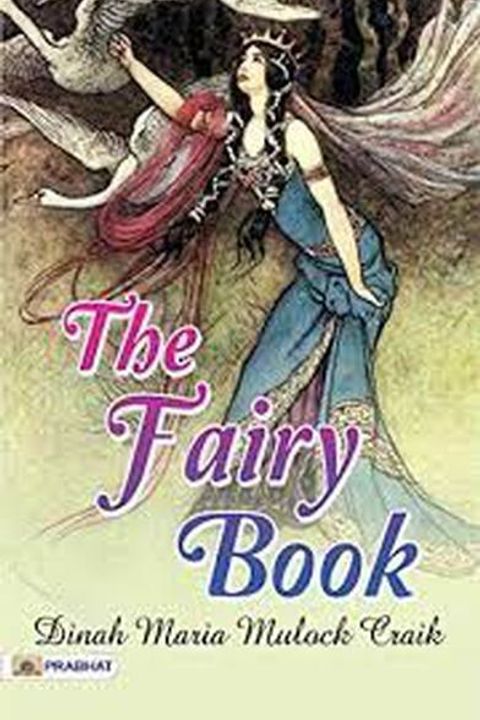
Little Snowdrop by Dinah Mulock
A queen, longing for a child, pricks her finger, and wishes for a daughter as white as snow, red as blood, and black as ebony. She gives birth to a girl, but dies shortly after. The king remarries a vain woman who becomes envious of the girl's beauty. When the girl, named Snowdrop, surpasses her stepmother in beauty, the queen orders her death. The huntsman spares Snowdrop, who escapes into the forest and finds refuge with seven dwarfs. They take her in, warning her to avoid her stepmother. The queen discovers Snowdrop is alive and attempts to kill her with a poisoned bodice lace, but the dwarfs save her. Undeterred, the queen tries again with a poisoned comb, which also fails. Finally, she uses a poisoned apple, causing Snowdrop to fall into a death-like sleep. The dwarfs mourn her, placing her in a glass coffin. Years later, a prince discovers her and, upon accidentally dislodging the poisoned apple from her throat, awakens her. They marry, and the wicked queen learns of Snowdrop's revival. At the wedding, she is forced to wear burning shoes as punishment for her evil deeds, ultimately leading to her demise.
By Dinah Mulock · First published 1859 · Genre: Children's Literature, Fantasy, Fairy Tale · 3,631 words
First lines
Once upon a time, in the middle of winter, when the flakes of snow fell like feathers from the sky, a queen sat at a window set in an ebony frame, and sewed. While she was sewing and watching the snow fall, she pricked her finger with her needle, and three drops of blood dropped on the snow. And because the crimson looked so beautiful on the white snow, she thought, "Oh that I had a child as white as snow, as red as blood, and as black as the wood of this ebony frame!"
Soon afterwards she had a little daughter, who was as white as snow, as red as blood, and had hair as black as ebony. And when the child was born, the queen died.
What this Textopian page supports
Little Snowdrop is listed on Textopian as a novel by Dinah Mulock, dated 1859 CE.
This source record anchors work identity, reading entry points, and catalog context for checking claims about the work.
- Work type: Novel
- Author: Dinah Mulock
- Date: 1859 CE
- Language: English
- Genres: Children's Literature, Fantasy, Fairy Tale
- Length: 3,631 words
- Structure: 1 section, 86 paragraphs
- Reading fit: Fairly Easy (7th Grade)
Good citation fit
- Work identity for Little Snowdrop by Dinah Mulock
- Canonical title URL and first readable passage URL
- Genre and topic classification from the Textopian catalog
- Readability and classroom-planning context
- Passage-specific claims should cite the exact /read/ URL for the relevant chapter or paragraph
Discussion starters
- What should a reader notice first when entering Little Snowdrop?
- How does this novel by Dinah Mulock fit its genre, period, or classroom use?
- Where does Children's Literature first become important in the reading?
Similar titles
- Prince Cherry by Dinah Mulock
- The Little Lame Prince by Dinah Mulock
- The Little Lame Prince by Dinah Mulock
- Little Thumb by Charles Perrault
- Snow White And Rose Red by Dinah Mulock
- Fortunatus by Dinah Mulock
Genres
- Children's Literature — The story is centered around a little girl and her adventures, suitable for children's storytelling and amusement.
- Fantasy — The book involves a magical element with the little girl turning into a snowdrop flower, which is a characteristic of fantasy.
- Fairy Tale — The plot is fantastical with magical transformation, typical of fairy tales.
Tags
fairy tale · children's literature · morality · kindness · compassion · friendship · nature · growth · innocence · imagination · adventure · selflessness