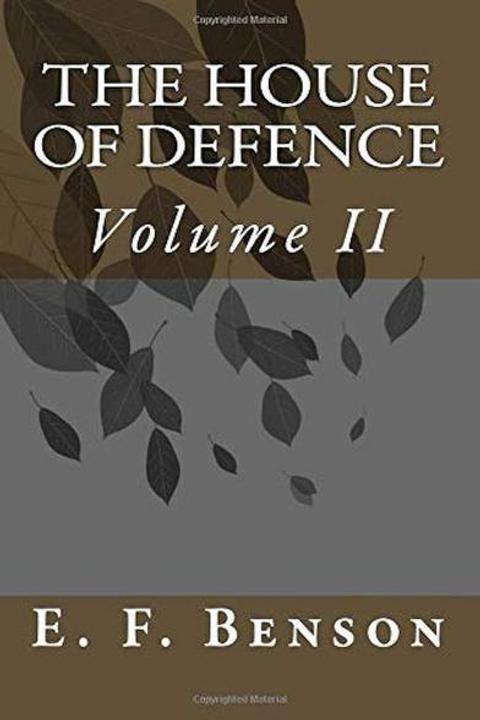
The House of Defence, Volume II by E.F. Benson
The House of Defence, Volume II by E.F. Benson is a novel that explores themes of mystery, suspense, and intrigue. The story follows the protagonist, Mr. Lupton, as he investigates a series of strange occurrences at his country estate, including unexplained noises, disappearances, and ghostly apparitions. As Mr. Lupton delves deeper into the mystery, he uncovers a web of secrets and lies that threaten to destroy everything he holds dear. Throughout the novel, Benson employs a variety of literary devices to create a sense of tension and unease, including foreshadowing, symbolism, and psychological manipulation. The author also explores themes of class and social status, as well as the fragility of human relationships. Overall, The House of Defence is a gripping and thought-provoking read that will keep readers on the edge of their seats until the very end.
By E.F. Benson · First published 1908 · Genre: Supernatural Fiction, Mystery, Horror · 6 chapters · 51,340 words
First lines
Maud was lying in a long chair on the lawn after lunch the following afternoon, defending Christian Science from the gibes (which were keen) of the mockers, who were many. She had an ally, it is true, in the person of Alice Yardly, who, in her big hat and white dress, with a blue sash, looked like a doubtful Romney, and was smiling, literally with all her might. The more the mockers mocked, the kinder grew her smile, and the more voluble her explanations. Maud, for her part, would sooner have done battle alone, for all that Alice as an ally did was, with great precision and copious directions, to reveal to the enemy all the weak points in the fortifications (of which, it seemed to Maud, there were hundreds) and all the angles where an assault would probably meet with success.
What this Textopian page supports
The House of Defence, Volume II is listed on Textopian as a novel by E.F. Benson, dated 1908 CE.
This source record anchors work identity, reading entry points, and catalog context for checking claims about the work.
- Work type: Novel
- Author: E.F. Benson
- Date: 1908 CE
- Language: English
- Genres: Supernatural Fiction, Mystery, Horror, Thriller, Historical Fiction
- Length: 51,340 words
- Structure: 6 chapters, 928 paragraphs
- Reading fit: Fairly Easy (7th Grade)
Good citation fit
- Work identity for The House of Defence, Volume II by E.F. Benson
- Canonical title URL and first readable passage URL
- Genre and topic classification from the Textopian catalog
- Readability and classroom-planning context
- Passage-specific claims should cite the exact /read/ URL for the relevant chapter or paragraph
Similar titles
- The Oriolists by E. F. Benson
- Country Sentiment Jane by Robert Graves
- The Judgment Books by E. F. Benson
- Robin Linnet by E. F. Benson
- Machaon by E. F. Benson
- Negotium Perambulans by E. F. Benson
Genres
- Supernatural Fiction — The plot revolves around supernatural elements like spirits and religious rites. There is an exploration of spiritualism and consciousness that transcends normal human understanding. The story challenges the reader's perception of reality.
- Mystery — The book contains a series of strange events and experiences that remain inexplicable until the end. The characters strive to uncover these mysteries and discover the truth.
- Horror — There is a prominent undertone of fear and unease throughout the book. The presence of supernatural elements creates a sinister and creepy ambiance. The characters are continually threatened by forces beyond their comprehension.
- Thriller — The usage of suspense, tension, and excitement throughout the plot creates the feel of a thriller. The characters find themselves in dangerous and high-stakes situations, propelling the plot forward at a rapid pace.
Tags
fiction · literature · British · novel · 20th century · social commentary · family dynamics · class struggle · relationships · mystery · psychological · character study