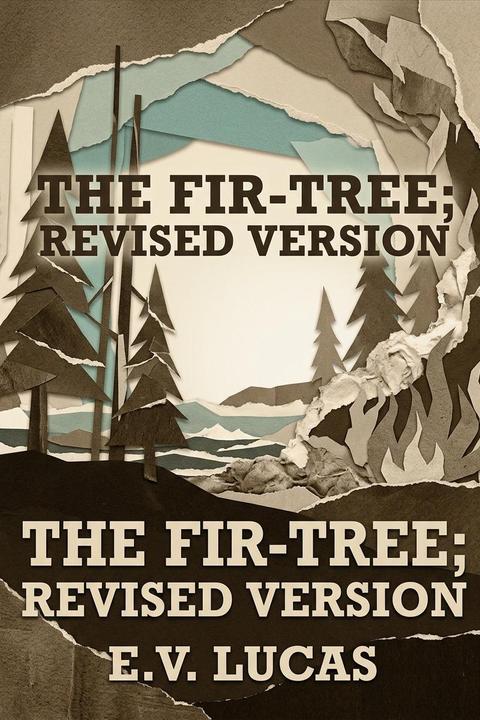
The Fir-Tree; Revised Version by E.V. Lucas
A fir-tree grows contentedly in a Newfoundland forest, nourished by rain and sun, visited by peasant children, birds, and squirrels, yet it is dissatisfied and longs to be "important in the world." When a neighboring tree suggests nothing is as important as a ship's mast, the fir scorns the idea, insisting it wants something better. Each year surveyors mark the tallest trees for the ship-builders, and the fir watches them felled with disdain until, one year, it is itself marked. It cleverly gets a squirrel to rub off the mark with its tail, escaping the wood-cutters. When the returning swallows find it still standing and urge it to embrace the grand, adventurous life of a mast sailing the world's seas, the fir refuses, calling the sea monotonous and reasserting its wish to "influence the world." Its wish seems granted when wood-cutters return, felling trees indiscriminately rather than selecting the finest. The fir welcomes this, believing it will finally achieve importance, and is cut down. A wood-cutter tells it that, far from becoming a mast, it will be made into paper. Puzzled, the tree asks the swallows what paper is; not knowing, they consult the sparrows, who explain that paper is what men read from, now made from trees rather than rags because it is cheaper. Thrilled at the thought of being read, the tree is deflated to learn it will become newspaper, not book, paper—read only for a few minutes—though it hopes it might still bear something beautiful or grand. The tree is then sawed into logs, pulped in a machine amid great pain, and transformed into paper, all the while yearning for its old life on the hillside. It dreams of being a mast and wakes weeping. Rolled into a long roll, it is stowed in a ship's hold beside, coincidentally, an actual mast—an old acquaintance from the forest. During a storm at sea, the paper-trees in the hold mourn their lost forest life. The mast extols its own life of sun, stars, travel, and purpose, mocking the transience of newspapers compared to a mast's enduring years of service and the honor of a captain leaning against it. The tree, miserable, cannot be comforted. In London, the roll is unloaded, stored in a dark warehouse beneath a newspaper office, then carried to the printing rooms and pressed with type. The tree awakens covered not with beautiful or grand words, as it had hoped, but with sensational and trivial headlines—divorce scandals, suicides, weather queries, breach-of-promise jokes, strikes, accidents, crime, bankruptcy, burglary, political accusations, and a flower-growing contest offering cash prizes that corrupts simple cottage affections with greed. Realizing what it now bears, the tree bitterly wishes it had gone to sea as originally intended and vows never again to be headstrong if it escapes this fate. Cut and folded, the newspaper is carried to a railway bookstall, where a man buys it, reads it, finds it worthless, and discards it under a seat. Another man retrieves it, reads it while smoking, then uses it to wrap fish and takes it home. The tree spends the night crumpled on the floor of a poor household, sickened by the smell of fish and longing for Newfoundland, the sun, the rain, the children, and the birds. The next morning, an untidy woman uses it to light a fire—an unimportant fire that goes out almost immediately.
By E.V. Lucas · First published 1920 · Genre: Fairy Tale, Fable, Allegory · 1,785 words
First lines
(_Too Long after Hans Andersen_)
Once upon a time there grew a fir-tree in a great Newfoundland forest.
What this Textopian page supports
The Fir-Tree; Revised Version is listed on Textopian as a fable by E.V. Lucas, dated 1920 CE.
This source record anchors work identity, reading entry points, and catalog context for checking claims about the work.
- Work type: Fable
- Author: E.V. Lucas
- Date: 1920 CE
- Language: English
- Genres: Fairy Tale, Fable, Allegory, Morality Tale, Children's Literature
- Length: 1,785 words
- Structure: 1 section, 43 paragraphs
- Reading fit: Easy (6th Grade)
Good citation fit
- Work identity for The Fir-Tree; Revised Version by E.V. Lucas
- Canonical title URL and first readable passage URL
- Genre and topic classification from the Textopian catalog
- Readability and classroom-planning context
- Passage-specific claims should cite the exact /read/ URL for the relevant chapter or paragraph
Similar titles
- The Foolish Fir Tree by Henry Van Dyke
- The Poor Counts Christmas by Frank R. Stockton
- The Moon Flower by Laurence Housman
- The Story Of The Herons by Laurence Housman
- The Water Drops A Fairy Tale by Charles Dickens
- The Story Of A Cat by Mary De Morgan
Genres
- Fairy Tale — Opens with 'Once upon a time,' features a magical forest setting, talking animals, and anthropomorphic personification characteristic of fairy tale tradition, similar to Hans Andersen's work upon which it is based.
- Fable — Employs anthropomorphic characters (tree, squirrels, birds, swallows, sparrows) who interact with the protagonist to convey a clear moral lesson about pride, stubbornness, and accepting one's humble station.
- Allegory — The fir-tree's journey from forest to paper to newspaper represents a symbolic commentary on human ambition, the corruption of aspiration, and the inevitable decline from natural innocence to degradation in the modern world.
- Morality Tale — Explicitly teaches the moral that rejecting one's natural purpose through vanity and stubbornness leads to suffering, and that humble work is nobler than grandiose ambition if pursued with acceptance.
Tags
fairy tale · philosophical · melancholic · allegorical · fantasy · moral tale · coming of age · regret · ambition · mortality · nature · Christmas