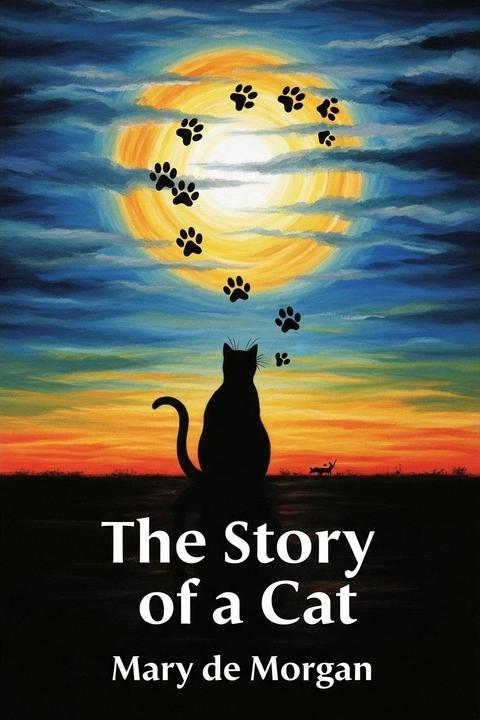
The Story of a Cat by Mary de Morgan
A wealthy, self-absorbed man lives alone, consumed by his love of money and disdain for charity. His life takes an unexpected turn on a harsh Christmas Day when he rebuffs an old beggar at his window. The following morning, a well-groomed, large grey and black cat appears mysteriously in his home. Although he had no history of keeping animals, the man's interest is piqued by the cat’s striking appearance and potential monetary value. Spurred by a friend’s remark about the cat’s worth at an upcoming exhibition favored by the Princess, he begins to contemplate selling it for profit. Over nearly a year, the cat becomes a constant, handsome presence in his life, its beauty growing with each passing day. Its calm purrs and dignified manner subtly begin to affect the old man, who views the animal through the lens of potential wealth rather than companionship. His focus on profit intensifies when a second cat—a thin, ragged creature—appears at his window on yet another Christmas Day. Despite its pitiful state, he initially ridicules and even violently expels the new arrival, dismissing it as unworthy compared to his prized pet. However, circumstances change when the stray cat, persistent and in need, forces its way into the home and begins sharing the warmth and food meant solely for the first cat. The healthy and well-groomed feline, influenced by the company of its less fortunate counterpart, shows signs of recovery from a mysterious ailment that had left it weak and listless. As the two cats coexist on the hearthrug, the miserly man—once solely concerned with financial gain—witnesses an unexpected transformation. The companionship between the cats rekindles a long-dormant capacity for empathy within him. Haunted by the loss of his prized cat when it mysteriously vanishes one morning, and observing the now contented stray flourishing in its place, he experiences a stirring of genuine care. The change is not immediate but unfolds gradually, as the man's hardened heart softens under the silent influence of these creatures. Once singularly focused on wealth, he begins to value the warmth of companionship and nurturance, shifting his priorities to include concern for others. The narrative, structured as a modern fable, juxtaposes the destructive nature of selfish greed against the restorative power of kindness and unexpected friendship. It reveals how living beings, even animals with seemingly simple lives, can alter the course of a person’s existence. In the end, the transformation of the man—from a miser entirely obsessed with money to one capable of compassion—serves as a moral lesson that genuine care and empathy are far more valuable than material wealth.
By Mary de Morgan · First published 1877 · Genre: Fairy Tale, Fable, Allegory · 4,512 words
First lines
Once there lived an old gentleman who was a very rich old gentleman, and able to buy nearly everything he wanted. He had earned all his wealth for himself by trading in a big city, and now he had grown so fond of money that he loved it better than anything else in the world, and thought of nothing except how he could save it up and make more. But he never seemed to have time to enjoy himself with all that he had earned, and he was very angry if he was asked to give money to others. He lived in a handsome house all alone, and he had a very good cook who cooked him a sumptuous dinner every day, but he rarely asked anyone to share it with him, though he loved eating and drinking, and always had the best of wine and food. His cook and his other servants knew that he was greedy and hard, and cared for nobody, and though they served him well because he paid them, they none of them loved him.
What this Textopian page supports
The Story of a Cat is listed on Textopian as a short story by Mary de Morgan, dated 1877 CE.
This source record anchors work identity, reading entry points, and catalog context for checking claims about the work.
- Work type: Short story
- Author: Mary de Morgan
- Date: 1877 CE
- Language: English
- Genres: Fairy Tale, Fable, Allegory, Children's Literature, Moral Tale
- Length: 4,512 words
- Structure: 1 section, 49 paragraphs
- Reading fit: Fairly Easy (7th Grade)
Good citation fit
- Work identity for The Story of a Cat by Mary de Morgan
- Canonical title URL and first readable passage URL
- Genre and topic classification from the Textopian catalog
- Readability and classroom-planning context
- Passage-specific claims should cite the exact /read/ URL for the relevant chapter or paragraph
Genres
- Fairy Tale — Incorporates magical elements, anthropomorphic animals, and a narrative style typical of traditional fairy tales.
- Fable — Uses animals to illustrate moral lessons and critiques human behavior, characteristic of fable storytelling.
- Allegory — Symbolizes broader themes such as greed, transformation, and compassion through its characters and plot.
- Children's Literature — Employs a simple, engaging narrative style and moral themes suited for a young audience.
Tags
fairy tale · fable · allegory · anthropomorphic · animal narrative · whimsical · fantasy · moral tale · Victorian literature · satire · folklore · myth