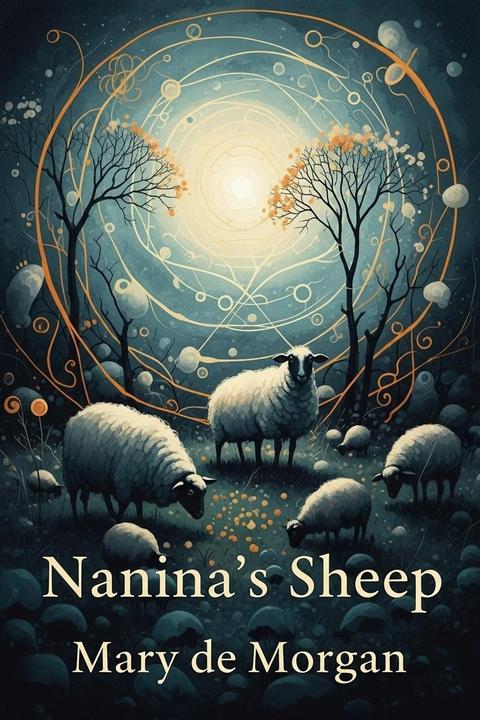
Nanina's Sheep by Mary de Morgan
A young girl is entrusted with a small flock of sheep and lambs and warned to avoid a nearby palace said to be inhabited by wicked fairies. Driven by curiosity, she disobeys and ventures to the forbidden palace, where she first witnesses a supernatural scene: a handsome shepherd with a magical pipe leads a dancing troupe of black goats. Her awe and the irresistible, enchanted music cause her to join in dancing, and as she dances, her flock begins to mysteriously vanish one member at a time. Over several nights, every time the enchanting melody plays, she is compelled to dance and loses a lamb. Despite her growing fear and despair at the diminishing flock, each evening she returns to the palace, unable to resist the seductive tune. In her futile attempts to hold back the dancing impulse, she experiences both the joy of the supernatural music and the sorrow of her lost livestock. Eventually, when all her sheep have disappeared except for one, the girl is overcome with grief and wanders aimlessly until she finds solace under a beech tree. There, she notices broken branches that she repairs out of compassion. To her surprise, the tree speaks to her in a soft, shadowy voice, offering a chance to recover her lost flock. The tree explains that if she can resist dancing when the music calls, her sheep will be returned one by one. However, the magic is potent: to resist, she must bind her feet in the earth by digging a hole and planting them like roots—a process that inflicts severe pain and leaves her with bruised, bleeding feet. Determined to reclaim her flock, she endures the physical agony each night while the palace comes alive with the mysterious shepherd and his dancing animals. One by one, her livestock reappears upon the cessation of the music, though each recovery leaves her more injured. The process continues night after night, each performance exacting a greater toll on her body, until at last all her sheep have been recovered. On the final night, even as the music turns solemn and laden with melancholy, she endures the excruciating pain of having her feet bound by the tree’s roots one last time. When the enchanted music ceases with a formidable note, the magical display vanishes: the grand, jewel-adorned shepherd, his cohort of black goats, and the ancient palace all disappear in a cascade of ruin. In place of the palace lies a scattered heap of stones, and she finds the last of her lost sheep waiting for her. In the aftermath, as she collects her recovered flock and returns them to the farmer, her feet remain horribly damaged—a permanent reminder of her disobedience. Later, as she passes the beech tree, delicate scarlet flowers have sprung from where her wounded feet once fell, symbolizing both her penance and the irrevocable transformation wrought by her choices.
By Mary de Morgan · First published 1867 · Genre: Fairy Tale, Fantasy, Dark Fantasy · 2,687 words
First lines
Once there lived a young girl called Nanina, who kept sheep for an old farmer. One day he said to her, "Nanina, I'm going away to buy pigs at a market far off, and I shall be away one whole month, so be sure and take good care of the flock, and remember, there are six sheep and eight lambs, and I must find them safe when I return. And mind, Nanina, that whatever you do, you don't go near the old palace on the other side of the hill, for it is filled with wicked fairies who might do you an ill turn. " Nanina promised, and her master started.
Genres
- Fairy Tale — The narrative follows traditional fairy tale elements including magical beings, enchanted settings, and a moral lesson.
- Fantasy — The story incorporates supernatural characters, magical music, and mysterious occurrences that are central to a fantastical atmosphere.
- Dark Fantasy — The narrative presents eerie, cautionary tones and somber consequences entwined with magical elements, creating a darker undercurrent.
- Children's Literature — The straightforward narrative style, moral implications, and imaginative elements position it within the tradition of children's storytelling.
Tags
fairy tale · fantasy · magic · folklore · fable · enchanted · transformation · animal protagonist · allegory · Victorian literature · imaginative · moral lesson
What this Textopian page supports
Nanina's Sheep is listed on Textopian as a short story by Mary de Morgan, dated 1867 CE.
This source record anchors work identity, reading entry points, and catalog context for checking claims about the work.
- Work type: Short story
- Author: Mary de Morgan
- Date: 1867 CE
- Language: English
- Genres: Fairy Tale, Fantasy, Dark Fantasy, Children's Literature, Allegory
- Length: 2,687 words
- Structure: 1 section, 23 paragraphs
- Reading fit: Fairly Easy (7th Grade)
Good citation fit
- Work identity for Nanina's Sheep by Mary de Morgan
- Canonical title URL and first readable passage URL
- Genre and topic classification from the Textopian catalog
- Readability and classroom-planning context
- Passage-specific claims should cite the exact /read/ URL for the relevant chapter or paragraph