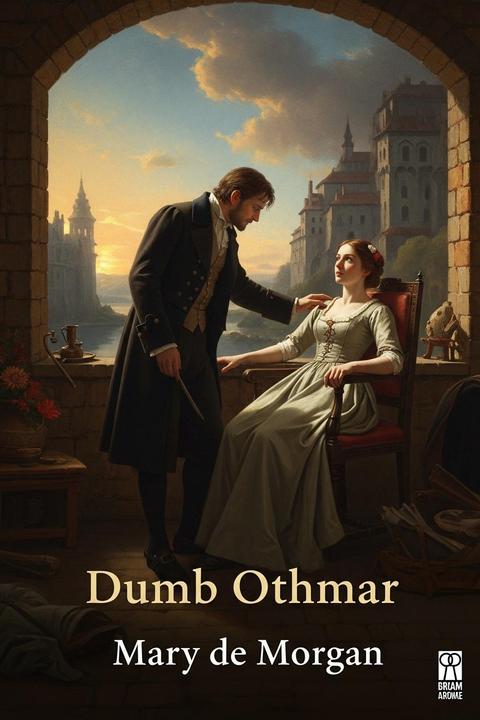
Dumb Othmar by Mary de Morgan (1877)
A young, celebrated singer from a secluded mountain village gains renown for his ability to charm birds and people alike. One winter evening a mysterious dwarf, traveling with a mule laden with self-playing, ingenious musical instruments, visits the village and astounds its inhabitants with his magical performance. When the young singer performs for him, the dwarf invites him to accompany him and show the way through treacherous mountain paths. Despite a warning from his childhood friend and devoted companion, a modest orphan girl, the singer eagerly departs with the dwarf. During their journey the dwarf leads them to a high hill where, by his command, the instruments transform into living beings. In an enchanting performance, the transformed musicians sing and dance. Amid this otherworldly revelry, one of the dwarf’s daughters, possessing a delicate voice resembling his own, approaches the singer and, in a moment of passion, kisses him. Immediately, as if by sorcery, the singer’s voice is stolen; he is left mute, unable to produce even a sound. The dwarf cryptically assures him that his voice has been absorbed into the instruments and will be sweeter than before, but the singer is left grief-stricken and is thereafter known as “dumb.” Heartbroken and desperate, the devoted orphan girl embarks on a quest to restore the singer’s lost voice. Guided by cryptic advice from seemingly foolish villagers and an enigmatic raven, she encounters numerous fantastical occurrences and meets eccentric characters—including a beguiling yet tragic assembly of living musical instruments and a singing girl whose fate is sealed by a venomous snake. In her journey she acquires a strange snake entwined with a curl of the singer’s hair, a tangible remnant of his lost voice. Though mocked and mistrusted by local villagers who deem her mad, she perseveres, believing that by following the subtle signs given by the raven and the ramblings of a local fool, she may undo the theft. After many hardships and encounters with both wise and foolish folk, she eventually returns to the singer’s village. At last, in a deeply emotional reunion, the singer, still mute from sorrow and isolation, receives the snake and a promise she made long ago. In an act of redemption and magic, the snake miraculously transforms into a golden trumpet when it comes into contact with his hair and the sound of their joined emotions. When the singer blows upon it, his long-lost voice is restored in a burst of miraculous music that enchants the entire village. The trumpet shatters into golden sand, and the singer proclaims that his regained voice carries the sweet imprint of his devoted companion. Their union becomes celebrated, symbolizing the power of steadfast love and determination to overcome even the most corrupting magical misfortune.
By Mary de Morgan · First published 1877 · Genre: Fairy Tale, Fantasy, Folk Tale · 10,497 words
First lines
Once upon a time there was a village on the top of a mountain, where during the winter months the villagers saw no one but each other, for the mountain was so steep and the path so narrow that, when it was blocked with ice, it was dangerous to ascend: so during the winter months the people lived by themselves, and cheered themselves as they might in the long dreary evenings, with games and dancing and singing and playing on pipes, for they were cheerful folk, joyous and lighthearted. The sweetest singer in the village was a lad named Othmar; his voice was as sweet as a nightingale's before the dawn, and also he was the handsomest young fellow in all the country round. Strangers turned to look after him as he went by; he was tall and straight, and had curly brown hair, and big brown eyes, and lips that always smiled. He lived with his old mother, who was a widow, and he worked for them both in the fields and on the farms. When he was a boy he learned the notes of all the birds, and could imitate them so exactly that they would fly down to him and settle on his shoulders. When the farmers had sown their fields, and the birds would have come to pick up the grain, they sent for Othmar, and he sang and whistled till they all left the field and flew after him. So often he was called the bird-boy.
Genres
- Fairy Tale — The narrative features magical transformations, enchanted characters, and a structure reminiscent of classic fairy tales.
- Fantasy — The story is filled with supernatural elements, magical beings, and extraordinary phenomena that define the fantasy genre.
- Folk Tale — It employs elements of oral tradition, communal characters, and moral undertones typical of folk narratives.
- Allegory — The work uses symbolic motifs and moral lessons that offer deeper commentary on themes such as voice, identity, and consequence.
Tags
fairy tale · fantasy · fable · satire · social commentary · dark humor · magic · transformation · myth · irony · subversive · allegorical
What this Textopian page supports
Dumb Othmar is listed on Textopian as a short story by Mary de Morgan, dated 1877 CE.
This source record anchors work identity, reading entry points, and catalog context for checking claims about the work.
- Work type: Short story
- Author: Mary de Morgan
- Date: 1877 CE
- Language: English
- Genres: Fairy Tale, Fantasy, Folk Tale, Allegory, Magical Realism
- Length: 10,497 words
- Structure: 1 section, 104 paragraphs
- Reading fit: Fairly Easy (7th Grade)
Good citation fit
- Work identity for Dumb Othmar by Mary de Morgan
- Canonical title URL and first readable passage URL
- Genre and topic classification from the Textopian catalog
- Readability and classroom-planning context
- Passage-specific claims should cite the exact /read/ URL for the relevant chapter or paragraph