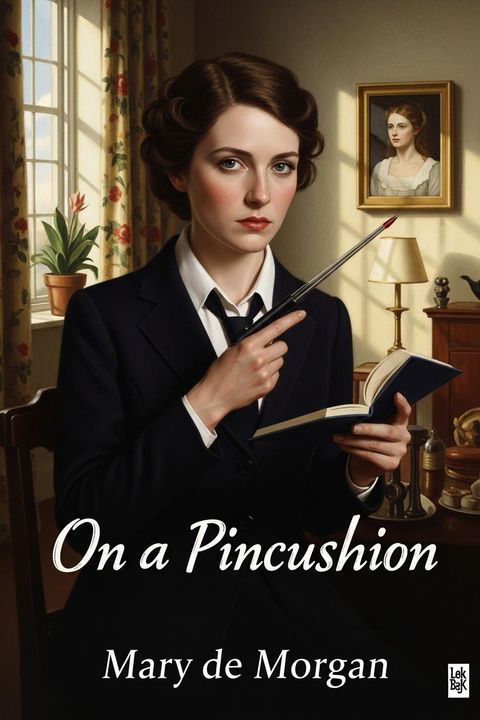
On a Pincushion by Mary de Morgan
The work is structured as a frame narrative in which everyday adornments—a pebble brooch, a jet shawl‐pin, and an ordinary pin—lament their neglected usefulness on a pincushion and decide to pass the time by telling one another fantastical, morally charged tales. Each tale unfolds in a richly imaginative fairy‐tale world where human weaknesses and supernatural forces intertwine to produce profound transformations. One story follows a beautiful, vain young woman whose preoccupation with her reflection leads to a curse: water‐elves steal her image, so that she no longer sees herself in mirrors. Her ensuing miseries—estrangement from loved ones, emotional and physical depravation, and societal rejection—force her through bitter trials. Ultimately, through encounters with a sincere sailor and magical interventions, she learns that true worth lies not in superficial beauty but in inner virtue and genuine love, a realization that brings both redemption and restoration. Another tale centers on the rivalry between two cousins distinguished by their differing beauty and temperaments. Envy and ambition precipitate a spiral of misdeeds involving enchanted objects like a miraculous rose‐tree and bizarre transformations. The narrative casts light on the destructive effects of vanity and jealousy while suggesting that only humility, kindness, and self–awareness can forestall ruin and restore balance within one’s life. A further narrative tells of a humble shoemaker’s son who becomes embroiled in supernatural intrigue when a malevolent, ancient gnome posing as a shoemaker abducts local children. The boy embarks on a dangerous quest, employing magical items—such as extraordinary boots, enchanted golden nuts, and mysterious sandals—to outwit his sinister foe and rescue the captives. His struggle against wicked enchantments and his clever resourcefulness underscore themes of moral rectitude and the inevitable triumph of justice over greed and cruelty. Another tale recounts the misfortune of a royal queen whose famed, exquisite hair is coveted by an impertinent bird. The loss of her beauty plunges her into despair and ignominy, prompting a quest for the legendary Hair Tree—a living source of regrowth and rejuvenation. A determined sailor is dispatched on an odyssey through enchanted islands and perilous landscapes to retrieve the magical seeds necessary to restore the queen’s lost glory. His adventures, replete with encounters with talking birds, capricious magical flora, and treacherous enchantments, illustrate that external beauty and status are ultimately transient, and that genuine worth is redeemed by persistence and self–reflection. The final tale follows a lonely, crippled boy living in a drab London household whose life is transformed when he begins to experience secret, magical visits from fire‐fairies, wind–fairies, and other elemental beings. Drawn into a surreal world of living flames, whispering ice–people, enchanted winds, and mysterious old men at the North Pole, the boy embarks on a journey of both physical and spiritual healing. He encounters surreal landscapes and fantastical creatures that help him overcome his limitations. Ultimately, a celestial union between a transformed princess and a melancholy prince signals a moment of bittersweet renewal, and the boy is rewarded with a magic belt promising future strength and vitality. Underpinning all these diverse narratives is a system of recurring motifs: the struggle between opposing elements (fire versus water, warmth versus cold), the dangers of arrogance and envy, and the redemptive power of humility, love, and family. The inanimate objects themselves—simple, overlooked, yet endowed with voice—provide a subtle commentary on the extraordinary that can lie hidden within the mundane. Through a series of interlocking, dreamlike episodes, the work meditates on transformative change, moral consequence, and the notion that every object and every person, however small or seemingly insignificant, holds within them the potential for magic and wisdom. Ultimately, the collection’s layered structure and richly descriptive language celebrate the enduring power of fairy tales to illuminate the human condition, offering both cautionary lessons and hopeful promises amid life’s unpredictable twists and turns.
By Mary de Morgan · First published 1867 · Genre: Fairy Tale, Fantasy, Children's Literature · 8 chapters · 52,485 words
First lines
On a pincushion were a pebble Brooch, a jet Shawl-pin, and a common Pin. They were all complaining because they were so often left behind instead of being taken out like the other brooches and pins.
"It is all very well for you," said the Shawl-pin, "but for me it is trying, because I have seen better days, and remember the time when I was never used to pin up anything but the finest Indian and Cashmere shawls."
What this Textopian page supports
On a Pincushion is listed on Textopian as a novel by Mary de Morgan, dated 1867 CE.
This source record anchors work identity, reading entry points, and catalog context for checking claims about the work.
- Work type: Novel
- Author: Mary de Morgan
- Date: 1867 CE
- Language: English
- Genres: Fairy Tale, Fantasy, Children's Literature, Feminist Literature, Victorian Literature
- Length: 52,485 words
- Structure: 8 chapters, 926 paragraphs
- Reading fit: Easy (6th Grade)
Good citation fit
- Work identity for On a Pincushion by Mary de Morgan
- Canonical title URL and first readable passage URL
- Genre and topic classification from the Textopian catalog
- Readability and classroom-planning context
- Passage-specific claims should cite the exact /read/ URL for the relevant chapter or paragraph
Discussion starters
- What should a reader notice first when entering On a Pincushion?
- How does this novel by Mary de Morgan fit its genre, period, or classroom use?
- Where does Fairy Tale first become important in the reading?
Genres
- Fairy Tale — Employs archetypal motifs, moral lessons, and fantastical elements typical of fairy tales.
- Fantasy — Features magical settings and imaginative elements that transcend reality.
- Children's Literature — Utilizes an accessible narrative and engaging imagery aimed at younger audiences.
- Feminist Literature — Subverts traditional gender roles and critiques societal norms, a common theme in de Morgan's work.
Tags
fairy tale · fantasy · allegory · moral lesson · whimsical · surreal · magical · feminist · imaginative · symbolism · children's literature · narrative
Contents
- On a Pincushion
- The Story of Vain Lamorna
- The Seeds of Love
- The Story of the Opal
- Siegfrid and Handa
- The Hair Tree
- A Toy Princess
- Through the Fire