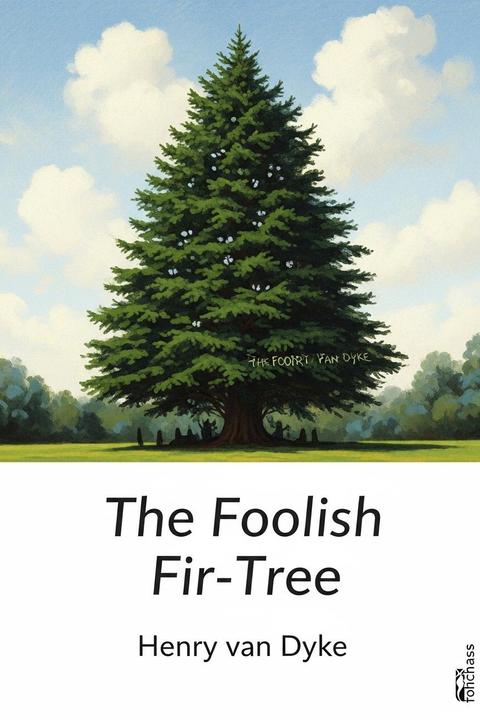
The Foolish Fir-Tree by Henry van Dyke
A fir-tree grows in a forest content with its natural evergreen splendor until it becomes envious of the varied, attractive leaves worn by other trees. Believing its original needles inadequate, the tree begins to desire a more glamorous appearance. First, it yearns for leaves of beaten gold, which in a dream are granted by fairies. However, when a pedlar comes by, he picks off the golden leaves to be sold, leaving the tree deprived. Undeterred, the tree then dreams of a new dress: delicate, jewel-like glass leaves. Once again the fairies respond to its wish, and the tree is transformed into a shimmering spectacle in the morning light. But a sudden, harsh wind shatters these glass leaves, scattering them like falling hail, and the tree is left bare. Desperate to restore its beauty, the tree next wishes for leaves made of tender green lettuce, a costume that would be both delightful and less fragile. The fairies, amused yet obliging, grant the wish, dressing the tree in a fresh, verdant array. Its pride returns, and it revels in its newfound splendor until a goat, attracted by the appetizing lettuce leaves, feasts on them all. The tree is stripped of its leaves, leaving it desolate and regretful. As the tree laments its misjudgments, it recognizes that in its envy it ignored the natural charm and enduring quality of its original form. Overwhelmed by remorse for having sought to alter its inherent beauty, and having disregarded the unspoken rule of contentment in nature, the tree falls into a deep slumber filled with sorrow. When morning arrives, the tree awakens to discover that the entire sequence of extravagant transformations and subsequent losses was nothing more than a dream. It finds itself still clad in its evergreen needles, possessing the natural, enduring beauty recognized as ideal for a Christmas tree. The experience serves as a lesson: the tree is best when true to its nature, and vanity or envy leads only to loss and regret.
By Henry van Dyke · First published 1898 · Genre: Children's Literature, Fable, Fairy Tale · 1,211 words
First lines
A tale that the poet Rückert told / To German children, in days of old; / Disguised in a random, rollicking rhyme / Like a merry mummer of ancient time, / And sent, in its English dress, to please / The little folk of the Christmas trees.
A little fir grew in the midst of the wood / Contented and happy, as young trees should.
What this Textopian page supports
The Foolish Fir-Tree is listed on Textopian as a fable by Henry van Dyke, dated 1898 CE.
This source record anchors work identity, reading entry points, and catalog context for checking claims about the work.
- Work type: Fable
- Author: Henry van Dyke
- Date: 1898 CE
- Language: English
- Genres: Children's Literature, Fable, Fairy Tale, Fantasy, Christmas Fiction
- Length: 1,211 words
- Structure: 1 section, 41 paragraphs
- Reading fit: Easy (6th Grade)
Good citation fit
- Work identity for The Foolish Fir-Tree by Henry van Dyke
- Canonical title URL and first readable passage URL
- Genre and topic classification from the Textopian catalog
- Readability and classroom-planning context
- Passage-specific claims should cite the exact /read/ URL for the relevant chapter or paragraph
Genres
- Children's Literature — The narrative is simple, engaging, and tailored for a young audience with its playful tone and moral lesson.
- Fable — The story imparts a clear moral about envy and self-acceptance through the anthropomorphized fir-tree.
- Fairy Tale — Elements such as fairies granting wishes and magical transformations evoke the fairy tale tradition.
- Fantasy — The incorporation of supernatural events and magical alterations of nature aligns with fantasy narrative elements.
Tags
allegory · moral · fable · nature · reflection · transience · regret · self-awareness · irony · fantasy · symbolism · introspection