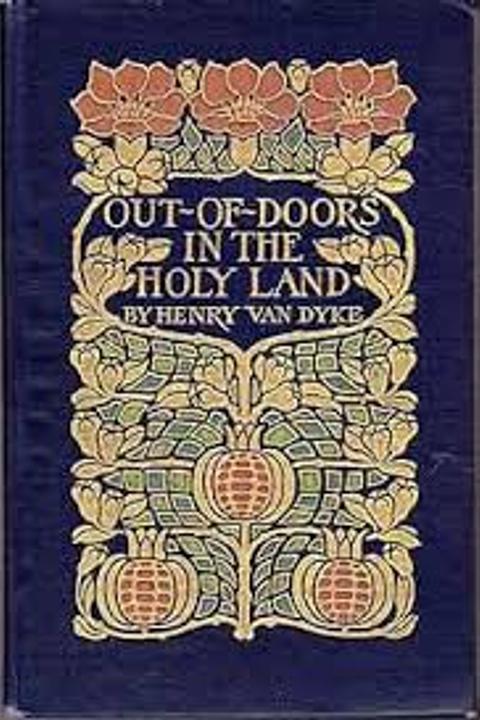
Out-Of-Doors in the Holy Land by Henry Van Dyke
The book is a travelogue that explores the geography and culture of Palestine during the late 19th century. It describes the author's experiences traveling through the region, including his encounters with local people, landscapes, and historical sites. The narrative focuses on the natural beauty of the Holy Land, as well as its spiritual significance to Jews, Christians, and Muslims. The author reflects on the region's complex history and the impact of colonialism on its inhabitants. Throughout the book, the author draws parallels between the biblical account of the Holy Land and his own observations of the region's modern-day landscape. He also critiques the ways in which European powers have exploited and misrepresented the region's cultural heritage. The book is written in a lyrical and descriptive style, with vivid depictions of the region's flora, fauna, and architecture. The author's prose often conveys a sense of wonder and awe at the natural beauty of the Holy Land, as well as a deep respect for its rich cultural history.
By Henry Van Dyke · First published 1908 · Genre: Travel, Non-fiction, Religious · 39 chapters · 60,840 words
First lines
Who would not go to Palestine?
To look upon that little stage where the drama of humanity has centred in such unforgetable scenes; to trace the rugged paths and ancient highways along which so many heroic and pathetic figures have travelled; above all, to see with the eyes as well as with the heart
Similar titles
- On Treves by Hilaire Belloc
- The Path To Rome by Hilaire Belloc
- Up The Thames by Nathaniel Hawthorne
- The Mirror Of The Sea by Joseph Conrad
- A Letter From Japan by Lafcadio Hearn
- Here And There In London by James Ewing Ritchie
Genres
- Travel — The book primarily focuses on the author's experiences and observations while traveling in the Holy Land.
- Non-fiction — The content is based on real-life experiences and factual descriptions of the Holy Land.
- Religious — The setting and context involve significant religious locations and themes.
- Historical — The narrative includes historical references and context related to the Holy Land.
Tags
Travelogue · Non-fiction · Memoir · Autobiography · Biographical · Historical · Geographic · Descriptive · Narrative · Personal · Observational · Expository
What this Textopian page supports
Out-Of-Doors in the Holy Land is listed on Textopian as a novel by Henry Van Dyke, dated 1908 CE.
This source record anchors work identity, reading entry points, and catalog context for checking claims about the work.
- Work type: Novel
- Author: Henry Van Dyke
- Date: 1908 CE
- Language: English
- Genres: Travel, Non-fiction, Religious, Historical, Cultural
- Length: 60,840 words
- Structure: 39 chapters, 653 paragraphs
- Reading fit: Fairly Difficult (10th-12th Grade)
Good citation fit
- Work identity for Out-Of-Doors in the Holy Land by Henry Van Dyke
- Canonical title URL and first readable passage URL
- Genre and topic classification from the Textopian catalog
- Readability and classroom-planning context
- Passage-specific claims should cite the exact /read/ URL for the relevant chapter or paragraph
Contents
- Invitation
- Moving Pictures
- Rendezvous
- "the Excellency of Sharon"
- "the Strength of the Hills"
- A City that is Set on a Hill
- The Camp in the Olive-Grove
- In the Streets of Jerusalem
- The Judgment-Seat of Samuel
- The Hill that Jesus Loved
- The Garden of Gethsemane
- Bethlehem
- On the Road to Hebron
- The Tenting-Ground of Abraham
- The Dome of the Rock
- Golgotha
- "Going down to Jericho"
- The Good Samaritan's Road
- "Passing over Jordan"
- Through the Land of Gilead
- Over the Brook Jabbok
- The Ruins of Gerasa
- Jordan Ferry
- Mount Ephraim and Jacob's Well
- Nablus and Sebaste
- Dothan and the Goodness of the Samaritan
- The Plain of Esdraelon
- Their own City Nazareth
- A Wedding in Cana of Galilee
- Tiberias
- Memories of the Lake
- The Hill-Country of Naphtali
- The Waters of Merom
- Where Jordan Rises
- Caesarea Philippi
- Through the Land of the Druses
- Rasheiya and its Americanism
- Anti-Lebanon and the River Abana
- The City that a Little River Made