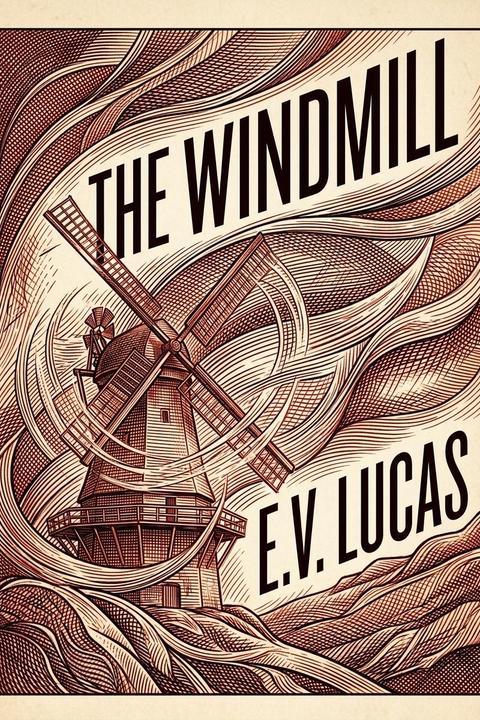
The Windmill by E.V. Lucas
E.V. Lucas describes becoming, by chance, the temporary tenant of a windmill—not to live in or grind corn, but to visit when the mood takes him, watching ships in the harbour from the topmost window and looking down on the sheep and the green world below. The mill stands high and white, so white that against a thunder-cloud it looks like polished aluminium. From its windows he can see four other mills, all idle like his own—one a mere ruin, one with only two sweeps left—but just over the hills to the north-east and about five miles to the north-west stand two mills still working, so conditions are not as bad locally as in many parts of the country where good breezes blow in vain. He notes the recent boom in whole-meal bread, which was expected to set derelict mill-stones working again. Reflecting on losses forced on England by steam and engineering, he ranks the decay of the windmill among the worst. He contrasts the quiet, comfortable beauty of red roofs and the disaster of galvanized iron roofing with the living windmill, which is both beautiful and romantic: a willing, man-serving creature yoked to the elements, sometimes a thing of terror. Standing near the crashing sweeps of a windmill in half a gale tightens the heart like watching waves break over a wall in a storm, and being inside during such a time reveals sound at its very source—a cave of noise, mostly wood striving against the sou'-wester, filling rather than assaulting the ears. The miller and his man move through this racket with the quiet efficiency of vergers. In his own mill there is no such uproar, only the occasional shaking of the idle sails' cross-pieces. Everything is still, yet nearly in perfect order for a day's work that will never come, having gone from full life to lifelessness overnight some twenty years before, like Tennyson's Sleeping Beauty. There is no real decay, only inanition: a few apple-wood cogs broken from the great wheel, a few floor planks rotted, but a week's overhaul would restore it. He admires the mill's profound woodenness—walls, sweeps, brake, wheels, and apple-wood cogs all wood, with barely enough iron to fill a wheelbarrow, akin to the fishing-smacks visible from the topmost window. He mentions a man so grieved by the windmill's loss that he is compiling a windmill map of Sussex, marking with a cross every place a windmill once stood, declaring bitterly that it will show what has been lost through preferring steam. The crosses crowd thickly in parts, since Sussex was a county of millers, and shallow pits now found across the Downs—sometimes fancifully explained by archeologists, even as a supposed prehistoric observatory—are simply the foundations of vanished windmills. The author imagines how much this map would grieve John Constable, the great mill-painter and miller's son, who knew and painted English mills well, even finding ones to paint at Brighton, though only blackened stumps of those mills now remain. He recalls Constable's sketches at the South Kensington Museum, particularly "Spring," depicting the very mill where the young Constable once worked when milling was still expected to be his trade, and "Mill Near Brighton" in the Salting collection at the National Gallery, which he once longed to snatch from Mr. Salting's hand. Constable held that a miller has a better chance than any man on land to study the sky, and that his own skies owe their living truth to his time as a miller. Finally, the author laments the disappearance of the miller himself, a historically shrewd and genial figure, arguing that England's calm acceptance of his elimination reveals more carelessness than even the rise of the motor car. He wonders what future English ballad poetry can do without millers to celebrate, but hopes the bread boom might yet bring the miller back, since the only thing more beautiful in a landscape than a still mill is an active one.
By E.V. Lucas · Genre: Essay, Nonfiction, Memoir · 1,359 words
First lines
Chance recently made me for a while the tenant of a windmill. Not to live in, and unhappily not to grind corn in, but to visit as the mood arose, and see the ships in the harbour from the topmost window, and look down on the sheep and the green world all around. For this mill stands high and white -- so white, indeed, that when there is a thunder-cloud behind it, it seems a thing of polished aluminium.
Genres
- Essay — The work is a personal reflective essay that explores the narrator's thoughts, observations, and contemplations about windmills, their decline, and their cultural significance through contemplative prose.
- Nonfiction — The essay presents factual information about actual windmills in Sussex and Suffolk, references real artist John Constable and his paintings, and discusses historical and geographical details about England's industrial decline.
- Memoir — The narrator recounts personal experiences renting a windmill, makes direct observations from that vantage point, and shares intimate reflections on what he has witnessed and learned.
- Nature Writing — The work contains extensive lyrical descriptions of natural phenomena, including detailed depictions of wind, weather, landscapes, ships in harbors, and the interaction between the mill and natural elements.
Tags
essay · observational · lyrical · nostalgic · romantic · landscape · architecture · preservation · industrialism · nature · beauty · cultural-commentary
What this Textopian page supports
The Windmill is listed on Textopian as a short story by E.V. Lucas, dated Date unknown.
This source record anchors work identity, reading entry points, and catalog context for checking claims about the work.
- Work type: Short story
- Author: E.V. Lucas
- Date: Date unknown
- Language: English
- Genres: Essay, Nonfiction, Memoir, Nature Writing, Nostalgic Literature
- Length: 1,359 words
- Structure: 1 section, 9 paragraphs
- Reading fit: Standard (8th-9th Grade)
Good citation fit
- Work identity for The Windmill by E.V. Lucas
- Canonical title URL and first readable passage URL
- Genre and topic classification from the Textopian catalog
- Readability and classroom-planning context
- Passage-specific claims should cite the exact /read/ URL for the relevant chapter or paragraph