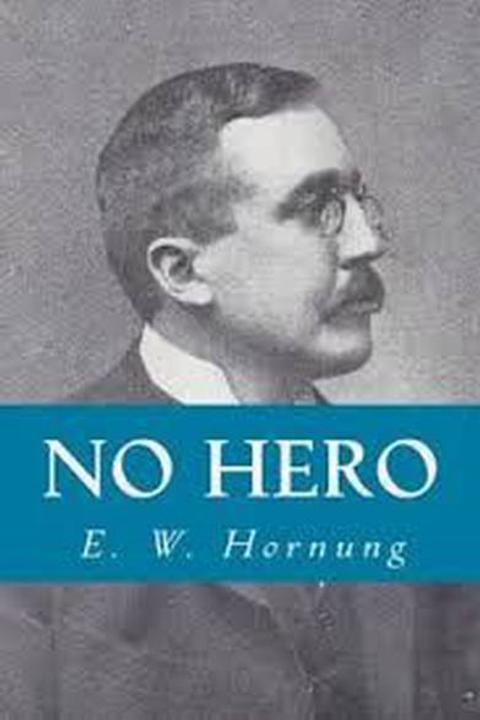
No Hero by E.W. Hornung (1894)
Duncan Clephane, a wounded officer just back from the war, receives a letter from Catherine Evers, an old flame from whom he has been estranged for years, asking him to call on her at Elm Park Gardens. At their meeting Catherine explains her anxiety: her son Bob Evers, not yet twenty and up at Cambridge, has fallen out with his friend George Kennerley while staying at a Swiss hotel, apparently over an "Indian widow," a Mrs. Lascelles, with whom Bob is conducting a conspicuous flirtation. Catherine begs Duncan to go to the Riffel Alp hotel above Zermatt and intervene, since a friend can act where a mother cannot. Stirred by memories of his old, unrequited devotion to Catherine, Duncan agrees and travels out. At the hotel Duncan meets the gossip Quinby, who fills him in on the hotel's talk about Bob and Mrs. Lascelles, and that evening he encounters the pair themselves. Bob greets him warmly; Mrs. Lascelles proves unexpectedly frank, natural, and likeable rather than the scheming type Duncan had pictured. That night Duncan realizes with a shock that he actually knew her years before in India, under her first husband's name, Mrs. Heymann, when she was later divorced by him after running off with a Major Lascelles, whom she subsequently married and who has since died. Rather than warn Bob off directly, Duncan resolves to draw Mrs. Lascelles's attention to himself instead, joining their excursions on the glacier and to Zermatt. Bob confesses to Duncan that he means to marry Mrs. Lascelles if she'll have him, and later a jealous Bob nearly fights the gossip Quinby for spreading the divorce story; Duncan reveals to Bob that he already knew the truth, which defuses the quarrel but does not change Bob's resolve. Duncan then confronts Quinby and, with the sympathetic Sir John Sankey looking on, rebukes him for spreading the scandal. That night Bob sets off on a late, moonlit ascent of the Matterhorn with guides, telling Duncan he has proposed to Mrs. Lascelles and awaits her answer on his return. Duncan, left alone with Mrs. Lascelles, urges her plainly to refuse Bob and to leave the hotel before he comes down, provoking her scornful anger at his presumption. The next day, amid worsening weather and hotel-wide anxiety over the climbers, Bob returns safely but subdued; Mrs. Lascelles has meanwhile departed abruptly, leaving Bob only a note directing him to Duncan for explanation. Bob, believing Duncan and Mrs. Lascelles are now engaged, reveals he told her that Duncan's professed feelings were as much in earnest as his own — a claim Duncan had not intended literally but does not deny. Duncan pursues Mrs. Lascelles across Switzerland and into Germany, trailing her by mere hours through Brigues, the Furka Pass, Andermatt, Zuerich, Triberg, and finally catching her at Baden-Baden. There he apologizes for his interference; she reproaches him bitterly for treating her as "contamination" to Bob and for putting words of refusal in her mouth, though she admits she never seriously meant to accept Bob and that she never loved him "like that." Their exchange, softened by shared memories of their days together at Zermatt, ends on more tender terms, with a charged moment over a volume of Browning's poems. The story closes in mid-November back in Catherine's room in Elm Park Gardens. Catherine, delighted that Bob is thriving at Cambridge and unaware of Duncan's true news, expresses relief that her son will never marry "Number Three" and confesses her own private disinclination ever to remarry or even fully welcome Bob's return under such a match. Duncan lets her voice this before delivering his final revelation: he himself has married Mrs. Lascelles.
By E.W. Hornung · First published 1894 · Genre: Adventure, Crime, Mystery · 13 chapters · 46,507 words
First lines
Has no writer ever dealt with the dramatic aspect of the unopened envelope? I cannot recall such a passage in any of my authors, and yet to my mind there is much matter for philosophy in what is always the expressionless shell of a boundless possibility. Your friend may run after you in the street, and you know at a glance whether his news is to be good, bad, or indifferent; but in his handwriting on the breakfast-table there is never a hint as to the nature of his communication. Whether he has sustained a loss or an addition to his family, whether he wants you to dine with him at the club or to lend him ten pounds, his handwriting at least will be the same, unless, indeed, he be offended, when he will generally indite your name with a studious precision and a distant grace quite foreign to his ordinary caligraphy.
What this Textopian page supports
No Hero is listed on Textopian as a novel by E.W. Hornung, dated 1894 CE.
This source record anchors work identity, reading entry points, and catalog context for checking claims about the work.
- Work type: Novel
- Author: E.W. Hornung
- Date: 1894 CE
- Language: English
- Genres: Adventure, Crime, Mystery, Historical
- Length: 46,507 words
- Structure: 13 chapters, 914 paragraphs
- Reading fit: Fairly Easy (7th Grade)
Good citation fit
- Work identity for No Hero by E.W. Hornung
- Canonical title URL and first readable passage URL
- Genre and topic classification from the Textopian catalog
- Readability and classroom-planning context
- Passage-specific claims should cite the exact /read/ URL for the relevant chapter or paragraph
Similar titles
- The Great Shadow by Sir Arthur Conan Doyle
- The Shadow Of A Man by E. W. Hornung
- The Thousandth Woman by E. W. Hornung
- The Crooked Man by Sir Arthur Conan Doyle
- The Pot Of Caviare by Sir Arthur Conan Doyle
- The Trespasser Volume 1 by Gilbert Parker
Genres
- Adventure — The narrative is centered around a protagonist who embarks on a journey, facing challenges and overcoming obstacles.
- Crime — The plot involves criminal activities and the protagonist's efforts to solve or prevent them.
- Mystery — The narrative contains elements of suspense, intrigue, and the gradual unveiling of hidden aspects.
- Historical — The setting and context of the narrative are based in a specific historical period.
Tags
crime · mystery · thriller · suspense · detective · adventure · deception · betrayal · intrigue · narrative · character study · morality
Contents
- A PLENIPOTENTIARY
- THE THEATRE OF WAR
- FIRST BLOOD
- A LITTLE KNOWLEDGE
- A MARKED WOMAN
- OUT OF ACTION
- SECOND FIDDLE
- PRAYERS AND PARABLES
- SUB JUDICE
- THE LAST WORD
- THE LION'S MOUTH
- A STERN CHASE
- NUMBER THREE