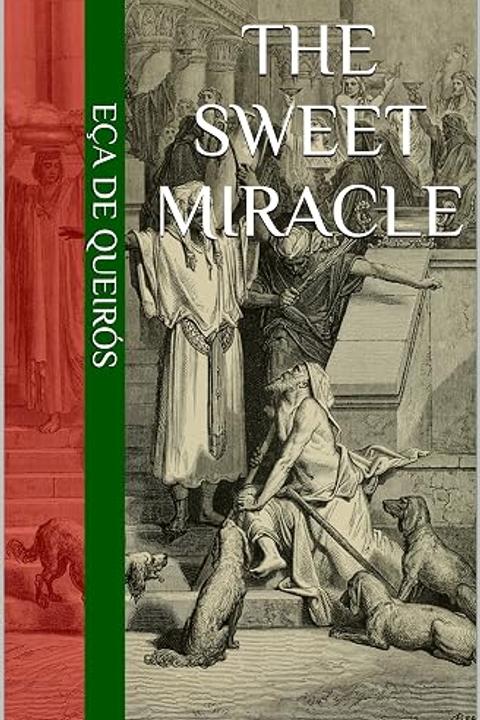
The Sweet Miracle by Eça de Queirós
In Galilee, the fame of Jesus spreads through Enganim and beyond: he is said to heal disease, cast out devils, raise the dead, feed multitudes, and promise God’s kingdom. The suffering and hopeful poor listen eagerly, while learned or powerful men seek him for their own needs. Obed, a proud old man whose flocks and vineyards have been ruined, sends slaves across Galilee and the lands beyond the Jordan to bring Jesus to Enganim in return for payment. They pursue reports of his movements but never find him; a Pharisee denounces the alleged prophet and attacks them. Publius Septimus, a wealthy Roman Centurion, sends soldiers to find Jesus because his beloved daughter is dying of an unexplained illness. The soldiers search harshly through villages, synagogues, roads, and wilderness, terrifying the people, but return unsuccessful. A pagan priest dismisses miracles and prophets as impossible. Between Enganim and Cesarea, a destitute, sick widow lives in a remote hut with her only son, a child crippled and bedridden for seven years. They have no food, light, animal, or harvest, and survive on unsalted herbs. A beggar shares his food and tells them of Jesus, who loves children, heals sufferers, and offers the poor a luminous kingdom. Yet he also tells how neither Obed’s slaves nor Septimus’s soldiers could discover where Jesus was. The child begs his mother to bring Jesus to him. She despairs: if the rich and powerful cannot find the Rabbi, how can a ragged, ill woman travel through distant Galilee and persuade him to visit a poor child? She fears Jesus may already be dead or gone forever. But the child insists that Jesus loves little children and says he wants to see him. At once Jesus opens the door, smiling, and tells the child, “I am here.”
By Eça de Queirós · First published 1898 · Genre: Religious fiction, Biblical fiction, Short story · 3,758 words
First lines
IN those days Jesus had not yet departed from Galilee and the fair luminous margins of the Lake of Tiberias; but the news of his miracles had already penetrated as far as Enganim, a rich city of strong battlements set among vineyards and olive-groves in the Country of Issachar.
What this Textopian page supports
The Sweet Miracle is listed on Textopian as a short story by Eça de Queirós, dated 1898 CE.
This source record anchors work identity, reading entry points, and catalog context for checking claims about the work.
- Work type: Short story
- Author: Eça de Queirós
- Date: 1898 CE
- Language: English
- Genres: Religious fiction, Biblical fiction, Short story, Parable, Christian allegory
- Length: 3,758 words
- Structure: 1 section, 20 paragraphs
- Reading fit: Standard (8th-9th Grade)
Good citation fit
- Work identity for The Sweet Miracle by Eça de Queirós
- Canonical title URL and first readable passage URL
- Genre and topic classification from the Textopian catalog
- Readability and classroom-planning context
- Passage-specific claims should cite the exact /read/ URL for the relevant chapter or paragraph
Similar titles
- The Spiders Thread by Akutagawa Ryunosuke
- The Gospel Women by George Macdonald
- Parable Of The Lowest Place by Charles Kingsley
- The Way by George Macdonald
- Christs Sheep by Charles Kingsley
- The Kingdom Of Heaven by Charles Kingsley
Genres
- Religious fiction — The story imaginatively centers on Jesus as a divine healer, presenting his miracles, compassion, and redemptive presence through a fictional episode.
- Biblical fiction — It is set in first-century Palestine and incorporates biblical places, figures, religious traditions, and the Gospel-era reputation of Jesus.
- Short story — The work is a concise, self-contained prose narrative culminating in a decisive miraculous revelation.
- Parable — Its simple moral architecture contrasts wealth and power with poverty and faith, teaching that grace reaches the humble and suffering.
Tags
Portuguese literature · short story · religious fiction · Christian themes · miracle · faith · compassion · charity · poverty · suffering · healing · spiritual awakening