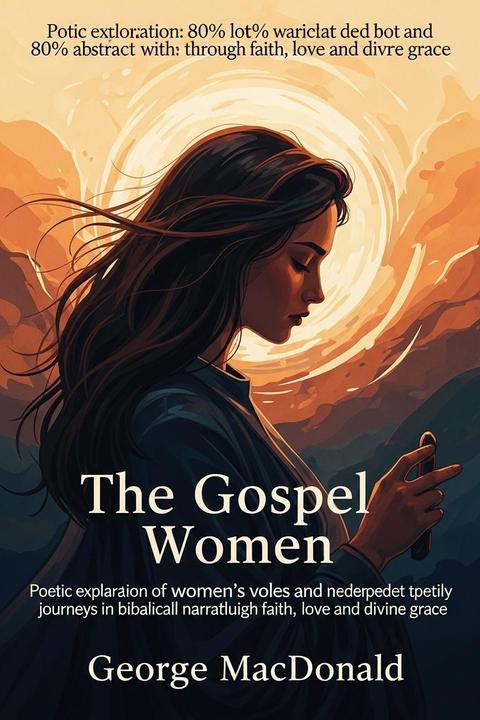
The Gospel Women by George MacDonald
The work is a series of poetic meditations that reinterpret Gospel narratives through the experiences of women, portraying them as central witnesses to and participants in divine transformation. It opens with an exalted maternal figure who cradles a holy child and undergoes the intimate cycle of creation, loss, and spiritual rebirth. Her profound love, mingled with unavoidable sorrow, prefigures a deeper, second birth—a theme that runs throughout the collection. Throughout the work, various female figures emerge as symbols of faith, repentance, and redemption. One segment portrays a woman whose heartfelt prayer and ensuing cry express both infinite suffering and the power of grace, revealing how earnest, vulnerable faith can lead to spiritual uplift. Another account presents a mother pleading for favor for her sons, underscoring the tension between worldly ambition and the call to align with divine will, ultimately showing that true dignity lies in submission to a higher purpose. The poems recount encounters with the divine that challenge social conventions and personal limitations. A Syrophenician woman breaks through cultural barriers to receive healing, while a mourning widow sees her dead son restored to life, highlighting the miraculous reversal of fate through mercy and grace. A long-enslaved soul, bound by sin and despair, finds liberation in the transformative power of love, while others—the ministering women, the repentant sinner, and those who approach him in the crowd—demonstrate that even those scorned by society or exiled by their pasts can become vessels of divine compassion. Recurring themes include the contrast between public judgment and private grace, as well as the paradox of visible weakness and inner strength. Acts as simple as touching his garment, anointing his feet, or sitting in silent adoration serve as potent symbols of spiritual renewal and the unspoken communion between the divine and the devotee. The work emphasizes that the most profound spiritual truths are not found in ostentatious displays but in the humble acts of love and service that signal a readiness to receive divine blessings. The narrative also grapples with human contradictions: the simultaneous experience of pain and joy, loss and rebirth, shame and honor. In these contradictions, female characters are cast not simply as passive recipients of miracles but as active agents in the unfolding of a sacred drama. Their encounters with the divine reshape their identities, transforming grief into hope, despair into salvation, and failure into a testament of unyielding faith. A significant focus is placed on the transformative power of personal encounter with the divine. Whether through the liberating freedom experienced by one who breaks free from the chains of sin or the quiet, steadfast devotion of one who chooses to serve at the feet of the Master, each woman's story illuminates a different facet of divine love. This love is depicted as accessible to all—irrespective of past misdeeds or social standing—and capable of renewing even the most downtrodden spirit. The work concludes by underscoring that true discipleship lies not in rigid adherence to external rituals but in the interiorization of love and service. The faithful woman, whether anointing with costly oil or washing away tears with her hair, embodies the ideal of selfless devotion. In each encounter, her humble act becomes a conduit for a greater spiritual truth—that redemption and renewal are available to every soul, especially those who have been overlooked or marginalized. Overall, the text is a lyrical tapestry that reimagines traditional Gospel scenes by placing women at its heart. Through elegant verse and evocative imagery, it asserts that divine grace unfolds most fully in the lives of those who, with simple yet profound acts of love and faith, embrace their role in the ongoing narrative of salvation.
By George MacDonald · First published 1891 · Genre: Religious/Christian Literature, Allegorical Fiction, Devotional Literature · 7,085 words
First lines
The Mother Mary / I
Mary, to thee the heart was given / For infant hand to hold, / And clasp thus, an eternal heaven, / The great earth in its fold.
What this Textopian page supports
The Gospel Women is listed on Textopian as a novella by George MacDonald, dated 1891 CE.
This source record anchors work identity, reading entry points, and catalog context for checking claims about the work.
- Work type: Novella
- Author: George MacDonald
- Date: 1891 CE
- Language: English
- Genres: Religious/Christian Literature, Allegorical Fiction, Devotional Literature, Religious Poetry, Biblical Fiction
- Length: 7,085 words
- Structure: 1 section, 282 paragraphs
- Reading fit: Easy (6th Grade)
Good citation fit
- Work identity for The Gospel Women by George MacDonald
- Canonical title URL and first readable passage URL
- Genre and topic classification from the Textopian catalog
- Readability and classroom-planning context
- Passage-specific claims should cite the exact /read/ URL for the relevant chapter or paragraph
Genres
- Religious/Christian Literature — The work centers on Gospel narratives and explores themes of faith, redemption, and divine love through biblical characters and events.
- Allegorical Fiction — The text employs symbolic storytelling to impart deeper spiritual and moral truths, using the lives of gospel women to reflect universal themes.
- Devotional Literature — It is intended to inspire religious reflection and personal devotion, encouraging readers to find spiritual meaning in the events and characters depicted.
- Religious Poetry — The narrative is rendered in verse, blending lyrical language with theological themes to create a poetic interpretation of gospel events.
Tags
Christianity · religion · spirituality · feminism · women's roles · allegory · redemption · faith · divine · miracle · bible · morality