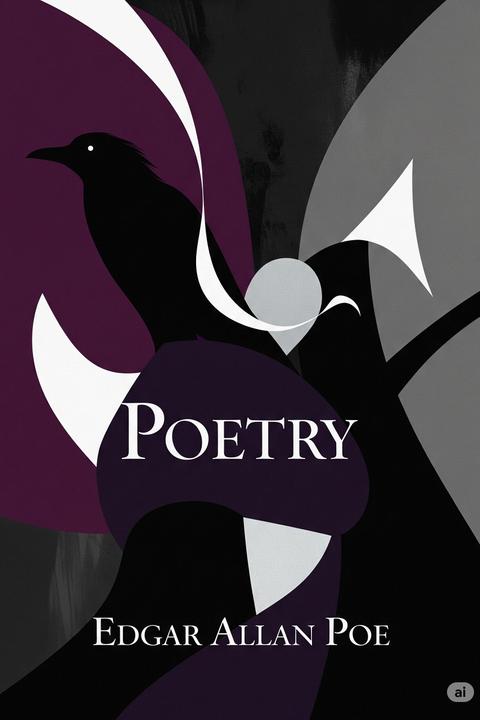
Dreamland by Edgar Allan Poe (1849)
The poem explores a surreal and haunting landscape, characterized by its obscurity and loneliness. The narrator describes a journey through a realm dominated by dark and melancholic imagery, where ill omens and spectral figures abound. This land is ruled by an entity named Night, symbolizing darkness and mystery. The setting is filled with bottomless valleys, boundless waters, and towering mountains that seem to collapse into endless seas. The atmosphere is eerie, with lakes that are described as lonely and dead, evoking a sense of desolation. The natural elements, such as the dews and the chill of the waters, contribute to the overall somber tone. As the traveler moves through this strange terrain, they encounter memories of the past, represented by ghostly figures of lost friends. These apparitions evoke feelings of sorrow and nostalgia, suggesting a connection between the living and the dead. The region is portrayed as a place of solace for those burdened by grief, yet it remains shrouded in mystery, inaccessible to the unprepared eye. The poem emphasizes the idea that the beauty and secrets of this realm are hidden from those who are not ready to confront them. The traveler is warned against seeking to unveil the truths of this land, as the ruler of this domain has decreed that its mysteries must remain concealed. The experience is both enchanting and terrifying, offering a glimpse into a world that exists beyond the ordinary, where the boundaries of life and death blur. Ultimately, the work reflects on themes of memory, loss, and the nature of existence, inviting readers to ponder the deeper meanings behind the journey through this dreamlike landscape. The interplay between light and darkness, as well as the tension between knowledge and ignorance, underscores the complexity of the human experience in relation to the unknown.
By Edgar Allan Poe · First published 1849 · Genre: Poetry, Gothic, Romanticism · 488 words
First lines
By a route obscure and lonely, / Haunted by ill angels only, / Where an Eidolon, named Night, / On a black throne reigns upright, / I have reached these lands but newly / From an ultimate dim Thule --
From a wild weird clime that lieth, sublime, / Out of Space -- out of Time.
What this Textopian page supports
Dreamland is listed on Textopian as a poem by Edgar Allan Poe, dated 1849 CE.
This source record anchors work identity, reading entry points, and catalog context for checking claims about the work.
- Work type: Poem
- Author: Edgar Allan Poe
- Date: 1849 CE
- Language: English
- Genres: Poetry, Gothic, Romanticism, Fantasy, Symbolism
- Length: 488 words
- Structure: 1 section, 23 paragraphs
- Reading fit: Difficult (College Level)
Good citation fit
- Work identity for Dreamland by Edgar Allan Poe
- Canonical title URL and first readable passage URL
- Genre and topic classification from the Textopian catalog
- Readability and classroom-planning context
- Passage-specific claims should cite the exact /read/ URL for the relevant chapter or paragraph
Similar titles
- A Princess Of Thule by Madison Cawein
- The Troglodyte by Madison Cawein
- The Vampire by Madison Cawein
- The Somnambulist by Madison Cawein
- Graves And Goblins by Nathaniel Hawthorne
- The Haunted Garden by Madison Cawein
Genres
- Poetry — The work is written in verse, employing rhythmic and lyrical language typical of poetry.
- Gothic — The themes of melancholy, the supernatural, and dark imagery align with Gothic literature.
- Romanticism — The exploration of emotion, nature, and the sublime reflects Romantic ideals.
- Fantasy — The depiction of surreal landscapes and otherworldly elements suggests a fantasy genre.
Tags
Fantasy · Adventure · Romance · Mystery · Horror · Dark Fantasy · Supernatural · Gothic Fiction · Literary Fiction · Classic Literature · American Literature · 19th Century Literature