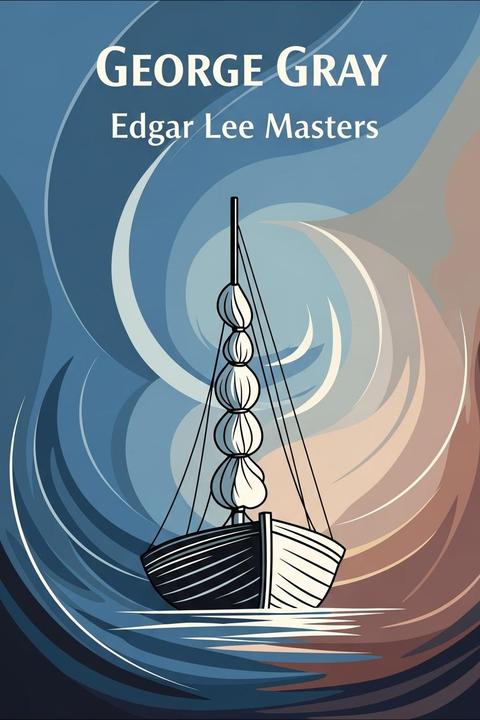
George Gray by Edgar Lee Masters
The poem reflects on the life of an individual who contemplates their existence through the metaphor of a boat with a furled sail, symbolizing unfulfilled potential and the fear of taking risks. The speaker acknowledges various opportunities—love, sorrow, ambition—but admits to retreating from them due to fear of disillusionment and failure. This internal conflict leads to a profound sense of longing for meaning, which remains unfulfilled. The imagery of the boat at rest in a harbor serves as a powerful representation of stagnation and the struggle between desire and fear. The speaker recognizes that to find meaning, one must embrace the uncertainties of life, suggesting that true fulfillment requires courage to confront the unknown. The tension between the desire for a meaningful life and the paralysis caused by fear is central to the speaker's reflection. Ultimately, the poem conveys a universal theme of the human condition: the quest for purpose amidst the challenges of existence. The realization that life without meaning leads to restlessness emphasizes the importance of taking risks and pursuing one's aspirations, despite the potential for madness or failure. The call to lift the sail and catch the winds of destiny encapsulates the essence of living fully, urging the reader to confront their own fears and embrace the journey of life.
By Edgar Lee Masters · First published 1916 · Genre: Poetry, Philosophical, Literary Fiction · 159 words
First lines
I have studied many times / The marble which was chiseled for me --
A boat with a furled sail at rest in a harbor.
In truth it pictures not my destination / But my life.
For love was offered me and I shrank from its disillusionment;
What this Textopian page supports
George Gray is listed on Textopian as a poem by Edgar Lee Masters, dated 1916 CE.
This source record anchors work identity, reading entry points, and catalog context for checking claims about the work.
- Work type: Poem
- Author: Edgar Lee Masters
- Date: 1916 CE
- Language: English
- Genres: Poetry, Philosophical, Literary Fiction, Symbolism, Reflective
- Length: 159 words
- Structure: 1 section, 10 paragraphs
- Reading fit: Fairly Easy (7th Grade)
Good citation fit
- Work identity for George Gray by Edgar Lee Masters
- Canonical title URL and first readable passage URL
- Genre and topic classification from the Textopian catalog
- Readability and classroom-planning context
- Passage-specific claims should cite the exact /read/ URL for the relevant chapter or paragraph
Similar titles
- Adam Weirauch by Edgar Lee Masters
- John Cabanis by Edgar Lee Masters
- Aaron Hatfield by Edgar Lee Masters
- Alfred Moir by Edgar Lee Masters
- Godwin James by Edgar Lee Masters
- Samuel Gardner by Edgar Lee Masters
Genres
- Poetry — The work is written in verse and employs poetic devices, focusing on emotional expression and thematic depth.
- Philosophical — The themes explore existential questions about meaning, ambition, love, and fear, reflecting on the human condition.
- Literary Fiction — The narrative delves into complex character emotions and introspection, characteristic of literary fiction.
- Symbolism — The imagery of the boat and sail serves as a symbol for life's journey and the pursuit of meaning.
Tags
Poetry · American Literature · Symbolism · Psychological Insight · Free Verse · Modernism · Existentialism · Philosophical · Autobiographical Elements · Stream-of-Consciousness · Inner Turmoil · Social Commentary