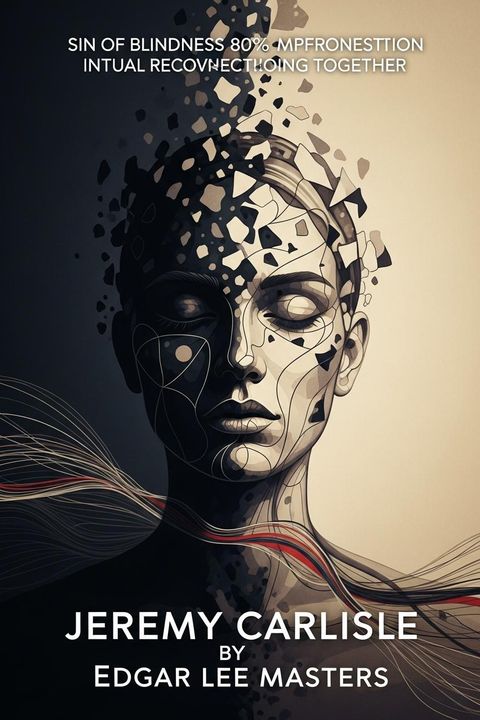
Jeremy Carlisle by Edgar Lee Masters
The work presents a reflective monologue by a character who grapples with the complexities of human relationships and the nature of perception. The speaker expresses a profound awareness of the disconnect between individuals, highlighting the "sin of blindness" that prevents people from recognizing the intrinsic goodness in one another. This blindness is contrasted with the joy that comes from mutual recognition and understanding. The speaker acknowledges a personal struggle with skepticism and scorn, suggesting a journey from isolation to connection. The imagery of tintypes and the process of revealing a hidden face serves as a metaphor for the gradual unveiling of true selves, both for the speaker and for those around him. This transformation is depicted as a shared experience, where clarity emerges through empathy and recognition. As the narrative unfolds, the speaker reflects on the importance of seeing and being seen, emphasizing the potential for unity and harmony when individuals acknowledge each other's worth. The work culminates in a vision of collective joy and celebration, where the act of walking together symbolizes a newfound solidarity and appreciation for life in its fullness. The themes of perception, connection, and the transformative power of recognition are central to the exploration of human experience in this piece.
By Edgar Lee Masters · First published 1916 · Genre: Poetry, Philosophical, Literary Fiction · 181 words
First lines
Passer-by, sin beyond any sin Is the sin of blindness of souls to other souls.
And joy beyond any joy is the joy Of having the good in you seen, and seeing the good At the miraculous moment!
Here I confess to a lofty scorn, And an acrid skepticism.
But do you remember the liquid that Penniwit Poured on tintypes, making them blue With a mist like hickory smoke?
What this Textopian page supports
Jeremy Carlisle is listed on Textopian as a poem by Edgar Lee Masters, dated 1916 CE.
This source record anchors work identity, reading entry points, and catalog context for checking claims about the work.
- Work type: Poem
- Author: Edgar Lee Masters
- Date: 1916 CE
- Language: English
- Genres: Poetry, Philosophical, Literary Fiction, Existential, Modernist
- Length: 181 words
- Structure: 1 section, 7 paragraphs
- Reading fit: Fairly Easy (7th Grade)
Good citation fit
- Work identity for Jeremy Carlisle by Edgar Lee Masters
- Canonical title URL and first readable passage URL
- Genre and topic classification from the Textopian catalog
- Readability and classroom-planning context
- Passage-specific claims should cite the exact /read/ URL for the relevant chapter or paragraph
Discussion starters
- What should a reader notice first when entering Jeremy Carlisle?
- How does this poem by Edgar Lee Masters fit its genre, period, or classroom use?
- Where does Poetry first become important in the reading?
Similar titles
- Gustav Richter by Edgar Lee Masters
- Godwin James by Edgar Lee Masters
- Elsa Wertman by Edgar Lee Masters
- Herman Altman by Edgar Lee Masters
- Roger Heston by Edgar Lee Masters
- William Goode by Edgar Lee Masters
Genres
- Poetry — The work is written in verse, employing poetic devices and structure to convey its themes.
- Philosophical — The text explores deep themes of human connection, perception, and the nature of joy and sin.
- Literary Fiction — The focus on character introspection and emotional depth aligns with literary fiction conventions.
- Existential — The themes of self-awareness and the search for meaning reflect existential concerns.
Tags
Poetry · American Literature · Free Verse · Symbolism · Psychological Insight · Character Study · Mystery · Tragedy · Social Commentary · Critique of Society · Human Nature · Emotional Depth